|
 |
 | | | | | | |||||||||||||||||||||||||||||||||||||||||||||||||||||||||||||||||||||||||||||||||||||||||||||||||||||||||||||||||||||||||||||||||||
| | | You are in: UK | |||||||||||||||||||||||||||||||||||||||||||||||||||||||||||||||||||||||||||||||||||||||||||||||||||||||||||||||||||||||||||||||||||||
|
| | Monday, 27 January, 2003, 12:07 GMT Analysis: Investigating the Tube crash  It may be weeks before the Central Line repairs are complete
Investigating a tube accident is a dirty, dangerous business. The team from Her Majesty's Railway Inspectorate will be working in cramped conditions, with the risk that asbestos could be released from damaged tunnel walls. Facts are now starting to emerge about the crash. The train driver has been released from hospital, and has given his account to his union representatives. They say he warned that there was something wrong at Leyton station - some eight stops before Chancery Lane. A strange grinding noise was coming from the rear of the train.
Eventually London Underground decided to withdraw the service and take the passengers off at Holborn. But this station is another stop down the line from Chancery Lane. The train never reached there. Passengers have backed up the tube driver's account of hearing unusual noises. So it is the train that is the focus of the investigation.
Union sources who've been to the crash site have told the BBC a motor unit can clearly be seen detached from the bottom of the train. It may have come off during the collision, but it is also possible the motor fell off beforehand, derailing the train. It wouldn't be the first time. Last year at Loughton in Essex - also on the Central Line - an empty train derailed as it was shunted into sidings. A motor had sheared off its mountings underneath one of the carriages and was discovered sitting on the track.
The BBC has also been told of an incident last year near Shepherds Bush station, when a brake fluid tank fell off the bottom of another Central Line train. The line's 85-strong fleet of trains has now been withdrawn from service - while checks are carried out. As a result it will take some days for London Underground to restore the service on the undamaged sections of the Central Line. It will take much longer to repair and reopen the Chancery Lane section. Once the investigation is finished, engineers will have to carefully move the damaged train. The track and tunnel walls will then have to be rebuilt. And before the station and line reopens there will be a rigorous safety inspection. It could take weeks.
Apart from the risk to teams working on the track, there is a chance some passengers involved in the crash may have been exposed to it. They reported thick black clouds of dust filling the carriage after the accident. London Underground says its tests haven't detected any sign of asbestos in the tunnel air. But they were carried out some hours after the crash, and may not be enough to reassure passengers. It is all terrible publicity for the Tube - at the worst possible time. Maintenance of the system is about to be privatised - the Central Line and its trains are already being managed in the same way they will be under their new private owners. An investigation report may well find faults with this new system of train or track maintenance. But the government's partnership with the private sector on the tube is already too far down the line to be reversed.
The last serious train crash was 28 years ago, when a tube train failed to stop at Moorgate station and hit the buffers killing 29 passengers. The worst disaster on the Underground in recent years was the Kings Cross fire in 1988, when 27 people died in an inferno which swept up the station's escalators and through its ticket hall. But the biggest causes of deaths on the tube these days are suicide, and passengers not taking care on the platform. There are two important reasons why the Underground is safer than the overground railways. Firstly it already has a system to stop train drivers passing red signals which often causes crashes above ground. Secondly its deeper tunnels are extremely narrow. They date back to Victorian times when tunnelling was difficult and expensive. But as a result, when a train derails it is unlikely to fall over and be crushed. For that reason, some of those involved in Saturday's accident probably owe their lives to the designers of the London Underground, back in the 19th Century. | |
See also:  27 Jan 03 | England 24 Jan 03 | England 19 Dec 02 | England Top UK stories now: Links to more UK stories are at the foot of the page. | |||||||||||||||||||||||||||||||||||||||||||||||||||||||||||||||||||||||||||||||||||||||||||||||||||||||||||||||||||||||||||||||||||
 | |
|  E-mail this story to a friend E-mail this story to a friend |
| |
| Links to more UK stories |
| | | ||
 | ||||
 | | Back to top
| ||
| ---------------------------------------------------------------------------------- To BBC Sport>> | To BBC Weather>> | To BBC World Service>> ---------------------------------------------------------------------------------- © MMIII | News Sources | Privacy |







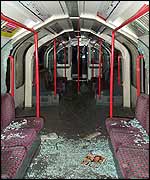
 The London Underground has one of the best safety records of any form of transport in Britain.