|
 |
 | | | | | | |||||||||||||||||||||||||||||||||||||||||||||||||||||||||||||||||||||||||||||||||||||||||||||||||||||||||||||||||||||||||||||||||||||||||||||||||||||||||||||||||||||||||||||||||
| | | You are in: South Asia | |||||||||||||||||||||||||||||||||||||||||||||||||||||||||||||||||||||||||||||||||||||||||||||||||||||||||||||||||||||||||||||||||||||||||||||||||||||||||||||||||||||||||||||||||||
|
| | Tuesday, 10 December, 2002, 10:47 GMT Nepal parties to step up action 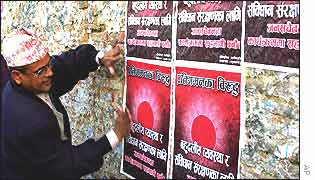 Political parties say the king's action was a blunder
Mainstream political parties in Nepal have decided to intensify their agitation against King Gyanendra's assumption of executive powers. In a joint meeting on Tuesday, five of the six parties which had members in the dissolved parliament said that the country's crisis had deepened after the king assumed executive powers.
They said that the constitutional monarch's move was a serious setback to democracy. Last October, King Gyanendra sacked the elected government for failing to hold national elections on schedule and assumed full executive powers - an unprecedented move in the 12 years of democracy. He then installed a government led by his nominee, Lokendra Bahadur Chand, in defiance of the parties who wanted a government of their nominees. He asked the new government to hold local and national elections at the earliest date and tackle the long-running Maoist insurgency which forced the previous government to seek the postponement of the polls by a year. Divisions Although the King has repeatedly vowed to remain a constitutional monarch under a multi-party system, the political parties fear the prospect of the return of an executive monarchy which existed for 30 years until a pro-democracy movement in 1990. However, the parties are divided on the future course of action. Some want the dissolved parliament to be reinstated to clear the way for an elected government. Some others want the king to install a government comprising of the mainstream parties' nominees. Despite such differences, the parties have pledged mutual co-operation in protest campaigns which in recent weeks have drawn big crowds. They have apparently been encouraged by the growing criticism of the government's performance over the past two months. A confrontation between the king and the parties will benefit the Maoist rebels who want to establish a republican regime. In an obvious attempt to take advantage of the situation, the rebels have urged the political parties to back their immediate demand for a constituent assembly to frame a new constitution which the rebels believe will clear way for a republic. | |
See also:  09 Dec 02 | South Asia 28 Oct 02 | South Asia 19 Oct 02 | South Asia 06 Oct 02 | South Asia 25 Sep 02 | South Asia Internet links: The BBC is not responsible for the content of external internet sites Top South Asia stories now: Links to more South Asia stories are at the foot of the page. | |||||||||||||||||||||||||||||||||||||||||||||||||||||||||||||||||||||||||||||||||||||||||||||||||||||||||||||||||||||||||||||||||||||||||||||||||||||||||||||||||||||||||||||||||
| |
|  E-mail this story to a friend E-mail this story to a friend |
| |
| Links to more South Asia stories |
| | | ||
 | ||||
 | | Back to top
| ||
| ---------------------------------------------------------------------------------- To BBC Sport>> | To BBC Weather>> | To BBC World Service>> ---------------------------------------------------------------------------------- © MMIII | News Sources | Privacy |