|
 |
 | | | | | | ||||||||||||||||||||||||||||||||||||||||||||||||||||||||||||||||||||||||||||||||||||||||||||||||||||||||||||||||||||||||||||||||||||||||||||||||||||||||||||||||||||||||||||||||||
| | | You are in: South Asia | ||||||||||||||||||||||||||||||||||||||||||||||||||||||||||||||||||||||||||||||||||||||||||||||||||||||||||||||||||||||||||||||||||||||||||||||||||||||||||||||||||||||||||||||||||||
|
| | Sunday, 6 October, 2002, 13:01 GMT 14:01 UK Choices before Nepal's king 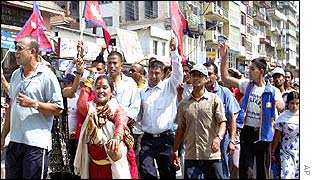 A show of support for the King
The political crisis in Nepal had been building for months. It was becoming obvious that elections planned for November would be unwieldy, unsafe and unlikely to have legitimate result. Last week, the usually quarrelsome political parties asked for elections to be postponed and all-party government formed.
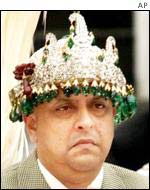
But evidently, it was not enough for King Gyanendra. His dismissal of the government has some precedence in Nepalese political history, but not during the period since democracy was restored in 1990. The constitution drawn up then makes the king's role largely symbolic. The clause invoked to dismiss the government is not specific on just how far he can go to resolve a serious crisis. Various options The Royal Nepal army is intensely loyal to the king and may see this as an opportunity to intensify operations against Maoist rebels in the countryside. Equally, the king may want to start a serious peace process to end a conflict that has claimed well over 4,500 lives in the past six -and - a - half years.
For their part, the Maoists are deeply anti-monarchy. They have been harshly critical of King Gyanendra since he came to the throne last year after the devastating massacre of most of his relatives. But for now, what is crucial is the shape of the next government and just which politicians, if any, support the king's new role. It's likely that many ordinary people will be supportive, especially since the king says he will restore democracy and hold elections when possible. This situation is developing on the eve of the country's most important religious holiday. It is a time when Nepalis would prefer to pray and be with their families, not contemplate yet more frightening uncertainty in their troubled land. | |
See also:  12 Sep 02 | Country profiles 04 Oct 02 | South Asia 04 Oct 02 | South Asia 11 Sep 02 | South Asia 05 Oct 02 | South Asia Top South Asia stories now: Links to more South Asia stories are at the foot of the page. | ||||||||||||||||||||||||||||||||||||||||||||||||||||||||||||||||||||||||||||||||||||||||||||||||||||||||||||||||||||||||||||||||||||||||||||||||||||||||||||||||||||||||||||||||||
| |
|  E-mail this story to a friend E-mail this story to a friend |
| |
| Links to more South Asia stories |
| | | ||
 | ||||
 | | Back to top
| ||
| ---------------------------------------------------------------------------------- To BBC Sport>> | To BBC Weather>> | To BBC World Service>> ---------------------------------------------------------------------------------- © MMIII | News Sources | Privacy |