|
 |
 | | | | | | ||||||||||||||||||||||||||||||||||||||||||||||||||||||||||||||||||||||||||||||||||||||||||||||||||||||||||||||||||||||||||||||||||||||||||||||||||||||||||||||||||||||||||||||||||||||||
| | | You are in: South Asia | ||||||||||||||||||||||||||||||||||||||||||||||||||||||||||||||||||||||||||||||||||||||||||||||||||||||||||||||||||||||||||||||||||||||||||||||||||||||||||||||||||||||||||||||||||||||||||
|
| | Tuesday, 22 October, 2002, 15:47 GMT 16:47 UK Sri Lanka's strained cohabitation 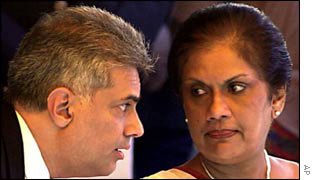 Sri Lanka's leaders disagree on the best way forward
It has ended up exacerbating strains within the government of cohabitation, where the president and prime minister come from rival parties. The government argued the president's power to dissolve parliament one year after elections could be a destabilising factor. Snap election 'unlikely' Now, ironically, it is the government that has been talking of the possible need to dissolve parliament to hold new polls. Although the idea of new elections is being bandied about, it is still thought unlikely they will take place:
Leverage So, the likelihood is the current parliament will remain and the prime minister and president will have to find a way to work together, with the government accepting the extent of the president's powers. But that assumes the prime minister can maintain his majority in the House. For that he needs to resolve the current crisis within his ally, the Sri Lankan Muslim Congress (SLMC). Of the party's 12 MPs in parliament, somewhere between five and nine of them are currently rebelling against the party leader over the issue of a separate Muslim interim council in the east. This rebellion has now become the most pressing problem for the prime minister, and, if he can resolve it, he clearly has more leverage in his relationship with the president. | |
See also:  15 Oct 02 | Country profiles 22 Oct 02 | South Asia 17 Oct 02 | South Asia 16 Oct 02 | South Asia 01 Sep 02 | South Asia 02 Sep 02 | Business 30 Aug 02 | South Asia 14 Aug 02 | South Asia Internet links: The BBC is not responsible for the content of external internet sites Top South Asia stories now: Links to more South Asia stories are at the foot of the page. | ||||||||||||||||||||||||||||||||||||||||||||||||||||||||||||||||||||||||||||||||||||||||||||||||||||||||||||||||||||||||||||||||||||||||||||||||||||||||||||||||||||||||||||||||||||||||
| |
|  E-mail this story to a friend E-mail this story to a friend |
| |
| Links to more South Asia stories |
| | | ||
 | ||||
 | | Back to top
| ||
| ---------------------------------------------------------------------------------- To BBC Sport>> | To BBC Weather>> | To BBC World Service>> ---------------------------------------------------------------------------------- © MMIII | News Sources | Privacy |