|
 |
 | | | | | | ||||||||||||||||||||||||||||||||||||||||||||||||||||||||||||||||||||||||||||||||||||||||||||||||||||||||||||||||||||||||||||||||||||||||||||||||||||||||||||||||||||||||||||||||||||||||||||||||||||||||||||||||
| | | You are in: South Asia | ||||||||||||||||||||||||||||||||||||||||||||||||||||||||||||||||||||||||||||||||||||||||||||||||||||||||||||||||||||||||||||||||||||||||||||||||||||||||||||||||||||||||||||||||||||||||||||||||||||||||||||||||||
|
| | Tuesday, 22 October, 2002, 12:41 GMT 13:41 UK Setback for Sri Lanka PM 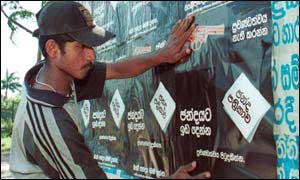 The Supreme Court ruling could force early elections Sri Lanka's Supreme Court has ruled that the government must hold a referendum before making controversial constitutional changes to limit the president's powers. The court described as "unconstitutional" legislation currently before MPs which, if passed, would remove the president's right to dissolve parliament.
Her rival in the government of cohabitation, Prime Minister Ranil Wickramasinghe, says the proposed amendment is crucial for the stability necessary to negotiate an end to the Tamil Tiger insurgency in the north. The Supreme Court ruling comes as Norwegian mediators are in Sri Lanka to prepare a new round of peace talks between the government and the Tamil Tiger rebels. 'Victory' Mrs Kumaratunga is elected separately from the government and has been critical of the government's handling of the peace process. The rebels fear she could derail it by sacking the government if she does not like the outcome of talks which have already begun. Last month, the government introduced a bill to curb the president's powers, saying it feared she could undermine peace efforts. Mrs Kumaratunga's supporters challenged the move in court. The Supreme Court ruling, read out in parliament on Tuesday, said the proposed amendment required not only a two-thirds majority of MPs, but also to be "approved by the people at a referendum". "This is a victory for us and a major blow to the government," said a delighted opposition leader, Mahinda Rajapakse. Referendum ruled out The government said it was studying the judgement. It has already ruled out a referendum, saying it would prefer fresh polls. But BBC correspondent Frances Harrison in Colombo says it is still thought unlikely these will take place, and the country's leaders will have to find a way to work together. She says a more pressing problem for the prime minister is to sort out a crisis within the Sri Lankan Muslim Congress, an ally in his governing coalition, which threatens his majority in the house. Fresh elections would delay the first direct peace talks in seven years, aimed at ending a civil war in which 64,000 people have been killed. | |
See also:  22 Oct 02 | South Asia 17 Oct 02 | South Asia 21 Oct 02 | Business 24 May 02 | South Asia Internet links: The BBC is not responsible for the content of external internet sites Top South Asia stories now: Links to more South Asia stories are at the foot of the page. | ||||||||||||||||||||||||||||||||||||||||||||||||||||||||||||||||||||||||||||||||||||||||||||||||||||||||||||||||||||||||||||||||||||||||||||||||||||||||||||||||||||||||||||||||||||||||||||||||||||||||||||||||
| |
|  E-mail this story to a friend E-mail this story to a friend |
| |
| Links to more South Asia stories |
| | | ||
 | ||||
 | | Back to top
| ||
| ---------------------------------------------------------------------------------- To BBC Sport>> | To BBC Weather>> | To BBC World Service>> ---------------------------------------------------------------------------------- © MMIII | News Sources | Privacy |