|
 |
 | | | | | | |||||||||||||||||||||||||||||||||||||||||||||||||||||||||||||||||||||||||||||||||||||||||||||||||||||||||||||||||||||||||||||||||||||||||||||||||||||||||||||||||||||||||
| | | You are in: South Asia | |||||||||||||||||||||||||||||||||||||||||||||||||||||||||||||||||||||||||||||||||||||||||||||||||||||||||||||||||||||||||||||||||||||||||||||||||||||||||||||||||||||||||||
|
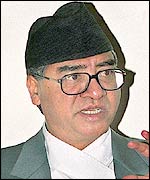
| | Saturday, 25 May, 2002, 12:57 GMT 13:57 UK Nepal crisis talks under way Supporters wonder what will happen to the party High-level consultations are under way in Nepal to defuse a political crisis over Prime Minister Sher Bahadur Deuba's attempts to extend the state of emergency to fight Maoists rebels.
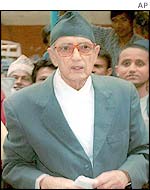
The party faces the prospect of a split after Mr Deuba was suspended from membership in response to his move to dissolve parliament and call elections. Mr Koirala, president of the ruling party and a rival of Mr Deuba, urged members of the government to resign. But most of the cabinet decided to support the prime minister, raising the prospect that they could be expelled from the party. Mr Deuba dissolved parliament because members of his own party as well as the opposition would not support an extension to the state of emergency being used to battle Maoist rebels. Party mediator Moderate leaders have been trying to defuse the crisis and keep the party united to prepare for the elections, expected in November.
The BBC's Sushil Sharma in Kathmandu says that as a mediator between the factions, Krishna Prasad Bhattarai is well placed as he has brought the party back from the brink of a split on a number of previous occasions. Our correspondent also says the party could face the prospect of losing the elections if it formally splits. Emergency powers The caretaker government in Nepal has also announced that it is to ask King Gyanendra on Monday to extend the country's state of emergency for another three months. Emergency laws expire on Saturday. Junior Home Minister Devendra Raj Kandel told Reuters that emergency powers were needed in the fight against the Maoists. The king is expected to approve the request. In an address to the nation on Friday, Mr Deuba defended his decision to dissolve parliament and hold fresh elections. Mr Deuba said his decision was the only option left to safeguard democracy. The Maoist insurgency has cost about 4,000 lives in the last six years. | |
See also:  24 May 02 | South Asia 23 May 02 | South Asia 23 May 02 | South Asia 11 May 02 | South Asia 18 Feb 02 | South Asia Internet links: The BBC is not responsible for the content of external internet sites Top South Asia stories now: Links to more South Asia stories are at the foot of the page. | |||||||||||||||||||||||||||||||||||||||||||||||||||||||||||||||||||||||||||||||||||||||||||||||||||||||||||||||||||||||||||||||||||||||||||||||||||||||||||||||||||||||||
| |
| Links to more South Asia stories |
| | | ||
 | ||||
 | | Back to top
| ||
| ---------------------------------------------------------------------------------- To BBC Sport>> | To BBC Weather>> | To BBC World Service>> ---------------------------------------------------------------------------------- © MMIII | News Sources | Privacy |