|
 |
 | | | | | | ||||||||||||||||||||||||||||||||||||||||||||||||||||||||||||||||||||||||||||||||||||||||||||||||||||||||||||||||||||||||||||||||||||||||||||||||||||||||||||||||||||||||||
| | | You are in: South Asia | ||||||||||||||||||||||||||||||||||||||||||||||||||||||||||||||||||||||||||||||||||||||||||||||||||||||||||||||||||||||||||||||||||||||||||||||||||||||||||||||||||||||||||||
|
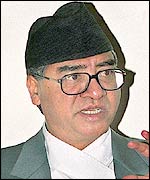
| | Friday, 24 May, 2002, 10:56 GMT 11:56 UK Nepal PM retains cabinet support The divisions within the ruling party are out in the open Nepal's embattled Prime Minister Sher Bahadur Deuba has received support from a large majority of his cabinet colleagues in the country's latest political crisis.
Three members of the cabinet, including the influential Finance Minister Ram Sharan Mahat, had already resigned on Thursday - but there are no indications that others are likely to follow suit. The crisis erupted when Mr Deuba asked the King to dissolve parliament when it became clear that the government would not have a majority to extend the current state of emergency being used in the campaign against Maoist rebels. The ruling Nepali Congress party subsequently declared that it had suspended Mr Deuba from membership. Factional fighting In their statement, the ministers not only expressed support for Mr Deuba, but also asked Mr Koirala to withdraw all actions against the prime minister and avert a split in the party.
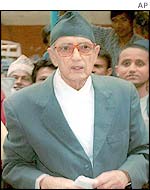
Mr Koirala, a veteran politician who has served several terms as prime minister, was forced out of office in July 2001 amid criticism of his failure to contain Maoist violence, handing over the premiership to Mr Deuba but retaining the party presidency. Correspondents say the relationship between the two men has always been strained and the dissolution of the parliament has brought the party's inner conflicts out in the open. Outside support Mr Deuba believes the government needs the sweeping powers granted by the emergency to fight Maoist rebels.
Some members of the ruling party and opposition groups think existing powers are enough. Nepal is also seeking help from abroad in its campaign against the rebels, The US pledged aid worth $20m and support has also been promised by the UK. The Chief of the British General Staff, General Sir Michael Boyce, arrived in Kathmandu on a four-day visit on Friday to assess how best to help the Nepalese army. Observers say that after several months of lacklustre performance, Nepal's security forces are in a relatively advantageous position against the rebels. who are want to replace Nepal's constitutional monarchy with a communist republic. | |
See also:  23 May 02 | South Asia 23 May 02 | South Asia 21 May 02 | South Asia 20 May 02 | South Asia 11 May 02 | South Asia 18 Feb 02 | South Asia Internet links: The BBC is not responsible for the content of external internet sites Top South Asia stories now: Links to more South Asia stories are at the foot of the page. | ||||||||||||||||||||||||||||||||||||||||||||||||||||||||||||||||||||||||||||||||||||||||||||||||||||||||||||||||||||||||||||||||||||||||||||||||||||||||||||||||||||||||||
| |
|  E-mail this story to a friend E-mail this story to a friend |
| |
| Links to more South Asia stories |
| | | ||
 | ||||
 | | Back to top
| ||
| ---------------------------------------------------------------------------------- To BBC Sport>> | To BBC Weather>> | To BBC World Service>> ---------------------------------------------------------------------------------- © MMIII | News Sources | Privacy |