By Rebecca Morelle
Science reporter, BBC News |

With their hefty frames, protruding tusks and beady red eyes, walruses are perhaps not the most attractive of the Arctic animals.
But their unusual exterior belies a fascinating creature.
BULKY BEASTS
 The walruses of the Pacific can weigh up to two tonnes |
Walruses are big, bulky beasts; some almost twice as heavy as a Mini car.
The Pacific walrus can weigh in at a massive two tonnes and measure up to 3.7m (12ft) long; the Atlantic walrus tops the scales at a slightly more diminutive 1.6 tonnes, reaching lengths of almost 3m (10ft).
And they have thick skins, too. Tough hair-covered hide, 2-4cm (0.8-1.3in) thick, sheaths a thick layer of blubber that keeps them warm in the icy Arctic weather.
TOUGH TUSKS
Walruses' defining features are their long, white tusks.
When they are born, the ivory appendages are not visible. But by the time they reach about 20 years old, their tusks can reach up to 80cm (30in) in length in the case of Pacific walruses and 50cm (20in) long for the Atlantic sub-species.
Walruses can use their tusks as hooks to drag themselves from the sea up onto an ice floe, but they also come in handy for self-defence in tussles with other walruses and polar bears.
LIFE ON LAND
 The creatures are nearly always found in groups |
Walruses are thought to spend about one-third of their time on ice or land, resting in preparation for their next excursion out to sea.
While out of the water, the creatures are nearly always found in groups (herds) and are rather sociable.
As they snuggle close together, scientists believe they communicate by grunting, snorting, sniffing and snuffling, and by prodding and jabbing with their tusks and snouts.
ALL AT SEA
It is in the ocean that a walrus's bulky form really comes into its own.
While it lumbers awkwardly on land, it can glide through water at speeds up to 35km per hour (22mph).
They can spend days on end at sea, sometimes swimming hundreds of kilometres; they can plunge to depths of more than 250m (820ft).
SUBMARINE FEASTS
 | See stunning underwater images of the tusked beasts 
|
The meal of choice for a walrus consists of clams and other molluscs, which live buried in the sea-floor sediment.
To get to them, a walrus must work hard.
First, it propels itself vertically at the sea-bottom, scraping its tusks along the floor. As the sediment dislodges creating a murky mess, it uses its moustache to locate the tasty morsel. Then, a jet of water squirted from its mouth dislodges the clam, which is quickly gobbled up.
Walruses occasionally supplement their diet with seals and sea birds; they have even been known to kill polar bears and small whales.
LOVE SONGS
Water is not just for feeding - mating, which takes place from late winter to spring, is another underwater activity for walruses.
And to attract females, male walruses sing. Complex, distinct songs formed of clicks, rasps and bell-like tones can be heard by passing females kilometres away.
The best singer wins the female.
DOTING PARENTS
 The tusked creatures are doting mothers |
Walruses bear young about once every three years; and when they do, they are doting mothers.
When the calf is born, it weighs about 60 to 65kg (130-140lb). It will stay with its mother for about two years, a relatively long time for a pinniped (the group of marine mammals to which walruses belong).
This is because mothers have a lot of information to pass on, such as where feeding banks are found, and how to perform their complicated feeding practices once they are there.
KILLING FIELDS
Their lack of agility on land and their tendency to bunch together has made the creatures an easy target for hunters over the centuries.
From the 1600s, walruses have been killed in their thousands for their blubber, tusks, hide and meat.
In some areas, they were wiped out completely, and in others they were hunted to the brink of extinction.
Numbers are recovering, but hunting continues in some parts. Inuit communities in Greenland still hunt walruses for their meat - both for human consumption and for food for sleigh dogs.
CLIMATE THREATS
 A warming climate could put pressure on some groups |
Walruses are also under threat from climate change.
As temperatures at the poles rise, the pack ice that they haul out on to will shift north over deeper waters where clam and other mollusc beds are not found.
However, walruses that feed closer to land may not be too adversely affected as they have the ability to haul out onto land as well as on ice, and can rest there after feeding.
A LONG LIFE
Walruses can live to a ripe old age of 40.
When they die, they do not float - they sink straight down to the bottom of the sea.


 One-Minute World News
  News services
 E-mail this to a friend
  Printable version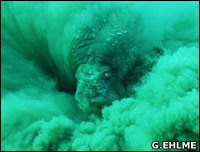
 In pictures
 Walrus meets hunter


