|
 |
 | | | | | | ||||||||||||||||||||||||||||||||||||||||||||||||||||||||||||||||||||||||||||||||||||||||||||||||||||||||||||||||||||||||||||||||||||||||||||||||
| | | You are in: Science/Nature | ||||||||||||||||||||||||||||||||||||||||||||||||||||||||||||||||||||||||||||||||||||||||||||||||||||||||||||||||||||||||||||||||||||||||||||||||||
|
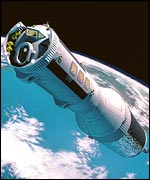
| | Wednesday, 22 January, 2003, 15:22 GMT Nasa to go nuclear  New propulsion systems would cut the travel time to Mars
It is believed he will give the initiative $1bn over five years, arguing that nuclear propulsion represents an essential technology for the manned and unmanned exploration of space. Supporters say nuclear power could change the nature of space exploration, but add that it will take many years and significant resources to develop. 'New vistas' Jim Garvin, Nasa's lead scientist for Mars Exploration, told BBC News Online that the space agency was very committed to "pursuing a vision in which access to unexplored territories in the Universe is possible" and that included "technology to open up new vistas and approaches".
O'Keefe is reported to have said to the Los Angeles Times: "We're talking about doing something on a very aggressive schedule to not only develop the capabilities for nuclear propulsion and power generation but to have a mission using the new technology within this decade." However, Nasa public relations officials have played down this statement. Nuclear propulsion is theoretically capable of achieving much faster speeds than conventional rockets using far less fuel. Stolen fire The technology was studied in the 1950s and 1960s in initiatives such as Project Orion, but it was subsequently neglected, partly for political (1963 nuclear test-ban treaty) and financial reasons. However, a space advocacy group, the Planetary Society, has said: "In the long run, nuclear power and propulsion will likely be needed for missions to carry humans to Mars and back." Using current rocket technology, it would take at least six months to cruise to the Red Planet. Project Prometheus - named after the Greek god who stole fire and gave it to man - could cut this travel time to two months. Advocates say that the nuclear option would make a manned Mars mission much easier, as it would reduce the need to carry so much food, fuel and oxygen, as well as relying on yet to be perfected recycling technology. Distant moons Nuclear power would also mean that Martian launch windows would be longer, allowing a more flexible choice of launch and return times, leading to a manned landing mission that could last as little as three or four months, as opposed to about three years.
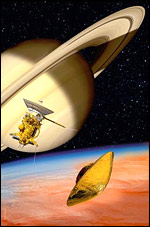
"Nuclear power reactors are essential for Mars base surface power, where they provide the power for reliable life support, ultra-high data-rate communications, and the in-situ production of ascent and return propellants, thereby increasing mission science return and cutting launch costs even more." Nuclear power could also revolutionise the unmanned exploration of the outer Solar System. Expected opposition Current rocket technology does not allow a spaceprobe to reach distant Pluto and go into orbit around it - only a flyby is possible. Chemical rockets also make it very difficult to get a probe to orbit such significant bodies as Jupiter's ice-crusted moon, Europa, a possible abode of life, or Titan, Saturn's major moon. But it is inevitable that the development of the new propulsion systems will spark controversy from anti-nuclear groups. There was major opposition to the launching of Nasa's Cassini probe to Saturn in 1997. The spacecraft uses plutonium to generate electricity for its onboard instruments. Protestors feared a launch failure or an accidental re-entry when the probe swung by Earth could have led to widespread contamination. Radioisotope generators have been used on a number of deep Solar System spacecraft. | | See also:  19 Dec 02 | Science/Nature 04 Nov 02 | Science/Nature 29 May 02 | Science/Nature 27 May 02 | Science/Nature 11 Aug 00 | Science/Nature Internet links: The BBC is not responsible for the content of external internet sites Top Science/Nature stories now: Links to more Science/Nature stories are at the foot of the page. | ||||||||||||||||||||||||||||||||||||||||||||||||||||||||||||||||||||||||||||||||||||||||||||||||||||||||||||||||||||||||||||||||||||||||||||||||
 | |
|  E-mail this story to a friend E-mail this story to a friend |
| |
| Links to more Science/Nature stories |
| | | ||
 | ||||
 | | Back to top
| ||
| ---------------------------------------------------------------------------------- To BBC Sport>> | To BBC Weather>> | To BBC World Service>> ---------------------------------------------------------------------------------- © MMIII | News Sources | Privacy |






 ...a tremendously positive step that will greatly enhance the prospects for human exploration and settlement of the Solar System