|
 |
 | | | | | | |||||||||||||||||||||||||||||||||||||||||||||||||||||||||||||||||||||||||||||||||||||||||||||||||||||||||||||||||||||||||||||||||||||||
| | | You are in: Science/Nature | |||||||||||||||||||||||||||||||||||||||||||||||||||||||||||||||||||||||||||||||||||||||||||||||||||||||||||||||||||||||||||||||||||||||||
|
| | Thursday, 26 December, 2002, 14:02 GMT Beached whale one of world's rarest  Scientists buried the whale without realising what it was A whale that beached itself in Japan this summer has turned out to be one of the best examples ever seen of an extremely rare species, scientists have said. The creature, which died soon after coming ashore in July, has been identified as a Longman's beaked whale.
Japanese scientists realised soon after the animal was buried that it was unlike other whales known in Japanese waters and dug it up on 3 August to perform tests. First complete example They announced on Wednesday that the 6.5-metre (21-foot) female was one of the best adult specimens ever found. "We did some follow-up on the whale because we buried it without knowing exactly what it was," Dr Kubo said.
They ruled out the possibility that it was one of seven related species based on the shape of its body, head and teeth, concluding that it must be a Longman's. The species - Indopacetus pacificus - is known from just a handful of complete specimens and fragmentary remains found in South Africa, the Maldives and Kenya. In 1926, HA Longman described the original find as a new species. South African specimen The Japanese report mentions whale remains found beached in South Africa in the summer of 2002, which they argue may not have been Longman's (although DNA studies waiting to be published suggest they were).
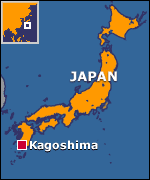
When the specimens were found in August, whale expert Vic Cockcroft said the discoveries were extremely important. "It's amazingly valuable, simply because we know absolutely nothing about the animals because they have only been seen two or three times alive," he said. "We don't know the maximum size, we don't know where they feed or what they feed on. I mean we know absolutely nothing about them, where they occur even," Dr Cockcroft said. Diet of squid As its name implies, it has a long, beak-like mouth, and is believed to normally inhabit waters far from shore. From the shape of their teeth, scientists believe the whales feed on squid. Experts do not know if they are endangered or merely seen rarely because they live far from humans in the Indian and Pacific Oceans. The skeleton of the Japanese specimen will be displayed at the Kagoshima City Aquarium. | | See also:  04 Aug 02 | Africa 31 Jul 02 | Americas 18 Jul 02 | Americas 16 Jul 02 | Americas 05 Jul 02 | Scotland 29 Jun 02 | Asia-Pacific 27 Dec 02 | England Internet links: The BBC is not responsible for the content of external internet sites Top Science/Nature stories now: Links to more Science/Nature stories are at the foot of the page. | |||||||||||||||||||||||||||||||||||||||||||||||||||||||||||||||||||||||||||||||||||||||||||||||||||||||||||||||||||||||||||||||||||||||
 | |
|  E-mail this story to a friend E-mail this story to a friend |
| |
| Links to more Science/Nature stories |
| | | ||
 | ||||
 | | Back to top
| ||
| ---------------------------------------------------------------------------------- To BBC Sport>> | To BBC Weather>> | To BBC World Service>> ---------------------------------------------------------------------------------- © MMIII | News Sources | Privacy |




 We buried it without knowing exactly what it was