|
 |
 | | | | | | ||||||||||||||||||||||||||||||||||||||||||||||||||||||||||||||||||||||||||||||||||||||||||||||||||||||||||||||||||||||||||||||||||||||||||||||||||||||||||||||||||||||||||||||||||||||||
| | | You are in: World: Americas | ||||||||||||||||||||||||||||||||||||||||||||||||||||||||||||||||||||||||||||||||||||||||||||||||||||||||||||||||||||||||||||||||||||||||||||||||||||||||||||||||||||||||||||||||||||||||||
|
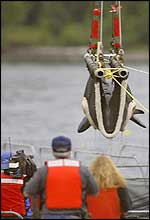
| | Thursday, 18 July, 2002, 11:36 GMT 12:36 UK Orphaned whale still 'prefers boats' 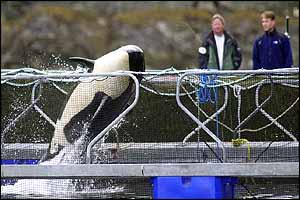 Jumping for joy... Springer is back near her family (AP) An orphaned killer whale recently released into her native Canadian waters is still having trouble in keeping with her family, preferring instead the company of boats, researchers say.
"When they are moving along slowly, cruising or feeding, she is fine. When they left she resorted to her old habit of approaching boats," Lance Barrett-Lennard, a scientist from Vancouver Aquarium, said in a statement. "It is when she is alone she seeks the companionship of boats." Springer - who was captured off the coast of Seattle in May - was released on Sunday, after making a 12-hour-journey to Telegraph Cove in British Columbia in a special container on board a high-speed catamaran. Scientists hope Springer will permanently stay with his family, in what is described as one of the first attempts to reunite a wild orca whale - as killer whales are also known - with its pod. 'Old habits' The 545-kilogram (1,200-pound) whale swam near her pod for two days, but became separated on Tuesday.
"She still has this tendency, if there's an intriguing-sounding boat or something over there, she might split off and go over and rub on its hull," John Ford, whale expert from Canada's Department of Fisheries told the Associated Press news agency. "It's something she did a lot in Puget Sound because she didn't have whales to associate with down there, so boats sort of became a replacement for that for social reasons," Mr Ford said. Springer has attracted international attention since being discovered swimming in the busy shipping lanes of Puget Sound, near Seattle, in poor health last January. She spent at least six months there, often swimming beside the passenger ferries going to and from Seattle. Scientists believe she became lost after being separated from her pod. Alternatively, she could have been rejected after her mother died. Researchers decided to capture her to nurse her back to health, partly because she was becoming too friendly with boaters in the area, raising fears that she could capsize a small vessel as she grew. | | See also:  15 Jul 02 | Americas 12 Jul 02 | Americas 05 Mar 02 | Americas 16 Jun 01 | Europe 17 Oct 98 | Science/Nature 03 Mar 00 | Entertainment 14 Jul 02 | Americas Internet links: The BBC is not responsible for the content of external internet sites Top Americas stories now: Links to more Americas stories are at the foot of the page. | ||||||||||||||||||||||||||||||||||||||||||||||||||||||||||||||||||||||||||||||||||||||||||||||||||||||||||||||||||||||||||||||||||||||||||||||||||||||||||||||||||||||||||||||||||||||||
| |
|  E-mail this story to a friend E-mail this story to a friend |
| |
| Links to more Americas stories |
| | | ||
 | ||||
 | | Back to top
| ||
| ---------------------------------------------------------------------------------- To BBC Sport>> | To BBC Weather>> | To BBC World Service>> ---------------------------------------------------------------------------------- © MMIII | News Sources | Privacy  |