|
 |
 | | | | | | |||||||||||||||||||||||||||||||||||||||||||||||||||||||||||||||||||||||||||||||||||||||||||||||||||||||||||||||||||||||||||||||||||||||||||||||
| | | You are in: Science/Nature | |||||||||||||||||||||||||||||||||||||||||||||||||||||||||||||||||||||||||||||||||||||||||||||||||||||||||||||||||||||||||||||||||||||||||||||||||
|
| | Thursday, 26 December, 2002, 07:33 GMT Humans on Mars 'by 2025'  Europe may go back to the Moon
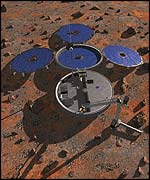
Under proposals being discussed by member states, a robotic outpost could be set up on the Red Planet to pave the way for a human landing. The European Space Agency (Esa) believes that by 2025, the technology will exist to send humans to Mars. It is considering two flagship missions to find a suitable landing site for astronauts and to bring back the first sample of Martian soil.
The plans are part of Esa's Aurora human space exploration programme. It will define a European strategy for the exploration of the Solar System over the next 30 years, which could include human expeditions to the Moon, Mars, asteroids and even beyond. David Hall, director of science at the British National Space Centre (BNSC) in London, is the UK's representative on the panel. He told BBC News Online: "I think it is feasible to think that perhaps by 2025 Europe would have the expertise to send a human to Mars and bring them back." Global collaboration The cost of sending astronauts to Mars or beyond is likely to be exorbitant and a global commitment may be the only way to achieve it. Europe is planning an individual programme with an eye to collaboration with the likes of the US, Russia, Japan and perhaps China.
Politics will prove a formidable barrier for many countries, including Britain. Under current policy, Britain is firmly against committing resources to human exploration. Its interest in Aurora focuses on the robotic phase of the mission, where Britain has some expertise. Politicians will have to decide in the next year or two whether to stay in the full programme. "Clearly, the UK's reason for going to space is to use space for certain purposes - technology, innovation and for pure science studies," said Hall. "There is always the argument that humans will have to go to space to do the science. At the moment, the UK would not be very convinced by that argument." British astronauts? The UK's priorities in space were brought into sharp relief recently by the visit of Piers Sellers to the International Space Station. The government does not support human space flight and will not fund UK citizens to go through the official European astronaut training programme. Sellers was born in East Sussex but had to become an American to achieve his dream of becoming an astronaut. According to David Hall, the idea of a true British astronaut would be a major cultural shift. "The UK tends to say: 'do it for science, do it for commerce' - but the UK has always hesitated at doing it for cultural reasons or political reasons outside science," he said. The BNSC will publish its draft space plan in spring 2003, followed by a consultation period. This will allow the public to have their say on whether the UK should cooperate with Europe's plans for human exploration of the Solar System. | | See also:  19 Dec 02 | Science/Nature 23 Sep 02 | Science/Nature 18 Sep 02 | Science/Nature 25 Jul 02 | Science/Nature 27 May 02 | Science/Nature 20 Dec 00 | Science/Nature 13 Sep 00 | Festival of science 05 Jul 02 | Science/Nature 27 Jul 02 | Science/Nature Internet links: The BBC is not responsible for the content of external internet sites Top Science/Nature stories now: Links to more Science/Nature stories are at the foot of the page. | |||||||||||||||||||||||||||||||||||||||||||||||||||||||||||||||||||||||||||||||||||||||||||||||||||||||||||||||||||||||||||||||||||||||||||||||
 | |
|  E-mail this story to a friend E-mail this story to a friend |
| |
| Links to more Science/Nature stories |
| | | ||
 | ||||
 | | Back to top
| ||
| ---------------------------------------------------------------------------------- To BBC Sport>> | To BBC Weather>> | To BBC World Service>> ---------------------------------------------------------------------------------- © MMIII | News Sources | Privacy |






 It is feasible that perhaps by 2025 Europe would have the expertise to send a human to Mars and bring them back