|
 |
 | | | | | | |||||||||||||||||||||||||||||||||||||||||||||||||||||||||||||||||||||||||||||||||||||||||||||||||||||||||||||||||||||||||||||||||||||||||||||||||||
| | | You are in: Science/Nature | |||||||||||||||||||||||||||||||||||||||||||||||||||||||||||||||||||||||||||||||||||||||||||||||||||||||||||||||||||||||||||||||||||||||||||||||||||||
|
| | Saturday, 27 July, 2002, 08:26 GMT 09:26 UK Space agencies take new look at Moon 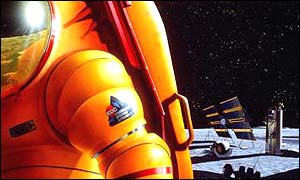 Some believe there may eventually be a Moon industry
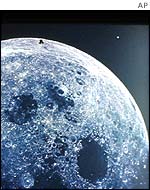
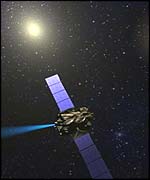
Europe is sending an unmanned spacecraft to map the satellite early in 2003. The mission, Smart-1, will fly over all of the Apollo landing sites in the process.
It comes amid conflicting reports that the emerging space power, China, may launch a manned Moon mission. The new interest in lunar exploration stems in part from the desire to understand how life on Earth began. Earthly fossils Many scientists believe dust on the Moon contains relics of rocks blasted off the face of the Earth about four billion years ago by comets and asteroids. Lunar craters could even harbour fossils of some of Earth's earliest microbial life, according to a team of US scientists.
"We expect them to be relatively rare; most fragments from the Earth will be melted rock," he told BBC News Online. "But even the melted rock bits will be useful in helping us date the individual impact events on the Earth, which are presently unknown." Dr Gonzalez is one of three US scientists who air their views in the forthcoming edition of the international astronomy journal Icarus. 'Only place' Co-author John Armstrong of the University of Washington says there are good reasons for taking a new look at the Moon. "A Nasa researcher, Kevin Zahnle, said: 'It is not that the Moon is the best place to look, it is the only place'," he told BBC News Online. Mr Armstrong says the most likely option for searching for fossils on the Moon is a robotic mission. But he thinks grabbing a chunk of rock "with Earth's name on it" is a task better suited to astronauts. "People can scan a surface and spot odd looking rocks much better than a robot," he says. "A robot would have to grab a bunch of soil and sift through it piece by piece. "I don't advocate sending a manned mission just to look for Earth rocks," he adds. "But if we do go back, we should keep our eyes open." Deep space The next opportunity to go back to the Moon is in early 2003 when the European Space Agency launches its Smart-1 mission. The main objective is to test a new type of engine technology - solar electric propulsion - which could power future missions very long distances into deep space.
Orion, the lunar module dropped by Apollo 16 on 21 April 1972, carried six hand-held cameras to photograph the Moon's surface. In contrast, Smart-1 will be using the latest X-ray and infrared imaging techniques to map the Moon's surface more accurately than before. Some of the scientific instruments are being built in the UK. Dr Sara Russell, a meteorite researcher at London's Natural History Museum, says the data should help plug gaps in our knowledge of the Moon. Conspiracy theories "The Apollo missions in their day were an incredible technological advance but they still left a lot of questions unanswered," she told BBC News Online.
But the samples were taken from particular places on the lunar surface, which do not necessarily represent the Moon as a whole. "What we want to do on the Smart-1 mission is look at the composition of the entire Moon," says Dr Russell, So could the new data satisfy conspiracy theorists who believe the Moon landings never happened, once and for all? "I think the conspiracy theorists will always believe what they want to believe no matter what the scientists say," says Dr Russell. Main image courtesy: Pat Rawlings/SAIC/Nasa JSC. Mark Dowman en Mike Stovall/Eagle Engineering, Inc./Nasa JSC. Clementine/BMDO/NSSDC. LunaCorp/Robotics Institute. | | See also:  21 May 02 | Science/Nature 20 May 02 | Science/Nature 16 Jan 02 | Science/Nature 16 Oct 01 | Science/Nature 15 Aug 01 | Science/Nature 24 Jul 02 | Science/Nature Internet links: The BBC is not responsible for the content of external internet sites Top Science/Nature stories now: Links to more Science/Nature stories are at the foot of the page. | |||||||||||||||||||||||||||||||||||||||||||||||||||||||||||||||||||||||||||||||||||||||||||||||||||||||||||||||||||||||||||||||||||||||||||||||||||
| |
|  E-mail this story to a friend E-mail this story to a friend |
| |
| Links to more Science/Nature stories |
| | | ||
 | ||||
 | | Back to top
| ||
| ---------------------------------------------------------------------------------- To BBC Sport>> | To BBC Weather>> | To BBC World Service>> ---------------------------------------------------------------------------------- © MMIII | News Sources | Privacy |