
|
 |
 | | | | | | |||||||||||||||||||||||||||||||||||||||||||||||||||||||||||||||||||||||||||||||||||||||||||||||||||||||||||||||||||||||||||||||||||||||||||||||||||||||||||||||||||||||||||||||||||||||||||||||||||||||||||||||||||
| | | You are in: Programmes: Hardtalk | |||||||||||||||||||||||||||||||||||||||||||||||||||||||||||||||||||||||||||||||||||||||||||||||||||||||||||||||||||||||||||||||||||||||||||||||||||||||||||||||||||||||||||||||||||||||||||||||||||||||||||||||||||||
|
| | Monday, 4 November, 2002, 18:35 GMT Minister defends Nigeria's Sharia law 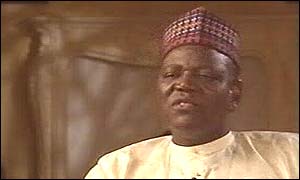 Sule Lamido met the BBC's Mike Embley Nigeria's Foreign Minister Sule Lamido has defended the use of Sharia law, despite the fact that the Islamic courts have been condemned by the West. Currently practised in almost a dozen northern states, Sharia courts impose punishments, including floggings and amputations, to those found guilty of committing crimes such as theft and adultery.
Under international pressure, the Nigerian federal government has declared the strict Sharia punishments unconstitutional, but has done little to challenge them. In an interview for BBC HARDtalk, Mr Lamido defended the right of Muslims to live by Islamic law. He said: "Modern Nigeria cannot impede the right of Muslims to be Muslims." He said: "Before I am a minister, I am first and foremost a Muslim." "I stand by Islam. If I have committed any fornication, I will also equally submit myself to that religion." Tensions There has been rising tension between the country's Christians and Muslims since Sharia courts were introduced two years ago.
Although the punishment laid down by the courts applies only to Muslims, Christians in the mainly Muslim northern states are beginning to feel threatened by their increasing influence. More than 3,000 people have been killed in clashes between Christians and Muslims in the north of the country. Two years ago in Kaduna state, more than 2,000 people died following the announcement of plans to introduce Sharia law there. But Mr Lamido dismissed claims of ethnic tension in the country and said that suggestions of religious clashes were simply a "misunderstanding" and a "deliberate distortion of events in Nigeria." Border dispute During the interview Mr Lamida also spoke about the recent dispute between Nigeria and Cameroon over the disputed Bakassi peninsula. Ownership over the 1,000-square-kilometre (400-square-mile) patch of swamp has implications for offshore fishing and oil rights.
But a row erupted when UN officials claimed that the Nigerian President, Mr Obasanjo had agreed to abide by the ruling of the ICJ at a meeting with the UN Secretary-General Kofi Annan, and President Paul Biya of Cameroon. President Obasanjo denied making the agreement and said that he would never give a "blank cheque" without knowing which way the ICJ would rule. Mr Lamida showed that they are still no nearer to accepted the ruling - and reasserted Nigeria's claim on the area. He said: "People who are inhabiting Bakassi have been there before the beginning of the beginning. "While we have respect for integrity of the judges, there are a number of things which have been overlooked." This interview can be watched in full on Monday 4 November on BBC World at the following times: BBC World (times shown in GMT) 0330, repeated 0830, 1130, 1530, 1830, 2330 | | 
Internet links:  The BBC is not responsible for the content of external internet sites Top Hardtalk stories now: Links to more Hardtalk stories are at the foot of the page. | |||||||||||||||||||||||||||||||||||||||||||||||||||||||||||||||||||||||||||||||||||||||||||||||||||||||||||||||||||||||||||||||||||||||||||||||||||||||||||||||||||||||||||||||||||||||||||||||||||||||||||||||||||
| |
|  E-mail this story to a friend E-mail this story to a friend |
|  |
| Links to more Hardtalk stories |
| | | ||
 | ||||
 | | Back to top
| ||
| ---------------------------------------------------------------------------------- To BBC Sport>> | To BBC Weather>> | To BBC World Service>> ---------------------------------------------------------------------------------- © MMIII | News Sources | Privacy |








 BBC News 24

