|
 |
 | | | | | | |||||||||||||||||||||||||||||||||||||||||||||||||||||||||||||||||||||||||||||||||||||||||||||||||||||||||||||||||||||||||||||||||||||||||||||||||||||||||||||||||||||||||||||||||||
| | | You are in: Programmes: Correspondent | |||||||||||||||||||||||||||||||||||||||||||||||||||||||||||||||||||||||||||||||||||||||||||||||||||||||||||||||||||||||||||||||||||||||||||||||||||||||||||||||||||||||||||||||||||||
|
| |  Tuesday, 27 August, 2002, 15:46 GMT 16:46 UK Tuesday, 27 August, 2002, 15:46 GMT 16:46 UK Fires of the Amazon 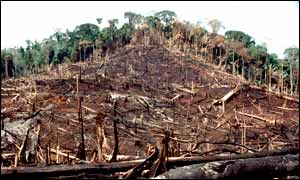 Deforestation rate is 40% higher now than in 1992
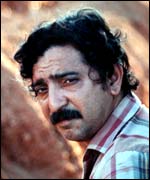
During the decade of the 1980s, I spent three years filming with the trade union leader, Chico Mendes, as he campaigned to protect the Amazon forest from the ranchers who were cutting it down. Chico's plan was to defend the forest by fighting for the rights of the rubber tappers who lived within it, and in 1987, this won him a UN Global 500 award. When he was assassinated a year later, his friends and colleagues swore to keep his ideas alive. Defending the forest Today, Chico's ex-aides and associates are the Mayor of his hometown of Xapuri, the Governor of his state of Acre, the leader of the opposition in the Brazilian Senate. And his closest associate, Mary Allegretti, is the Federal Government's Secretary for Amazonia. The underdogs of Amazonia have come to power.
Their aim, like Chico's, is to defend the forest. In Fires of the Amazon I went back to Amazonia to see whether they had a realistic chance of succeeding. I travelled with Mary Allegretti around the rubber tapper reserves which she and Chico had set up. Protected by legislation, the reserves now cannot be challenged. And every year, somewhere in Amazonia, a handful of new reserves are set up. Cooperative factories for rubber and Brazil nuts have begun to provide higher prices for forest products, and Duda Mendes, Chico's brother, says his income - from the sustainable logging of timber - has increased fourfold. His reserve of Cachoeira has won a Forest Stewardship Council certificate for its environmental care of the forest, and the local furniture factory pays a higher price for their certified timber. Schizophrenic policy Altogether, 31% of Amazonia is protected, today, in some form of park or reserve. The situation would appear rosy if there was not a schizophrenia in Amazonian policy which - at the same time as it encourages the preservation of the forest - also finances its destruction.
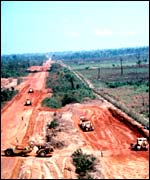
The government's huge "Avanca Brasil" development programme will fund, amongst other projects, the paving of half a dozen highways. It has been calculated from satellite photographs recording the deforestation caused by previous Amazonian highways, that paving causes 40% deforestation within 50 km of a road in a period of 20 to 25 years, whilst another 40% of the forest is degraded by logging. A recent report in the American journal Science estimates that this will leave Amazonia 28-42% deforested by 2020, with vast additional areas of forest degraded. Bleak outlook For the last three years, the Amazonian branch of Greenpeace has been researching the mahogany trade in Amazonia and, last December, the government agreed with Greenpeace that 70% of the trade was illegal. They suspended it for a year, but the damage had already been done. Selective logging inside a reserve leaves most of the trees standing, but thins out the density of the forest and punches holes in the canopy. This helps to dry out the forest making it vulnerable to fire.
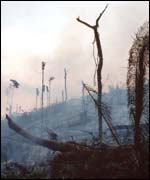
In the past, standing Amazonian forest was too damp to be flammable. But now, Dan Nepstad of the Institute for Amazonian Environmental Research estimates that in periods of drought induced by the regular weather event, El Nino, 30% of the forest is vulnerable to "a really mega fire event". What is worse, the British Meteorological Office's Hadley Centre for Climate Prediction estimates that global warming will raise the surface temperature of the oceans so much, that they will increase the El Nino effect of bringing drought to Amazonia. This will have killed off most of the forest before the end of the century. In 1992, Chico Mendes became a sort of patron saint to the United Nations Environmental Summit in Rio de Janeiro - his policy of protecting the forest by helping the people who live within it was seen as the best way forward. A decade later, it still is. But the outlook from the summit in Johannesburg is much bleaker, both for Amazonia and for the rest of the environment. Reporter/Producer: Adrian Cowell Correspondent: Fires of the Amazon is on: | |
  View Amazon e-card  On the Earth Summit
See also: 25 Aug 02 | Science/Nature 14 Aug 02 | Americas 30 Jul 02 | Crossing Continents Internet links: The BBC is not responsible for the content of external internet sites Top Correspondent stories now: Links to more Correspondent stories are at the foot of the page. | |||||||||||||||||||||||||||||||||||||||||||||||||||||||||||||||||||||||||||||||||||||||||||||||||||||||||||||||||||||||||||||||||||||||||||||||||||||||||||||||||||||||||||||||||||
| |
|  E-mail this story to a friend E-mail this story to a friend |
|  |
| Links to more Correspondent stories |
| | | ||
 | ||||
 | | Back to top
| ||
| ---------------------------------------------------------------------------------- To BBC Sport>> | To BBC Weather>> | To BBC World Service>> ---------------------------------------------------------------------------------- © MMIII | News Sources | Privacy |