|
 |
 | | | | | | |||||||||||||||||||||||||||||||||||||||||||||||||||||||||||||||||||||||||||||||||||||||||||||||||||||||||||||||||||||||||||||||||||||||||||||||||||||||||||||||||||||||||||||
| | | You are in: Americas | |||||||||||||||||||||||||||||||||||||||||||||||||||||||||||||||||||||||||||||||||||||||||||||||||||||||||||||||||||||||||||||||||||||||||||||||||||||||||||||||||||||||||||||||
|
| | Wednesday, 14 August, 2002, 14:28 GMT 15:28 UK Brazil's unsustainable Amazon scheme 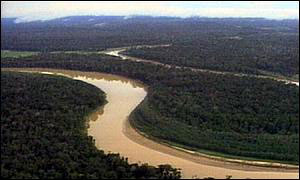 Deforestation could turn the Amazon into a desert
Deep in the Amazon, coffee bushes planted at the entrance to a private farm wilt in the intense heat.
But prosecutors investigating where the money has gone say hardly any coffee was planted and much of the money disappeared.
It is a story which shows how sustainable development - which has become the buzz word around the globe since the first conference on the subject in Rio de Janeiro a decade ago - often means something very different on the ground. Sudam was supposed to be funding environmentally sustainable projects across the Amazon. It had a budget of $0.5 bn a year. But much of this, prosecutors allege, was stolen. Investigations "Of the 70 or 80 projects investigated so far - all of them have problems. All of them have resources diverted, varying from 30% of their grants to 100%," said Ubiratan Cazzeta, one of a young generation of federal prosecutors who are starting to alter the political landscape of Brazil with their corruption investigations. He said his evidence suggested some of the money went into beneficiaries pockets but some was allegedly used to fund political campaigns. The government has now closed Sudam down because of the allegations and several top politicians are being investigated in connection with the scandal. In areas where the agency was active, it has left a landscape of cattle ranches with no cattle, reforestation projects with no trees. Disputes Perhaps one of the worst aspects of the scandal is where money has not been spent in the Amazon. The diversion of government resources over decades has left much of the region a lawless frontier. Land disputes are constant with several people often laying claims to the same area. Many do not have proper land titles making long-term investments impossible.
"There is no-one to stop forest being destroyed and if there is, they can be corrupted," said Ubiratan Cazetta, who added that this type of corruption has probably been going on for decades, but records are only available to investigate the last five years. And very little money has gone towards improving the lives of the thousands of penniless peasant farmers moving into the Amazon from Brazil's "poverty belt", the north-east of the country. The government has encouraged this migration with offers of land. Deforestation With no government assistance projects to teach them to get the best from their plots, the settlers cut down the forest and use the same slash-and-burn agriculture that is threatening to turn the north-east into desert.
"And so they try to grab at anything that will help them eat today. They don't see any tomorrow. They have never seen any tomorrow." It is a situation which the logging companies take full advantage of. All landowners and settlers are supposed to keep 80% of their land as forest. This is one of the main measures designed to stop deforestation. But peasant farmers who are desperate for cash to buy seed to plant can easily be persuaded to sell their trees for a pittance. Pressure on villagers Villagers along the Trans-Amazon highway say the logging companies pay around 15 dollars for trees that are worth thousands of dollars on the international market.
"I did not want to sell my trees," said Cisero Suares, a settler who lives in a dirt floor hut about five miles off the highway. "I only told them they could build a track through my land to get at my neighbour's wood. But they chopped mine down anyway." He is angered at the multi-million dollar sums given to large landowners. "If we had financing that allowed us to survive from our agriculture - we would not need to sell wood," he said. "We sell the wood out of necessity because the government gives us no opportunities. The problem is that the government money goes to the big guys - not little guys like us." Brazil does have legislation designed to protect the Amazon from the loggers and ranchers that are bulldozing the forest. It also has some institutions like the federal prosecutors who are starting to uncover the corruption involved. But, unless they are successful, the laws to preserve the forest will not be worth the paper they are written on. | | See also:  30 Jul 02 | Crossing Continents 25 Jul 02 | Americas 12 Jun 02 | Americas 04 Sep 01 | Americas 09 Nov 00 | Americas 14 Apr 99 | Science/Nature Internet links: The BBC is not responsible for the content of external internet sites Top Americas stories now: Links to more Americas stories are at the foot of the page. | |||||||||||||||||||||||||||||||||||||||||||||||||||||||||||||||||||||||||||||||||||||||||||||||||||||||||||||||||||||||||||||||||||||||||||||||||||||||||||||||||||||||||||||
| |
|  E-mail this story to a friend E-mail this story to a friend |
| |
| Links to more Americas stories |
| | | ||
 | ||||
 | | Back to top
| ||
| ---------------------------------------------------------------------------------- To BBC Sport>> | To BBC Weather>> | To BBC World Service>> ---------------------------------------------------------------------------------- © MMIII | News Sources | Privacy |