
|
 |
 | | | | | | |||||||||||||||||||||||||||||||||||||||||||||||||||||||||||||||||||||||||||||||||||||||||||||||||||||||||||||||||||||||||||||||||||||||||||||||||||||||||||||||||||||||||||||
| | | You are in: Middle East | |||||||||||||||||||||||||||||||||||||||||||||||||||||||||||||||||||||||||||||||||||||||||||||||||||||||||||||||||||||||||||||||||||||||||||||||||||||||||||||||||||||||||||||||
|
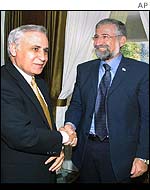
| | Thursday, 6 February, 2003, 20:31 GMT Israel's Likud grows in strength  Mr Sharansky's party will merge with Mr Sharon's The Likud party of Israeli Prime Minister Ariel Sharon has absorbed a small centre-right party just days before Israel's president is to ask Mr Sharon to form a new government. Likud merged with the immigrants' rights party Yisrael B'Aliyah, bringing the combined bloc's strength to 40 seats in the 120-seat Knesset, or parliament. Yisrael B'Aliyah's leader, former Soviet dissident Natan Sharansky, has been promised a cabinet post in charge of Jerusalem and diaspora Jewry.
He has said he would prefer a national unity government with the centre-left Labour party, but dovish Labour leader Amram Mitzna has said his party will not serve under hawkish Mr Sharon. Mr Sharon has said he would prefer not to lead a narrow right-wing and religious coalition, though he could probably build a workable majority with little difficulty. The makeup of the next Israeli Government could prove critical in determining policy towards the Palestinians. President's intervention Israeli President Moshe Katsav met Mr Mitzna on Thursday to urge him to join a unity government, but Mr Mitzna refused. Mr Sharon will have six weeks to form a government once Mr Katsav formally invites him to do so on Sunday.
Mr Sharon's party has been in coalition talks with the aggressively secular centre-right Shinui Party, which finished third in the election. However, Shinui is reluctant to sit in government with two ultra-Orthodox Jewish parties that together account for 16 seats. Changing times Yisrael B'Aliyah's merger with Likud is a sign that immigrant parties have outlived their usefulness, Jerusalem Report diplomatic correspondent Leslie Susser told BBC News Online. The party captured only two seats in last week's elections, down from four in the outgoing Knesset. "Mr Sharansky is admitting that the days for parties of Russian immigrants are over," he said. He said the merger with Likud was something of a formality, since Mr Sharansky's party would almost certainly have been in government anyway. About one million Russian immigrants came to Israel in the wake of the collapse of the Soviet Union, helping swell Israel's population to about 6.6 million. | |
See also:  31 Jan 03 | Middle East 30 Jan 03 | Middle East 03 Nov 02 | Middle East 29 Jan 03 | Middle East 28 Jan 03 | Middle East Internet links: The BBC is not responsible for the content of external internet sites Top Middle East stories now: Links to more Middle East stories are at the foot of the page. | |||||||||||||||||||||||||||||||||||||||||||||||||||||||||||||||||||||||||||||||||||||||||||||||||||||||||||||||||||||||||||||||||||||||||||||||||||||||||||||||||||||||||||||
 | |
|  E-mail this story to a friend E-mail this story to a friend |
| |
| Links to more Middle East stories |
| | | ||
 | ||||
 | | Back to top
| ||
| ---------------------------------------------------------------------------------- To BBC Sport>> | To BBC Weather>> | To BBC World Service>> ---------------------------------------------------------------------------------- © MMIII | News Sources | Privacy |





 Mr Sharansky is admitting that the days for parties of Russian immigrants are over


