|
 |
 | | | | | | ||||||||||||||||||||||||||||||||||||||||||||||||||||||||||||||||||||||||||||||||||||||||||||||||||||||||||||||||||||||||||||||||||||||||||||||||||||||||||||||||||||||||||||||||||||||
| | | You are in: Middle East | ||||||||||||||||||||||||||||||||||||||||||||||||||||||||||||||||||||||||||||||||||||||||||||||||||||||||||||||||||||||||||||||||||||||||||||||||||||||||||||||||||||||||||||||||||||||||
|
| | Monday, 17 February, 2003, 17:47 GMT Analysis: Sharon weighs coalition options  Ariel Sharon has 28 days to form a government
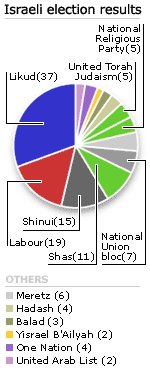
Likud has won a striking victory, virtually doubling its number of parliamentary seats. But the character of the new government won't be known until it is clear what kind of coalition he will be able to form. If he wanted to, Ariel Sharon could probably put together a parliamentary majority tomorrow - his own party's 37 seats plus the ultra-orthodox parties and the far right, and he would be home and dry. But there is no rush. The constitution gives him 28 days to form a government, and even then, if he fails, he can be allowed a fortnight longer.
The idea of yet another election would certainly cause dismay in Israel, but the cost of moving the government to the extreme right would be high.
The ultra-orthodox would want concessions - more funding for their institutions, and legislation to enforce a more religiously observant life on Israel as a whole. And that would bring a backlash from secular Jews already exasperated with the privileged position of the very religious in Israeli society. Their exasperation propelled a hitherto obscure party, Shinui, which campaigned on just this issue, to third place in the polls.
All existing peace plans, including the so-called 'road map', would be dead. And that would go down badly with the plan's main sponsor, the United States, on whom Israel is relying to get it out of its economic mess. It would also leave the government with no strategy for ending the conflict, except the use of force. 'Mistake' And so the prime minister is likely to take his time, and woo the big, centrist parties, Labour and Shinui. Both said things before the election which would make it hard for them to join his coalition. Shinui said it would not be part of any government that also included the ultra-orthodox. Labour made it clear that its previous co-habitation with Likud had been a mistake, and one which would not be repeated. That stand was reinforced by the Labour leader, Amram Mitzna, in his speech on election night. But a lot could happen in the next month or six weeks, not just inside Israel, but also in the wider world. A war with Iraq is looming, and that kind of national emergency could change the political equation, and make it much easier for Labour and Shinui to respond to Mr Sharon's appeals, and join a government of national unity. | |
See also:  29 Jan 03 | Middle East 21 Jan 03 | Middle East 09 Jan 03 | Middle East 09 Jan 03 | Middle East 06 Feb 01 | Middle East Internet links: The BBC is not responsible for the content of external internet sites Top Middle East stories now: Links to more Middle East stories are at the foot of the page. | ||||||||||||||||||||||||||||||||||||||||||||||||||||||||||||||||||||||||||||||||||||||||||||||||||||||||||||||||||||||||||||||||||||||||||||||||||||||||||||||||||||||||||||||||||||||
 | |
|  E-mail this story to a friend E-mail this story to a friend |
| |
| Links to more Middle East stories |
| | | ||
 | ||||
 | | Back to top
| ||
| ---------------------------------------------------------------------------------- To BBC Sport>> | To BBC Weather>> | To BBC World Service>> ---------------------------------------------------------------------------------- © MMIII | News Sources | Privacy |






 The prime minister is likely to take his time, and woo the big, centrist parties, Labour and Shinui