|
 |
 | | | | | | ||||||||||||||||||||||||||||||||||||||||||||||||||||||||||||||||||||||||||||||||||||||||||||||||||||||||||||||||||||||||||||||||||||||||||||||||||||||||||||||||||||||||||
| | | You are in: In Depth: September 11 one year on | ||||||||||||||||||||||||||||||||||||||||||||||||||||||||||||||||||||||||||||||||||||||||||||||||||||||||||||||||||||||||||||||||||||||||||||||||||||||||||||||||||||||||||||
|
| |  Monday, 2 September, 2002, 09:35 GMT 10:35 UK Monday, 2 September, 2002, 09:35 GMT 10:35 UKIsrael's neglected economy  Palestinian children are becoming malnourished
The internecine cycle of violence in Israel and the Palestinian territories has only intensified since 11 September. Al-Qaeda's attacks on New York served to ratchet up tensions between Israel and its Arab neighbours.
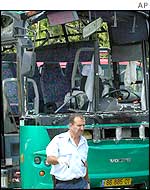
But the real breakdown of trust between the two sides began one year earlier with the renewal of the Palestinian uprising - or intifada - in September 2000. Since then relations have deteriorated to fresh lows, taking their toll on Israel's economy and plunging the Palestinians into crisis. Israel's security fears Concerns over domestic security in Israel, following a series of suicide bombings, have dented consumer and business confidence.
Tourism, though a small part of the economy, has fallen off by about 80% since its peak in pre-intifada days. The Palestinian uprising has cost the economy up to 6% of its gross domestic product (GDP), says Dan Dillerman, chairman of Israel's Chamber of Commerce. Burst bubble However, the real problems started for Israel with the tech slump in late 2000. "Essentially the story is that Israel was doing very well in the mid 1990s on the back of the Oslo accords and the prospect of peace," says Mr Ash.
Israel recently calculated that its economy expanded by 7.4% in 2000, as the country's hi-tech sector became the primary engine of growth. A year later, after the global slowdown was aggravated by the events of 11 September, growth slipped to minus 0.9%, according to revised figures. Deepest recession The country is now caught in an economic quagmire, as it funds an expensive military campaign and experiences its deepest recession for 50 years.
The government, meanwhile, has designed an austerity budget to cut public spending and rein in a widening deficit. But Israel's prospects are not altogether bleak and its citizens still enjoy a Western standard of living. "I believe the Israeli economy is very strong and it has proved resilient in the face of very difficult times," says the Chamber of Commerce's Mr Dillerman. "I can foresee the economy coming out of recession in the second half of 2003." Palestinians under pressure The Palestinians, however, have far fewer hopes to console themselves with.
Incursions by the Israeli army, curfews and numerous checkpoints restricting their movement have squeezed the life out of the economy. As a result, there has been a "wind-down of the private sector", says Nigel Roberts, director of the World Bank in the West Bank and Gaza. For example, internal checkpoints within the West Bank have made it difficult for traders to deliver goods to market. One of the Palestinians' major exports, quarried stone, has also slumped because of limited access to quarries. Malnourished children The Palestinian Central Bureau of Statistics says that one third of Palestinian workers are unemployed, although the United Nations puts the unemployment rate at closer to 65%. As a result, more than half of all Palestinians are now surviving on less than $2 a day. "Children under five are showing levels of malnutrition that is more akin to sub-Saharan Africa, than a middle income economy," says the World Bank's Mr Roberts. An increase in international aid from the Arab League and the European Union, totalling $930m last year, has been a mainstay. But Mr Roberts believes that the economy could bounce back if restrictions on movement were lifted. "Remedies are available - it's not that you have an impossible and hopeless situation." A solution? Recently, the Israeli government has agreed to release a small portion of tax revenues it owes the Palestinian Authority. The conciliatory gesture came partly in response to Israel's trust in the new Palestinian finance minister Salam Fayad. Israel has withheld the money since December 2000 for fear that it would find its way into the hands of Palestinian terrorists. Israeli Foreign Minister Shimon Peres has also told the donor community that 12,000 Palestinians will be able to return to jobs in Israel. Peace has not broken out, but there is a growing realisation that ongoing conflict could spoil any chance of economic recovery. "I have no doubt there is a strong linkage between security, the political situation and the economic situation," says Mr Dillerman. "Only when we achieve total security and an end to hostilities, will we return to a thriving economy. "I am optimistic it will happen in the long term, but it is a pity it will happen after some much blood has been shed and lives lost." 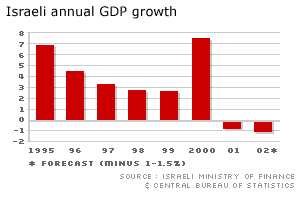 Israel's economy slumped after the tech bubble burst | |
See also:  14 Aug 02 | Business 12 Aug 02 | Middle East 30 Jul 02 | Middle East 25 Jul 02 | Business 21 Jun 02 | Business 09 Jun 02 | Business 22 May 02 | Business 22 May 02 | Middle East 21 May 02 | Business 07 Mar 02 | Country profiles 18 Feb 02 | Business Internet links: The BBC is not responsible for the content of external internet sites Top September 11 one year on stories now: Links to more September 11 one year on stories are at the foot of the page. | ||||||||||||||||||||||||||||||||||||||||||||||||||||||||||||||||||||||||||||||||||||||||||||||||||||||||||||||||||||||||||||||||||||||||||||||||||||||||||||||||||||||||||
 | |
|  E-mail this story to a friend E-mail this story to a friend |
| |
| Links to more September 11 one year on stories |
| | | ||
 | ||||
 | | Back to top
| ||
| ---------------------------------------------------------------------------------- To BBC Sport>> | To BBC Weather>> | To BBC World Service>> ---------------------------------------------------------------------------------- © MMIII | News Sources | Privacy |







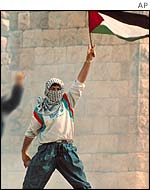
 Only when we achieve total security and an end to hostilities, will we return to a thriving economy