
|
 |
 | | | | | | |||||||||||||||||||||||||||||||||||||||||||||||||||||||||||||||||||||||||||||||||||||||||||||||||||||||||||||||||||||||||||||||||||||||||||||||||||||||||||||||||||||||||||
| | | You are in: Business | |||||||||||||||||||||||||||||||||||||||||||||||||||||||||||||||||||||||||||||||||||||||||||||||||||||||||||||||||||||||||||||||||||||||||||||||||||||||||||||||||||||||||||||
|
| | Wednesday, 22 May, 2002, 10:30 GMT 11:30 UK Sharon's economic plan scores a victory 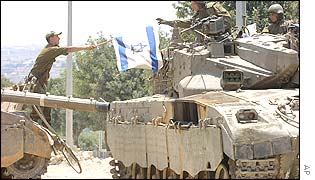 Israel spends more on defence than most countries
Israeli Prime Minister Ariel Sharon has been having a rough ride recently. For a man who enjoys a 70% approval rating in the country at large, he has experienced more than a few problems marshalling his own government this week.
The package was rejected by parliament on Monday, but finally passed through its first reading of three after being re-submitted on Wednesday. In the process, Mr Sharon sacked four ministers that blocked it - all from a key coalition ally, the Ultra-Orthodox party Shas - and seven deputy ministers. The ministers had objected to cuts in subsidies for Orthodox religious students. Internal feuds over budget spending are not uncommon in Israel's coalitions, and have precipitated previous collapses or weakening of government. However, Mr Sharon's opponents risk landing the country knee-deep in debt if they continue to obstruct the spending cuts. Spectre of Argentina "We cannot open the door to a situation of anarchy and allow our economy to unravel like in Argentina," said Foreign Minister Shimon Peres, commenting on the intransigence of the Shas ministers.
Mr Peres may have been exaggerating a little when he used the A-word, but certainly the time has come to right Israel's capsized economy. "It's pretty essential," said Keren Uziyel, an economist at the Economist Intelligence Unit. "The deficit is sky-rocketing and we expect the economy to retract." Just not enough cash At Israel's current rate of progress, the size of its deficit - the shortfall between what the government spends and what it has in its coffers - could jump to 6% of gross domestic product (GDP). Two years ago, it was 0.6% of GDP as Israel basked in the sunshine of its hi-tech boom.
If the deficit gets out of control, the government's appetite to borrow money will inevitably push up interest rates. At the same time, inflation - which is about two times the government's target - is also putting the central bank under pressure to raise rates. And as Merrill Lynch's emerging market economist Mehmet Simsek makes clear: "When the economy is in recession, you don't want to see interest rates rising." Israel's heyday Only two years ago, Israel's economy was in fine fettle as it supplied computer equipment to the world.
Growth, which had hit a high of 6.4% in 2000, fell sharply to minus 0.6% a year later - Israel's first recession since 1953. But the latest pressure on the economy has come from Israel's escalating conflict with the Palestinians. "As the security situation deteriorates, it has drained the economy and affected domestic confidence," said Ms Uziyel. "People are afraid to go out and have a meal or go to the shopping mall." Security concerns The Palestinian Intifada - or uprising - and Israel's decision to intensify its closure of borders has stopped Palestinian workers getting through. In turn, this has squeezed Israel's construction and agricultural industries, which are reliant on such manpower. Inevitably, tourism has also suffered from suicide bombings. "Israel needs to improve its security situation before it can go back to its heyday," said Merrill's Mr Simsek. This would also reduce Israel's spending on defence, which is sizeable compared with most European countries, but still only a small component of Israel's economic problems. A man with a plan Mr Sharon will certainly not want to cut defence spending just yet, but he is painfully aware of the need for economic reform. For the present, he seems to have converted the Knesset to his cause and steam-rollered any opponents. "The fact that he is willing to take measures to limit the damage is significant," said Merrill's Mr Simsek, who detects a new confidence in Mr Sharon's leadership. "This is the first time that Sharon has stood up to the religious parties... I think there is a realisation that the far right has to accept this package," he added. However, Mr Sharon may still need to get his sacked ministers back on side to ensure the ultimate success of his reforms. He has lost his majority in the parliament and, despite his victory on Wednesday, the economic package has to pass through two more votes before it becomes law. So no doubt the political horse-trading will continue behind the scenes for a few days yet. | |
See also:  22 May 02 | Middle East 21 May 02 | Middle East 21 May 02 | Business 07 Mar 02 | Country profiles 01 Jan 02 | Business 18 Dec 01 | Business 03 Dec 01 | Business 22 Nov 01 | Business 13 Nov 01 | Business Internet links: The BBC is not responsible for the content of external internet sites Top Business stories now: Links to more Business stories are at the foot of the page. | |||||||||||||||||||||||||||||||||||||||||||||||||||||||||||||||||||||||||||||||||||||||||||||||||||||||||||||||||||||||||||||||||||||||||||||||||||||||||||||||||||||||||||
| |
|  E-mail this story to a friend E-mail this story to a friend |
| |
| Links to more Business stories |
| | | ||
 | ||||
 | | Back to top
| ||
| ---------------------------------------------------------------------------------- To BBC Sport>> | To BBC Weather>> | To BBC World Service>> ---------------------------------------------------------------------------------- © MMIII | News Sources | Privacy |






