
|
 |
 | | | | | | ||||||||||||||||||||||||||||||||||||||||||||||||||||||||||||||||||||||||||||||||||||||||||||||||||||||||||||||||||||||||||||||||||||||||
| | | You are in: Health | ||||||||||||||||||||||||||||||||||||||||||||||||||||||||||||||||||||||||||||||||||||||||||||||||||||||||||||||||||||||||||||||||||||||||||
|
| | Thursday, 10 October, 2002, 02:00 GMT 03:00 UK Gene spells danger for prostate patients 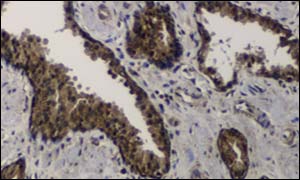 Prostate cancer can spread rapidly (pic: Imperial College) A gene could help doctors predict whether a patient has an aggressive prostate cancer - or one which may never threaten his life. This could be vital for many thousands of men who receive powerful radiotherapy or radical surgery - even though they don't actually need it. Both types of treatment risk nerve damage that can leave a man incontinent, impotent, or both. In the long term, the discovery by US scientists could help doctors develop treatments to keep even aggressive tumours under control.
Improved detection methods mean that many more cases are found than 10 years ago. The paradox is that a large proportion of tumours are latent - and are unlikely to cause any problems to the patient especially if he is elderly. Spotting the spread The problem for doctors is identifying those in which the cancer is likely to spread rapidly beyond the prostate gland itself. These need to be powerfully treated quickly if the man is to survive, as once the cancer has spread, it is very difficult to treat. The latest research, from the University of Michigan in the US, focused on a gene called EZH2. After examining tissue samples taken from a thousand men with prostate cancer, the researchers noticed that the gene was far more active in cancers which later spread beyond the prostate. The more aggressively the cancer spread, the higher the "expression" of the gene. The finding means that doctors, in theory, could test a tissue sample taken when a man is first diagnosed, and predict far more accurately whether it was an aggressive cancer. Those without high levels of the gene in their samples could be spared immediate treatment, but simply monitored closely to make sure the cancer showed no early signs of spread. Breakthrough Professor Mark Rubin, one of those who worked on the project, said: "Over the past 50 years, there has been no significant improvement in clinical outcome for men diagnosed with advanced prostate cancer and no way to tell ahead of time which cancers will spread and which cancers will remain localised. "It is exciting to think that we may have finally found something to help." However, it is not simply as a diagnostic test that the gene holds promise. Scientists discovered that this is a "master gene" - controlling the activity of at least 20 others, some of which are thought to have "tumour suppressing" properties. In the future, it is possible that EZH2 could become a prime target for treatments designed to freeze the spread of a prostate cancer. Treatment hope It is hoped that one day, even tumours which at the moment would spread quickly could be altered so that they mimicked latent prostate cancers, and never caused a problem for the patient. Early tests in the laboratory suggest that inhibiting the activity of the gene actually halted the growth and division of the prostate cancer cells. Dr Charlotte Bevan, from the Prostate Cancer Research Group at Imperial College London, said she was impressed by the research. She told BBC News Online: "If this works as a diagnostic test, it would be one of the most significant things from the patients' point of view. "A lot of tumours will remain latent for the whole of a patient's life. "If doctors knew they could just leave it and kept an eye on it, patients' quality of life would be much better." | | See also:  07 Oct 02 | Health 15 Sep 02 | Health 22 Jul 02 | Health Internet links: The BBC is not responsible for the content of external internet sites Top Health stories now: Links to more Health stories are at the foot of the page. | ||||||||||||||||||||||||||||||||||||||||||||||||||||||||||||||||||||||||||||||||||||||||||||||||||||||||||||||||||||||||||||||||||||||||
| |
|  E-mail this story to a friend E-mail this story to a friend |
| |
| Links to more Health stories |
| | | ||
 | ||||
 | | Back to top
| ||
| ---------------------------------------------------------------------------------- To BBC Sport>> | To BBC Weather>> | To BBC World Service>> ---------------------------------------------------------------------------------- © MMIII | News Sources | Privacy |





