
|
 |
 | | | | | | ||||||||||||||||||||||||||||||||||||||||||||||||||||||||||||||||||||||||||||||||||||||||||||||||||||||||||||||||||||||||||||||||||||||||
| | | You are in: Health | ||||||||||||||||||||||||||||||||||||||||||||||||||||||||||||||||||||||||||||||||||||||||||||||||||||||||||||||||||||||||||||||||||||||||||
|
| | Monday, 22 July, 2002, 23:01 GMT 00:01 UK Cancer tracked with fireflies 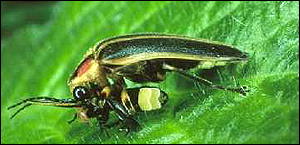 A firefly preparing for a meal The chemical which helps fireflies glow may help doctors spot the spread of prostate cancer. Researchers say that this could aid the fight against the disease. The main test for the presence of prostate cancer is currently the PSA test, which looks for the presence of a chemical released by tumours. CT scans and biopsies can also give clues as to the spread of the illness.
It involves a genetically engineered virus which targets only prostate cancer cells. They used the virus to deliver the substance that makes fireflies glow. Measured glow Through hi-tech imaging systems, the "tagged" cells can be spotted and the extent of the cancer measured. Dr Lily Wu, assistant professor of urology and paediatrics at UCLA, said: "Once you know where the cancer is, you have a handle on how to treat it. "It's much better than treating the whole body with chemotherapy. "By attaching light to cancerous cells, we are able to say, 'aha, it's over there', and then go after it." The UCLA study found that, just three weeks after mice with tumours were injected with the virus, an imaging camera could locate small groups of cancer cells on the spine and lung. She now hopes to use the virus to actively attack the prostate cancer cells, rather than simply deliver the firefly chemical. 'Problems to solve' A spokesman for the Prostate Cancer Charity in the UK said: "It will be several years before we know if this is a breakthrough or an 'also ran' idea. "The researchers have two problems to solve. "The basic one is getting their new hi-tech imaging technique to work in humans. "Their work so far involves mice. The second one is to develop the treatments based on gene therapy that could grow from this." It is likely that the imaging system needed to see "tagged" cells in humans would involve a "PET" scanner. There are few of these in the UK. | | See also:  04 Aug 99 | Health 07 Dec 99 | Health 22 Jan 02 | Health 28 Feb 02 | Health Internet links: The BBC is not responsible for the content of external internet sites Top Health stories now: Links to more Health stories are at the foot of the page. | ||||||||||||||||||||||||||||||||||||||||||||||||||||||||||||||||||||||||||||||||||||||||||||||||||||||||||||||||||||||||||||||||||||||||
| |
|  E-mail this story to a friend E-mail this story to a friend |
| |
| Links to more Health stories |
| | | ||
 | ||||
 | | Back to top
| ||
| ---------------------------------------------------------------------------------- To BBC Sport>> | To BBC Weather>> | To BBC World Service>> ---------------------------------------------------------------------------------- © MMIII | News Sources | Privacy |





