|
 |
 | | | | | | |||||||||||||||||||||||||||||||||||||||||||||||||||||||||||||||||||||||||||||||||||||||||||||||||||||||||||||||||||||||||||||||||||||||||||||||||||||||||||||||||||||||||||||||||||||||||||||||
| | | You are in: Europe | |||||||||||||||||||||||||||||||||||||||||||||||||||||||||||||||||||||||||||||||||||||||||||||||||||||||||||||||||||||||||||||||||||||||||||||||||||||||||||||||||||||||||||||||||||||||||||||||||
|
| | Thursday, 13 February, 2003, 17:38 GMT Nato crisis prompts candidates' jitters  Prospective members are facing their first crisis
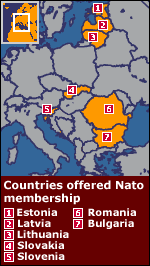
As Nato tries to heal the rift that divides its members over Iraq, prospective member countries are watching anxiously from the sidelines. Seven former communist countries, ranging from Romania in the south to Estonia in the north, are set to join the alliance next year.
When Poland, Hungary and the Czech Republic joined Nato in 1999, they almost immediately underwent a baptism of fire, as the alliance began its first war over Kosovo. The seven countries set to join next year are facing their first crisis at Nato even before they gain actual membership. With accession talks practically over, they are increasingly more involved in Nato's day-to-day work - and, from the end of March, they will have the right to attend and speak at most Nato meetings. 'We want to join' So on Monday evening the ambassadors of the seven newcomers asked for a meeting with the Secretary General Lord George Robertson to express their concerns about the unity of the alliance and to be briefed about the deadlock over defence planning for Turkey.
The Latvian ambassador to Nato, Imants Liegis, replied: "Yes of course we want to join, because there's no doubt that the Nato alliance isn't going to disappear overnight, it's going through a rather large temporary glitch." If the current crisis continues, Nato will not fade away, but simply become irrelevant as the US and other countries join together in ad-hoc alliances. Nato was set up 54 years ago with collective defence at its core, following the motto "all for one, one for all". The two key articles in Nato's founding treaty are:
Article five was invoked for the first time by the US in the wake of the 11 September attacks, but it was something of an afterthought and had few concrete consequences. 'No immediate threat' On Monday, in another unprecedented move, Turkey called for consultations under article four.
That is of particular concern to small, vulnerable countries like Latvia. How would it react if, once in Nato, it invoked article four because it felt threatened by a neighbour, say Russia, and its allies failed to respond? "Well first of all can I say that Latvia doesn't feel any immediate military threat from a third country, whether it's Russia or any other country," said ambassador Leigis. "But at the same time, clearly, Latvia doesn't feel entirely reassured about what's been happening within the alliance over the past few weeks." Last week, the seven newcomers plus three other Nato applicants (Albania, Croatia and Macedonia) signed a letter of support for the US administration. Tough line The signatories reassured Washington that they were prepared to contribute to an international coalition to enforce the full disarmament of Iraq.
Poland, Hungary and the Czech Republic are already taking a tough line within the alliance, sometimes - according to one Nato ambassador - even harder than that of Britain or the US. The French know, the ambassador said, that it will be the same when the newcomers join. But the former communist countries do not want to choose between Europe and America - they want to build a bridge between the two. And their populations are just as opposed to war as those in the west. That is a particular worry for Slovenia, the only future member to hold a referendum on Nato entry on 23 March. But, after a visit to alliance headquarters this week, Slovenian Prime Minister Anton Rop tried to put a brave face on things. Small countries like Belgium or Slovenia, he said, were taken into account in Nato. "Everything in decision-making in Nato is based on consensus and that is incredibly important for small countries like Slovenia and that's an argument for us why to be in Nato," he said. Many analysts, however, think that if the US launches a military operation against Iraq, especially without UN endorsement, support for Nato could plummet in Slovenia and jeopardise the referendum result. As the deadlock continues at Nato, a journalist from another applicant country practically broke into tears and wondered aloud: "What sort of alliance are we joining?" | |
See also:  11 Feb 03 | Europe 12 Feb 03 | Europe 29 Jan 03 | Europe 11 Dec 02 | Europe 23 Nov 02 | Europe 23 Nov 02 | Europe Internet links: The BBC is not responsible for the content of external internet sites Top Europe stories now: Links to more Europe stories are at the foot of the page. | |||||||||||||||||||||||||||||||||||||||||||||||||||||||||||||||||||||||||||||||||||||||||||||||||||||||||||||||||||||||||||||||||||||||||||||||||||||||||||||||||||||||||||||||||||||||||||||||
 | |
|  E-mail this story to a friend E-mail this story to a friend |
| |
| Links to more Europe stories |
| | | ||
 | ||||
 | | Back to top
| ||
| ---------------------------------------------------------------------------------- To BBC Sport>> | To BBC Weather>> | To BBC World Service>> ---------------------------------------------------------------------------------- © MMIII | News Sources | Privacy |






 The Nato alliance isn't going to disappear overnight, it's going through a rather large temporary glitch