|
 |
 | | | | | | ||||||||||||||||||||||||||||||||||||||||||||||||||||||||||||||||||||||||||||||||||||||||||||||||||||||||||||||||||||||||||||||||||||||||||||||||||||||||||||||||||||||||||||||||||||||||||||
| | | You are in: Europe | ||||||||||||||||||||||||||||||||||||||||||||||||||||||||||||||||||||||||||||||||||||||||||||||||||||||||||||||||||||||||||||||||||||||||||||||||||||||||||||||||||||||||||||||||||||||||||||||
|
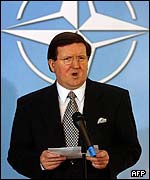
| | Tuesday, 11 February, 2003, 18:37 GMT Nato: A history of crises  Nato has a long record of internal bickering
Nato faces one the most serious crises in its 54-year history following a move by France, Belgium and Germany to block plans to bolster Turkey's defences in case of war with Iraq. They argue that beginning military planning now would undermine diplomatic efforts to avoid a war. The rift in the transatlantic alliance is so serious that some commentators say it will cause its demise. But Nato is no stranger to disagreement, and has survived many crises in the past. French dissent Its solidarity was threatened in the 1960s when the French withdrew from its integrated military command. Then, as now, the French were dissatisfied with what they saw as American and British domination. From Nato's birth in 1949, France has been an uncomfortable member of the alliance, insisting on its own nuclear strike force. Nato had little choice but to move its headquarters from Paris to Brussels after France left its military structure, although it remained a political member.
In the 1980s Nato was strained by disputes over the deployment of intermediate-range nuclear forces and a row over the Soviet gas pipeline to Europe. Nonetheless, during the Cold War, the alliance remained central to US foreign policy while western Europe sheltered under Nato's umbrella, supported by American military strength. But then capitalism buried communism, the Berlin Wall came down and many began to question whether Nato still had a role in the new world order. Queue to join Civil wars in former Yugoslavia gave Nato a new job keeping the peace in the Balkans. However its intervention in Kosovo in 1999 to defend ethnic Albanians came only after a series of disputes among its members. After 11 September, the US ignored the Nato structure when it led a coalition into Afghanistan. Yet the number of eastern European countries queuing up to join Nato shows that it remains relevant, especially to those from the former Soviet bloc. And despite the current row, the Americans are keen to preserve Nato. It may again survive, but it risks sliding into irrelevance. | |
Top Europe stories now:  Links to more Europe stories are at the foot of the page. | ||||||||||||||||||||||||||||||||||||||||||||||||||||||||||||||||||||||||||||||||||||||||||||||||||||||||||||||||||||||||||||||||||||||||||||||||||||||||||||||||||||||||||||||||||||||||||||
 | |
|  E-mail this story to a friend E-mail this story to a friend |
| |
| Links to more Europe stories |
| | | ||
 | ||||
 | | Back to top
| ||
| ---------------------------------------------------------------------------------- To BBC Sport>> | To BBC Weather>> | To BBC World Service>> ---------------------------------------------------------------------------------- © MMIII | News Sources | Privacy |