|
 |
 | | | | | | |||||||||||||||||||||||||||||||||||||||||||||||||||||||||||||||||||||||||||||||||||||||||||||||||||||||||||||||||||||||||||||||||||||||||||||||||||||||||||||||||||||||||||
| | | You are in: Europe | |||||||||||||||||||||||||||||||||||||||||||||||||||||||||||||||||||||||||||||||||||||||||||||||||||||||||||||||||||||||||||||||||||||||||||||||||||||||||||||||||||||||||||||
|
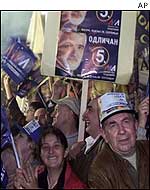
| | Monday, 14 October, 2002, 08:37 GMT 09:37 UK Serbia election drama heads into farce 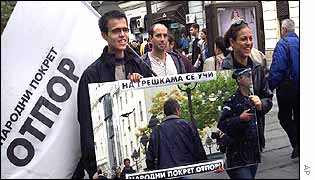 People are frustrated that their voices are not heard
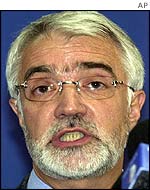
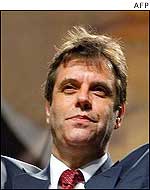
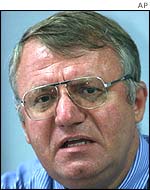
Serbia's presidential elections are showing every sign of having lived up to expectations of turning from political drama into black farce. Before the vote for the second round on Sunday, there were fears that turnout would fail to reach the required 50%. This invalidates the result, leaving Serbia without a president and the government in no-man's-land. Extreme nationalist Vojislav Seselj called on his supporters to boycott the second round. Mr Seselj came third in the first round and was eliminated from the contest. But with 23% of the vote, he is too powerful to be ignored. Indicted Sunday's vote was a run-off between the top two candidates: Yugoslav President Vojislav Kostunica, a moderate nationalist, and Serbian deputy prime minister Miroljub Labus, an economic reformer popular with the West. Technically there was no need for new elections until the end of the year, when the term of the current Serbian president, Milan Milutinovic, runs out.
So why now? Why call a vote ahead of schedule? First of all, there is the power struggle between Mr Kostunica, President of Yugoslavia, and Zoran Djindjic, Prime Minister of Serbia. Earlier this year the covert feud between them broke into the open, when Mr Kostunica's group of deputies was expelled from the Serbian parliament. Mr Djindjic's man, Miroljub Labus, was doing well in the polls. An economist by training, he had helped to negotiate the constitutional charter replacing the old Yugoslav federation with a new, looser union of Serbia and Montenegro. Under that charter - which has not yet been ratified - Mr Kostunica's present job will disappear. Mr Djindjic judged this as a good time to defeat his rival, once and for all.
In particular, electricity prices have gone up by around 150% in the past two years, since Mr Djindjic's government took power. Mood factor It is not too fanciful to say that people are in a better mood when the weather is warm, rather than in winter, when they are cooped up in their flats, cold, miserable and worried about the cost of putting the heating on. All these elements gave Mr Djindjic reason to go to the polls early. But events haven't unfolded as planned. Turnout in the first round was low: around 55%.
Mr Labus came second, only four per cent ahead of Mr Seselj. In the wake of those results, several of the smaller parties announced that they would call on their supporters to boycott the second round. By far the most important of these was Mr Seselj's Serbian Radical Party (SRS). A failure to reach the 50% threshhold in the second round means it is back to square one, and a whole new round of elections has to be held. Then, one theory goes, things could be very different for Mr Djindjic. Knock out It is possible that the voters would be angry with Mr Djindjic for having wasted their time and money on early elections. They would punish his candidate, Mr Labus, at the polls, leaving Mr Kostunica (a moderate nationalist) and Mr Seselj (an extreme nationalist) to go through to the second round.
In effect, it would be like the French elections, in which Jean-Marie Le Pen of the far-right National Front went through to the second round against the centre-right candidate, Jacques Chirac. And just as Mr Le Pen represented people who felt their voices were not being heard by the mainstream political parties, so Mr Seselj is tapping into a deep vein of frustration in Serbia. Mr Djindjic and Mr Labus are pro-Western reformers. Greater Serbia They want to put Serbia's economy in order and improve its external relations. But for the majority of people, the reforms necessary for this have failed to deliver any improvements to their own lives. In many cases, things have actually got worse. In contrast, Mr Seselj promises to protect the interests of his people. He offers them Serbian nationalism and the comfort of the Orthodox church. He is vehemently opposed to privatisation. And he promises to look after the interests of all Serbs, especially those from Kosovo who have been displaced since Belgrade effectively lost control of the province three years ago.
This is nationalism, but not a return to the wars which blighted the former Yugoslavia during the 1990s. New face of nationalism In this sense, it is not unlike the Bosnian elections the previous weekend, where moderate, pro-Western governing coalition lost out to conservative nationalist parties. Two years ago, Mr Djindjic and Mr Kostunica took power on a wave of popular protests which culminated in the peaceful removal of former Yugoslav president Slobodan Milosevic. But the promise of that moment has not been fulfilled, and across the region, people are turning away from reform as demanded by the international community. Instead they are looking to the parties who pledge to look after their own people. It may be that nationalism in the Balkans is assuming a new face: no longer about territorial expansion, but rather a conservative populist movement which promises economic improvements - but along ethnic lines. | | See also:  30 Sep 02 | Europe 30 Sep 02 | Europe 27 Sep 02 | Media reports 09 Aug 02 | Europe 29 Sep 02 | Business 30 Sep 02 | Europe 15 Mar 02 | Europe 25 Sep 02 | Country profiles Internet links: The BBC is not responsible for the content of external internet sites Top Europe stories now: Links to more Europe stories are at the foot of the page. | |||||||||||||||||||||||||||||||||||||||||||||||||||||||||||||||||||||||||||||||||||||||||||||||||||||||||||||||||||||||||||||||||||||||||||||||||||||||||||||||||||||||||||
| |
|  E-mail this story to a friend E-mail this story to a friend |
| |
| Links to more Europe stories |
| | | ||
 | ||||
 | | Back to top
| ||
| ---------------------------------------------------------------------------------- To BBC Sport>> | To BBC Weather>> | To BBC World Service>> ---------------------------------------------------------------------------------- © MMIII | News Sources | Privacy |