|
 |
 | | | | | | |||||||||||||||||||||||||||||||||||||||||||||||||||||||||||||||||||||||||||||||||||||||||||||||||||||||||||||||||||||||||||||||||||||||||||||||||||
| | | You are in: Entertainment | |||||||||||||||||||||||||||||||||||||||||||||||||||||||||||||||||||||||||||||||||||||||||||||||||||||||||||||||||||||||||||||||||||||||||||||||||||||
|
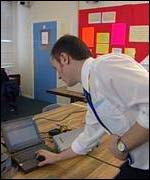
| | Tuesday, 14 January, 2003, 09:33 GMT Controversy over BBC digital learning  The government encourages technology in schools
There were howls of protest last week from the educational software industry after the government gave approval to the BBC's digital learning plans. Industry spokesmen professed themselves "bitterly disappointed" at the government's decision. Why such a rumpus? The software companies argue that allowing the BBC to offer so much material to cash-strapped schools free of charge will deprive them of potentially hundreds of millions of pounds' worth of business. But the force of their objections may have something to do with the peculiar characteristics of the educational software industry - in particular its dependence on government. The government chose to announce its decision last week during the industry's annual trade fair, Bett.
But strip out the suppliers of hardware, networking software and the like, and the core market for educational software and online teaching materials is worth no more than �85m a year. Virtually all of that ultimately comes from the government, much of it in the form of "e-learning credits". As a sweetener, at the same time as Culture Secretary Tessa Jowell was giving the BBC the go-ahead, Education Secretary Charles Clarke announced an extra �100m a year in e-learning credits for schools to spend on buying software from the Beeb's commercial rivals. Vocal critic That wasn't enough to placate the software companies. The largest company in the sector is RM, whose huge stand dominated the main hall at Olympia. It has 1,600 employees and last year two-thirds of Britain's schools placed some sort of order with the firm. RM is the BBC's most vocal critic, and a glance at its annual report shows the BBC's arrival in the market comes at an already difficult time for the sector. Last year RM's turnover fell from �242m to �202m, and profits went down from �16m to �5m. It made 99 staff redundant. New toys The company admitted it failed to respond quickly enough to shifts in product demand and "significant changes in government initiatives". After several years in which schools spent freely on IT equipment and software as a result of government initiatives, RM says IT has become a mainstream part of education. Schools are now consolidating, working out how to make best use of all their new toys - and buying fewer products from RM and similar companies. The BBC's timing, for RM and the rest of the sector, couldn't really be worse. 'Betrayed' They fear its arrival in the market will simply depress demand for commercially-available "digital learning resources" even further. The software companies feel the government, on whom they depend, has betrayed them. Little wonder, perhaps, that protests last week were so loud. A version of this column appears in the BBC in-house newspaper Ariel. | |
See also:  09 Jan 03 | Education 09 Jan 03 | Technology 07 Nov 02 | Education Internet links: The BBC is not responsible for the content of external internet sites Top Entertainment stories now: Links to more Entertainment stories are at the foot of the page. | |||||||||||||||||||||||||||||||||||||||||||||||||||||||||||||||||||||||||||||||||||||||||||||||||||||||||||||||||||||||||||||||||||||||||||||||||||
 | |
|  E-mail this story to a friend E-mail this story to a friend |
| |
| Links to more Entertainment stories |
| | | ||
 | ||||
 | | Back to top
| ||
| ---------------------------------------------------------------------------------- To BBC Sport>> | To BBC Weather>> | To BBC World Service>> ---------------------------------------------------------------------------------- © MMIII | News Sources | Privacy |