|
 |
 | | | | | | |||||||||||||||||||||||||||||||||||||||||||||||||||||||||||||||||||||||||||||||||||||||||||||||||||||||||||||||||||||||||||||||||||||||||||||||||||||
| | | You are in: Entertainment | |||||||||||||||||||||||||||||||||||||||||||||||||||||||||||||||||||||||||||||||||||||||||||||||||||||||||||||||||||||||||||||||||||||||||||||||||||||||
|
| | Monday, 23 September, 2002, 10:41 GMT 11:41 UK ITV still headhunting 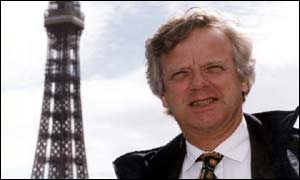 Is Michael Grade set to return to broadcasting?
Poor ITV. Just when it thought it had found someone to take on the challenge of rescuing the country's oldest but ailing commercial television channel, Dawn Airey ups and goes to BSkyB for a reputed �1m. Although you should take that, like most reported fees and salaries in television, with a dose of salt.
For the past few months Dawn Airey has been the most sought after woman in British television. She is the diminutive dynamo who presided over Channel 5, at a time when the newest and weakest terrestrial channel was recording increases in both audience share and advertising revenue and ITV's ratings and revenue were heading steadily down. Critical plaudits Originally Channel 5's director of programmes, responsible for a cheap and cheerful programme schedule immortalised (in her own words) as "films, fornication and football", she became chief executive two years ago.
Channel 5's shareholders, the European broadcasting giant RTL and United Media (which once owned Anglia and Meridian), were unsurprisingly keen to keep her, and promised to increase the channel's programme budget. Equally unsurprisingly ITV's two main shareholders, Carlton and Granada, were just as eager to entice her away in the hopes that she might be able to work a similar magic for them. ITV's chief executive, Stuart Prebble, quit in the wake of the ITV Digital debacle in the spring and the director of programmes, David Liddiment, says he is leaving at the end of the year. Persuaded Airey was reportedly offered a job combining both roles, then went off for three weeks' holiday to think about it. But not for the first time Carlton and Granada have been wrong-footed by Sky, whose chief executive Tony Ball has persuaded Airey instead to accept a job as managing director of Sky Networks. She will be responsible for all Sky's "content" except sport, including a number of planned new channels: a second general entertainment channel to sit alongside Sky One, a version of the same channel to go on the new BBC-backed Freeview service which is to replace ITV Digital, and three new MTV-style music channels. So ITV has been left in the lurch. Or has it? "Sources" claim Carlton and Granada detected that Airey might have been wavering a fortnight ago, and so began searching for a second-choice candidate. Supposedly they found one in Michael Grade, one of the grand old men of the industry, who worked for LWT, the BBC and as chief executive of Channel 4 before quitting television. Good catch These days he runs Pinewood Studios and is chairman of Camelot, the lottery company. He would be, if not ideal for ITV, then at least a good catch. He knows the business inside out, was a brilliant programme scheduler (one of ITV's problems in the last couple of years is that programmes like The Premiership have been poorly scheduled), and would be a fine figurehead. But significantly he is talked of as a chief executive "or chairman". ITV would still need to find a director of programmes - although that might be easier if the programme head weren't also expected to be someone of sufficient standing to double up as the public face of ITV. I have been unable to confirm all this with Grade himself and his office has said he is "not interested" in the job at all. Useful fig-leaf Last week, he apparently told one journalist that rumours he was in discussions with ITV were "rubbish". So it may simply be that the talks with Grade are a useful fig-leaf for ITV: a way to keep Carlton and Granada's shareholders from panicking while the two companies work out what to do next. There may, in any case, be other candidates, notably Grade's successor as chief executive of Channel 4, Michael Jackson, who went off to America to run USA Networks last year. He may now want to come back to Britain and has apparently talked to ITV's headhunters. But whoever it is, someone has to be found soon, if only for the sake of Carlton and Granada's share price. For now ITV is being run on a temporary basis by joint chief executives from Carlton and Granada. Nobody seems to think this arrangement can last. There is a sense of drift which only the announcement of a firm appointment at the top is likely to dispel. A version of this column appears in the BBC magazine Ariel Contact Nick Higham at [email protected]. | |
See also:  15 Sep 02 | Entertainment Internet links: The BBC is not responsible for the content of external internet sites Top Entertainment stories now: Links to more Entertainment stories are at the foot of the page. | |||||||||||||||||||||||||||||||||||||||||||||||||||||||||||||||||||||||||||||||||||||||||||||||||||||||||||||||||||||||||||||||||||||||||||||||||||||
| |
|  E-mail this story to a friend E-mail this story to a friend |
| |
| Links to more Entertainment stories |
| | | ||
 | ||||
 | | Back to top
| ||
| ---------------------------------------------------------------------------------- To BBC Sport>> | To BBC Weather>> | To BBC World Service>> ---------------------------------------------------------------------------------- © MMIII | News Sources | Privacy |