
|
 |
 | | | | | | ||||||||||||||||||||||||||||||||||||||||||||||||||||||||||||||||||||||||||||||||||||||||||||||||||||||||||||||||||||||||||||||||||||||||||||||||||||||||||||||||||||
| | | You are in: Business | ||||||||||||||||||||||||||||||||||||||||||||||||||||||||||||||||||||||||||||||||||||||||||||||||||||||||||||||||||||||||||||||||||||||||||||||||||||||||||||||||||||||
|
| | Wednesday, 20 November, 2002, 17:34 GMT Zimbabwe splits interest rate in two 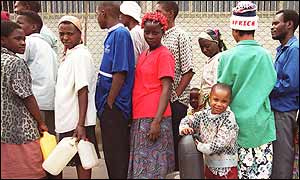 Zimbabweans have been facing fuel shortages since 1999 Zimbabwe's lopsided economy not only has two exchange rates - it is to have two interest rates as well. The Reserve Bank announced on Wednesday that its main banking rate of 57.2% was being suspended immediately. In its place will come a two-tier system - an ultra-low rate for exporters and companies in the "productive" sector, as bank governor Leonard Tsumba put it, and a higher one for importers and local consumers.
"This measure has become necessary so as to achieve the twin objectives of stimulating economic growth while at the same time bringing inflation under control," he said in a statement. The move comes less than a week after the Finance Minister, Herbert Murerwa, warned in his budget speech that the economy would contract 12% in 2002. Rampant prices Taming inflation is certainly an urgent problem for Zimbabwe's policy-makers. Prices have more than doubled in the past year, and inflation is about 140%.
Price caps on basic necessities have not helped, since companies are forced to sell products at a loss and therefore are making less. The resulting shortages have energised the black market, pushing up prices further. By allowing exporters to borrow at 5%, while "productive" companies pay just 15%, the government hopes to stimulate output. Mismatch But according to many observers, the real problem remains the dual exchange rate. Officially, 55 Zimbabwe dollars will buy one US dollar. But the shortage of foreign currency is so acute that most people and businesses have to resort to the "parallel market" at rates approaching Zim$2,000 to the US dollar. The government is now threatening to close down all bureaux de change in the hope of killing the parallel market. 'Positive' It also intends to raise the 40% tax on payments in foreign currency from overseas to 50%, while the remainder must be lodged in the central bank and made available on the basis of who the bank judges to have the highest priority. "The monetary policy statement is positive... under the difficult circumstances that we are in as a country," said Munyaradzi Kereke, economist at a commercial bank in Harare. "But for as long as there is no sufficient foreign exchange, it will take a bit of time before producers can respond positively to the monetary incentives." | |
See also:  16 Nov 02 | Africa 14 Nov 02 | Business 15 Oct 02 | Africa 08 Nov 02 | Business 18 Sep 02 | Business 26 Jul 02 | Business 11 Jul 02 | Africa Internet links: The BBC is not responsible for the content of external internet sites Top Business stories now: Links to more Business stories are at the foot of the page. | ||||||||||||||||||||||||||||||||||||||||||||||||||||||||||||||||||||||||||||||||||||||||||||||||||||||||||||||||||||||||||||||||||||||||||||||||||||||||||||||||||||
| |
|  E-mail this story to a friend E-mail this story to a friend |
| |
| Links to more Business stories |
| | | ||
 | ||||
 | | Back to top
| ||
| ---------------------------------------------------------------------------------- To BBC Sport>> | To BBC Weather>> | To BBC World Service>> ---------------------------------------------------------------------------------- © MMIII | News Sources | Privacy |






