|
 |
 | | | | | | |||||||||||||||||||||||||||||||||||||||||||||||||||||||||||||||||||||||||||||||||||||||||||||||||||||||||||||||||||||||||||||||||||||||||||||||||||||||||||||||||||||||||||||||||||||||||||||||||||||||||||||||||||||||||||
| | | You are in: Business | |||||||||||||||||||||||||||||||||||||||||||||||||||||||||||||||||||||||||||||||||||||||||||||||||||||||||||||||||||||||||||||||||||||||||||||||||||||||||||||||||||||||||||||||||||||||||||||||||||||||||||||||||||||||||||||
|
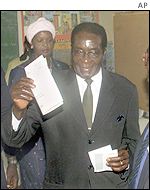
| | Wednesday, 13 March, 2002, 17:53 GMT Economists fear worst for Zimbabwe Newspapers announced the poll results President Robert Mugabe's victory in Zimbabwe's presidential elections has "astonished" many economic analysts, who now fear the country is on the verge of disaster. They expected that the result will weaken further the country's battered economy, warning of a serious knock-on effect for the entire region. Others, though, hope that the clear-cut outcome claimed by the government will provide the stability needed to do business.
"It's hard to see major multinationals coming here and it would not be surprising to see some of them restructuring their operations and thinking about Botswana or South Africa as the place to be," he said, but admitted there was no evidence of this happening yet. Julius Makoni, chairman of NMB Bank in Harare, is more sanguine. "Thank God it's over and now we can move forward," Mr Makoni told World Business Report. "None of our clients was willing to make decisions and in that kind of situation it is hard to do business at all." President Mugabe was officially declared winner with well over 50% of vote, which will extend his 22-year rule for six more years. Economic situation Zimbabwe is currently suffering its worst-ever economic crisis, with unemployment at a record 60%, inflation at an all time high of 112% and interest rates of 70%. Hundreds of businesses have closed, foreign investment has dried up, Western governments have frozen aid and over 3 million people are in danger of going hungry.
"One of the threats Mugabe made during the election campaign was that companies suspected of, what he called, economic sabotage would be nationalised and lose their property, and he referred to mines in particular." Eddie Cross, a free-market economist and shadow finance minister for the opposition Movement for Democratic Change, also expects the financial crisis to deepen. He predicted Western nations would declare the elections not to be free and fair, and up sanctions. "There is going to be increased isolation of the government. I think what you are going to see is enhanced flight of capital and people," Mr Cross said. Contagion fears Instability in Zimbabwe has heightened fears for the region. "It's disappointing not just from a Zimbabwean point, but for the whole southern African region," said Professor Hawkins. Zimbabwe only accounts for 3% of the economic output of the regional trading block of 14 nations, the Southern African Development Community (SADC), while neighbouring South Africa accounts for 72%. South African observers on Wednesday called the election legitimate. But the South African currency, the rand, fell 2.8% from 11.53 to the US dollar on Tuesday to 11.88 as the election result was made known, before recovering in afternoon trade. The rand has lost more than a third of its value since the beginning of the year, partially because of the instability in Zimbabwe. | |
See also:  08 Mar 02 | Business 27 Feb 02 | Business 26 Feb 02 | Business 15 Feb 02 | Business Top Business stories now: Links to more Business stories are at the foot of the page. | |||||||||||||||||||||||||||||||||||||||||||||||||||||||||||||||||||||||||||||||||||||||||||||||||||||||||||||||||||||||||||||||||||||||||||||||||||||||||||||||||||||||||||||||||||||||||||||||||||||||||||||||||||||||||||
| |
|  E-mail this story to a friend E-mail this story to a friend |
| |
| Links to more Business stories |
| | | ||
 | ||||
 | | Back to top
| ||
| ---------------------------------------------------------------------------------- To BBC Sport>> | To BBC Weather>> | To BBC World Service>> ---------------------------------------------------------------------------------- © MMIII | News Sources | Privacy |