|
 |
 | | | | | | |||||||||||||||||||||||||||||||||||||||||||||||||||||||||||||||||||||||||||||||||||||||||||||||||||||||||||||||||||||||||||||||||||||||||||||||||||||||||||||||||||||||||||||||||||||||||||||||||||||||||||||||||||||||||
| | | You are in: Business | |||||||||||||||||||||||||||||||||||||||||||||||||||||||||||||||||||||||||||||||||||||||||||||||||||||||||||||||||||||||||||||||||||||||||||||||||||||||||||||||||||||||||||||||||||||||||||||||||||||||||||||||||||||||||||
|
| | Tuesday, 1 October, 2002, 13:33 GMT 14:33 UK German voters reject economic reform 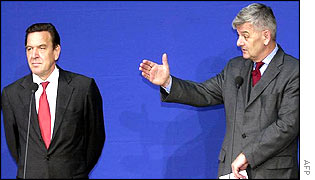 The SPD and Greens held coalition talks
The clear message from the recent general election in Germany that returned Chancellor Gerhard Schroeder to power is that there is little appetite among voters for radical economic changes. That is bad news for Germany's small businesses, which are staggering under the burden of taxes that add an extra 50% to the cost of employing anyone.
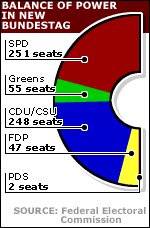
Ironically, while environmentalists have in the past often been hostile to business, Germany's Green Party, which performed well in the election, is likely to be the strongest influence in the new government arguing for a tax regime that encourages entrepreneurs to take on new staff. The experienced writer and consultant on Germany, David Marsh of the Droege group in Dusseldorf, told BBC's World Business Report that the Greens were keen on promoting plans for so-called "mini-jobs". Mini-jobs allow companies to employ people on relatively low wages: "The Greens don't like the corporatistic wage-bargaining system under which the trade unions and the big federations of industry and employers just do deals on a nationwide basis," he said. The Greens, because of their individualistic roots and community spirit, prefer a company-by-company approach to wage bargaining. "Strangely enough, the Greens could be quite good in promoting the kind of small business creation that Germany is utterly crying out for," he said. Why change? But few voters seem to have accepted that Germany needs to adopt a more flexible economy. Most Germans continue to value job security and so are not willing to see a radical shake out of employment, particularly with the jobless total already at 4 million.
Germans remain, on average, the richest people in Europe, despite 10 years of below-par growth. And in some cases, the unemployed in Germany are still better off than people in Britain with jobs. Therefore, some argue, that Germans are right to shy away from painful economic adjustments. But the problem with a harbouring a reluctance to change quickly, is that society ends up being unable to change at all. If the competitive global economy is a race, then we must remember that a runner who leads a race by a mile and then stops for a rest risks - not just being overtaken - but actually not being able to get up again. Left behind David Marsh believes that having world class companies such as Siemens and Volkswagen is no longer enough for Germany.
German companies could cope with tax and red tape while neighbouring countries such as Italy and Belgium were badly run, Mr Marsh said. But now other states are becoming more efficient: "The problem is that other countries have become a great deal more flexible; they're working a great deal harder," Mr Marsh said. Other countries also have lower inflation now and higher economic growth than Germany. "Germany used to be a relatively virtuous state - an island in a sea of rather badly run economic states. "The Germans have really passed on some of their virtues to their neighbours and inherited the vices of people like the Belgians and the Italians. "And so the Germans actually need far more flexibility and far more reform, just to keep up with the neighbours these days." Tables turned David Marsh thinks that Germany is in for a shock as it has been protected from facing up to its problems by a huge rise in the country's borrowings since unification 12 years ago. This borrowing cannot carry on indefinitely:
Another problem is that the formation of the euro means there is one level of interest rates across Europe. Before the euro was launched it was expected that the single currency would mean the rest of Europe would benefit from low German interest rates. What is actually happened is that Germans now have higher rates than they would do without the euro, with the European Central Bank setting higher rates - in part - to cool down faster growth in the rest of the eurozone. Stagnation There are some pretty nasty parallels between Germany and Japan, another rich country that's seen stagnation for the past decade. While Japanese banks are effectively bankrupt, David Marsh says things are not as bad in Germany, although he admits this is "the worst crisis in German banking since about the 1930s". Simply because of Germany's geography at the heart of Europe, it seems inevitable that the country will eventually be forced into a more business-friendly decentralised approach. Germany is left no choice thanks to the forces of private sector competition in the single European market, and the deliberate efforts of Brussels to set a level playing field across EU markets. | |
See also:  23 Sep 02 | Europe 21 Sep 02 | Europe 20 Sep 02 | Europe 17 Sep 02 | Europe 08 Sep 02 | Europe Internet links: The BBC is not responsible for the content of external internet sites Top Business stories now: Links to more Business stories are at the foot of the page. | |||||||||||||||||||||||||||||||||||||||||||||||||||||||||||||||||||||||||||||||||||||||||||||||||||||||||||||||||||||||||||||||||||||||||||||||||||||||||||||||||||||||||||||||||||||||||||||||||||||||||||||||||||||||||
| |
|  E-mail this story to a friend E-mail this story to a friend |
| |
| Links to more Business stories |
| | | ||
 | ||||
 | | Back to top
| ||
| ---------------------------------------------------------------------------------- To BBC Sport>> | To BBC Weather>> | To BBC World Service>> ---------------------------------------------------------------------------------- © MMIII | News Sources | Privacy |