|
 |
 | | | | | | ||||||||||||||||||||||||||||||||||||||||||||||||||||||||||||||||||||||||||||||||||||||||||||||||||||||||||||||||||||||||||||||||||||||||||||||||||||||||||||||||||||||||||||||||||||||||||||||||||||||||
| | | You are in: Americas | ||||||||||||||||||||||||||||||||||||||||||||||||||||||||||||||||||||||||||||||||||||||||||||||||||||||||||||||||||||||||||||||||||||||||||||||||||||||||||||||||||||||||||||||||||||||||||||||||||||||||||
|
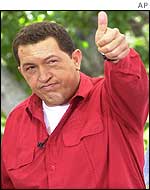
| | Thursday, 23 January, 2003, 02:00 GMT Vote on Chavez rule called off  Chavez opponents want him to go now The Supreme Court in Venezuela has suspended an opposition-backed referendum due next month on whether the country's embattled President, Hugo Chavez, should resign. The electoral authorities had set the vote for 2 February after the opposition collected more than two million signatures demanding a referendum on the president's rule.
Amid increasing capital flight and a slide in the currency, the government announced on Wednesday that Venezuela's currency markets would be closed for five days. In its ruling, the Supreme Court ordered the National Electoral Council to suspend the referendum and refrain from organising any other elections. However, the electoral authorities insisted the effect of the court's ruling was to "freeze" but not cancel the referendum. Voters would have been asked whether or not Mr Chavez should step down. Carter proposals The result would not have been legally binding, but the president's opponents hoped a resounding defeat would have embarrassed him into calling early presidential elections.
That was one of the proposals put forward on Tuesday by former US President Jimmy Carter, to try to end Venezuela's political deadlock. Another proposal was to amend the constitution to allow early elections, cutting the presidential term from the current six years. Both the government and opposition are studyling the proposals. But the BBC's Adam Easton in Caracas says the Supreme Court's decision could prevent any agreement being reached soon. Opposition leaders condemned the court's ruling as biased and a sign of the government's control of the courts. "The government is just blocking and blocking all the democratic avenues," opposition negotiator Timoteo Zambrano told Reuters. Vice-president Jose Vicente Rangel said the opposition had no legal basis to go ahead with the vote. "We had always refused to recognise it, but now the Supreme Court has confirmed our position," he said. | |
See also:  16 Jan 03 | Americas 21 Jan 03 | Business 05 Jan 03 | Americas 22 Jan 03 | Business 21 Jan 03 | Americas Internet links: The BBC is not responsible for the content of external internet sites Top Americas stories now: Links to more Americas stories are at the foot of the page. | ||||||||||||||||||||||||||||||||||||||||||||||||||||||||||||||||||||||||||||||||||||||||||||||||||||||||||||||||||||||||||||||||||||||||||||||||||||||||||||||||||||||||||||||||||||||||||||||||||||||||
 | |
|  E-mail this story to a friend E-mail this story to a friend |
| |
| Links to more Americas stories |
| | | ||
 | ||||
 | | Back to top
| ||
| ---------------------------------------------------------------------------------- To BBC Sport>> | To BBC Weather>> | To BBC World Service>> ---------------------------------------------------------------------------------- © MMIII | News Sources | Privacy |





 The government is just blocking ...all the democratic avenues