|
 |
 | | | | | | |||||||||||||||||||||||||||||||||||||||||||||||||||||||||||||||||||||||||||||||||||||||||||||||||||||||||||||||||||||||||||||||||||||||||||||||||||||||||||||||||||||||||||||||||
| | | You are in: Americas | |||||||||||||||||||||||||||||||||||||||||||||||||||||||||||||||||||||||||||||||||||||||||||||||||||||||||||||||||||||||||||||||||||||||||||||||||||||||||||||||||||||||||||||||||||
|
| | Tuesday, 17 December, 2002, 17:15 GMT Analysis: Missile defence strategy 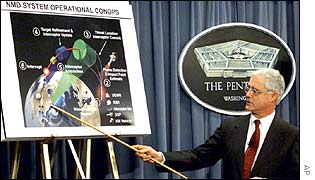 Missile defence is a key priority for Bush
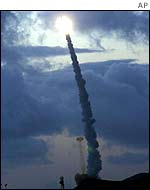
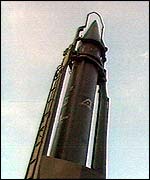
President George W Bush's order to get ballistic missile interceptors up and running confirms the Pentagon' dash to deploy a rudimentary missile defence system by the end of 2004. Missile defence has become almost an article of faith with the Bush Administration. It has withdrawn from the Anti-Ballistic Missile (ABM) treaty, which effectively circumscribed the deployment of any system. And it wants to get a test-bed up and running at Fort Greely in Alaska which will provide, in the Pentagon's terms, an initial operating capability. Mixed tests But just what capability is open to question. So far testing of America's missile interceptors - often under highly favourable conditions - has provided mixed results.
Critics are far from convinced that the goal of hiting an incoming missile - what some have likened to hitting a bullet with a bullet - is actually possible with the existing technology, especially if the attacker seeks to thwart the defences with decoys or other counter-measures. The programme's supporters stress that what is intended is a much more limited capability than the so-called Star Wars scheme proposed during the Reagan presidency. The aim of the Bush programme is to defend the United States against a limited attack from a rogue nation, not to defend against a massive nuclear onslaught. Deterrent To critics who claim that any defensive system would have no certainty of destroying an incoming missile, the advocates claim that anything that complicates the calculations of a would-be attacker adds to America's security.
An attacker would have to factor into his calculations the possibility that the weapons would not get through, as well as the likelihood that the US would respond with massive force. Of course up to now long-range ballistic missiles have exclusively been used by formal armies, though in some cases when national authority has collapsed - for example in Afghanistan - shorter-range systems have fallen into the hands of irregular forces. Proliferation There are relatively few countries actually producing long-range missiles. But North Korea's willingness to run a sort of cash-and-carry for ballistic missiles - along with local programmes in countries like Iran, Pakistan and Syria - adds to the Pentagon's fears that weapons could fall into the wrong hands. Missile proliferation is a fact of life, according to the Pentagon, and needs to be dealt with by a variety of approaches including missile defences. There is no doubt that with sufficient time and money the Americans will eventually come up with a working system. But some experts still believe that given the variety of threats facing the country - from biological and chemical attacks to dirty bombs - this money could be better spent on countering terrorism rather than one single type of attack. | |
See also:  17 Dec 02 | Americas 17 Dec 02 | Politics 11 Dec 02 | Americas 12 Dec 02 | Americas 16 Mar 02 | Americas 13 Jun 02 | Americas Internet links: The BBC is not responsible for the content of external internet sites Top Americas stories now: Links to more Americas stories are at the foot of the page. | |||||||||||||||||||||||||||||||||||||||||||||||||||||||||||||||||||||||||||||||||||||||||||||||||||||||||||||||||||||||||||||||||||||||||||||||||||||||||||||||||||||||||||||||||
| |
|  E-mail this story to a friend E-mail this story to a friend |
| |
| Links to more Americas stories |
| | | ||
 | ||||
 | | Back to top
| ||
| ---------------------------------------------------------------------------------- To BBC Sport>> | To BBC Weather>> | To BBC World Service>> ---------------------------------------------------------------------------------- © MMIII | News Sources | Privacy |