
|
 |
 | | | | | | ||||||||||||||||||||||||||||||||||||||||||||||||||||||||||||||||||||||||||||||||||||||||||||||||||||||||||||||||||||||||||||||||||||||||||||||||||||||||||||||||||||||||||||||||
| | | You are in: Americas | ||||||||||||||||||||||||||||||||||||||||||||||||||||||||||||||||||||||||||||||||||||||||||||||||||||||||||||||||||||||||||||||||||||||||||||||||||||||||||||||||||||||||||||||||||
|
| | Thursday, 12 December, 2002, 01:19 GMT US missile failure raises funding questions 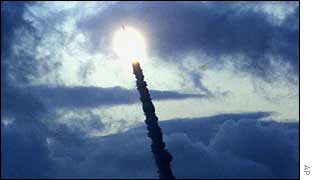 The test is conducted over massive distances
The latest firing of components of President George W Bush's missile defence programme on Wednesday cost $80m. Its failure, apparently involving a relatively low-tech part of the system, is undoubtedly a setback. The test involved perhaps the most ambitious element of the Bush administration's plans for a "layered" missile defence system - the so-called land-based midcourse defence system, which attempts to intercept long-range ballistic missile warheads in space.
These tests cover vast distances. The target ballistic missile is launched from a missile site in California. The interceptor is fired from the Kwajalein Atoll in the Marshall Islands in the Pacific, nearly 8,000 kilometres (5,000 miles) away. The interception is meant to occur at an altitude of about 225km (140 miles). Concept viability Freed from the restrictions of the Anti-Ballistic Missile Treaty, the Missile Defence Agency has begun undertaking increasingly ambitious tests, involving more and more of the elements of radar, control, and weapons that would form part of an actual system. But there are still serious doubts and question marks about the viability of the concept, and time is pressing for the testers. Work has begun on a test facility in Alaska which is meant to be ready by late 2004, and to have a limited operational capability. Although this is the third failure of this system in eight tests, it was doubly disappointing because the last four in a row have been successful. But critics say the tests are not realistic anyway. Airborne laser plan The whole missile defence programme is currently costing nearly $8bn a year. The ultimate cost is uncertain, but will run into tens of billions of dollars. As well as this particular system, the US is developing shorter-range interceptors to deal with shorter-range missiles, sea-based systems, and even a giant airborne laser fitted into a modified Boeing 747, as part of the layered defence concept. Some of these, like the airborne laser, are still in their early stages of development. But another, a new version of the Patriot missile, called Pac-3 (Patriot Advanced Capability 3), could be fielded if there is military action against Iraq, to guard against possible Scud missile launches. | |
See also:  16 Jun 02 | Americas 16 Mar 02 | Americas 11 Jul 01 | Europe 20 May 02 | Europe 13 Jun 02 | Americas Internet links: The BBC is not responsible for the content of external internet sites Top Americas stories now: Links to more Americas stories are at the foot of the page. | ||||||||||||||||||||||||||||||||||||||||||||||||||||||||||||||||||||||||||||||||||||||||||||||||||||||||||||||||||||||||||||||||||||||||||||||||||||||||||||||||||||||||||||||||
| |
|  E-mail this story to a friend E-mail this story to a friend |
| |
| Links to more Americas stories |
| | | ||
 | ||||
 | | Back to top
| ||
| ---------------------------------------------------------------------------------- To BBC Sport>> | To BBC Weather>> | To BBC World Service>> ---------------------------------------------------------------------------------- © MMIII | News Sources | Privacy |






