|
 |
 | | | | | | ||||||||||||||||||||||||||||||||||||||||||||||||||||||||||||||||||||||||||||||||||||||||||||||||||||||||||||||||||||||||||||||||||||||||||||||||||||||||||||||||
| | | You are in: Americas | ||||||||||||||||||||||||||||||||||||||||||||||||||||||||||||||||||||||||||||||||||||||||||||||||||||||||||||||||||||||||||||||||||||||||||||||||||||||||||||||||||
|
| | Monday, 23 September, 2002, 13:55 GMT 14:55 UK California defies Bush on stem cells 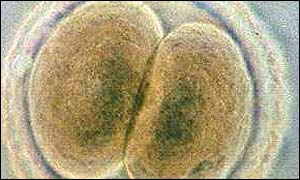 Opponents say the use of embryos constitutes murder The US state of California has adopted a new law permitting scientific research on embryonic stem cells, putting it at odds with the administration of President George W Bush.
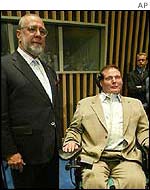
"As the country ages, I believe more and more Americans will see the value stem cell research has in enhancing quality of the lives of the people they love," he said after signing the bill late on Sunday. Mr Bush, who has restricted the use of federal funds for stem cell research, has so far made no comment on the decision. Governor Davis was joined at the new law's announcement by former Superman actor Christopher Reeve, who is paralysed as the result of an accident. Last week he explicitly blamed the Bush administration for blocking research which he believes could cure his condition. "Since stem cells were first isolated in 1998, the political debate has had a chilling affect on our scientists," Mr Reeve said on Sunday. "It is painful to contemplate what advances could have been made." Written consent The bill, which explicitly allows embryonic stem cell research and will enable embryos to be both donated and destroyed, will become law on 1 January 2003.
It also bans the sale of embryos. Supporters believe the research could be valuable in curing or alleviating chronic and degenerative conditions, such as Parkinson's disease, Alzheimer's and spinal cord injuries. Opponents argue that the procedures involved constitute murder and believe that work with adult stem cells, from bone marrow or other tissues, may be equally promising. The Senate is still considering legislation which could ban such research completely. BBC science correspondent Richard Black says that, with US public opinion on stem cell research sharply divided and the Senate decision several months overdue, the Californian legislature would appear to have made an astute political move. The so-called "grey power" lobby of elderly Americans is growing in strength - and the law could well attract biotechnology companies from other parts of the US. It may also prove more difficult for the Senate to ban research which many Americans want if the country's most populous state has approved it. | | See also:  17 Sep 02 | Entertainment 24 Feb 02 | Health 09 Sep 02 | Health 28 Aug 02 | Science/Nature 28 Aug 02 | Science/Nature 01 Mar 00 | Science/Nature 20 Jun 02 | Health 13 Mar 02 | Science/Nature Internet links: The BBC is not responsible for the content of external internet sites Top Americas stories now: Links to more Americas stories are at the foot of the page. | ||||||||||||||||||||||||||||||||||||||||||||||||||||||||||||||||||||||||||||||||||||||||||||||||||||||||||||||||||||||||||||||||||||||||||||||||||||||||||||||||
| |
|  E-mail this story to a friend E-mail this story to a friend |
| |
| Links to more Americas stories |
| | | ||
 | ||||
 | | Back to top
| ||
| ---------------------------------------------------------------------------------- To BBC Sport>> | To BBC Weather>> | To BBC World Service>> ---------------------------------------------------------------------------------- © MMIII | News Sources | Privacy |