|
 |
 | | | | | | |||||||||||||||||||||||||||||||||||||||||||||||||||||||||||||||||||||||||||||||||||||||||||||||||||||||||||||||||||||||||||||||||||||||||
| | | You are in: Health | |||||||||||||||||||||||||||||||||||||||||||||||||||||||||||||||||||||||||||||||||||||||||||||||||||||||||||||||||||||||||||||||||||||||||||
|
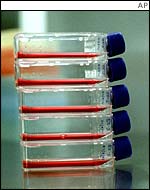
| | Monday, 9 September, 2002, 08:55 GMT 09:55 UK Stem cell bank 'within a year' 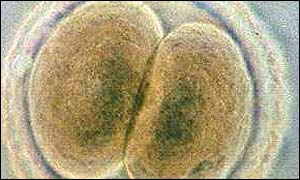 Human embryo research is highly controversial Europe's first stem cell bank, which will be based in the UK, could be up and running within a year. The National Institute for Biological Standards and Control (NIBSC) has been awarded a �2.6m contract to set up the bank by the Medical Research Council (MRC). Stem cells are hailed as a potentially revolutionary way of treating disease and repairing damage to the body. It is thought they could one day be used to treat conditions like Alzheimer's and diabetes.
The bank will hold cell lines, derived from stem cells, which survive indefinitely and continue to multiply and reproduce. It will hold new and existing adult, fetal and embryonic stem cell lines. A steering committee made up of scientists and bio-ethicists will develop a code of practice and regulate the running of the bank. 'Tremendous boon' Professor Sir George Radda, chief executive of the MRC, said: "Stem cell research holds real promise for the treatment of many life-threatening diseases and conditions and the bank will allow researchers to explore this enormous potential in a controlled environment." Professor Julia Goodfellow, chief executive of the Biotechnology and Biological Sciences Research Council, which will fund the bank along with the MRC, added: "The bank will be a tremendous boon for keeping UK science at the very forefront of this important area of research.
The director of the NIBSC, Dr Steven Inglis, will speak at an MRC conference on stem cells, to be held in London on Wednesday. The meeting will also include a video message from Superman actor Christopher Reeve, a keen supporter of stem cell research. Dr Inglis told the BBC it could be years before any pharmaceutical developments resulted from stem cell research. But he added: "There have been encouraging signs, both from research and early clinical studies in, for example, bone marrow transplant and others, that stem cell research is looking at." The NIBSC, based in Potters Bar, Hertfordshire, is a government funded body charged with assuring the quality of biological materials such as vaccines and blood products. Health Minister Lord Hunt said: "The stem cell bank will be the first of its kind in Europe and will ensure that the UK retains its international position in this exciting field which promises to bring a revolution in healthcare. "Whilst stem cell research holds out enormous potential for delivering new treatments for many diseases and disorders currently without cure, there will be a long period of work in research laboratories during which scientists will learn more about the way stem cells work. "This is one of the ways in which the stem cell bank will be of great benefit." Opposition However some critics fear that the existence of the bank could mean couples undergoing IVF treatment could be put under pressure to donate spare embryos. Anti-abortion campaigners are also against the bank, arguing equally effective treatments could be developed without using embryos. A spokesman for the ProLife Alliance said: "Like every caring member of society we want to see ethical cures for human disease. "But this bank will also be harvesting human stem cells from the fetus and the embryo, and these can only be obtained through the deliberate destruction of human life." The concept of a stem cell bank was first proposed by the influential UK body of scientists, the Royal Society, in March 2000, and later backed by Chief Medical Officer Sir Liam Donaldson. Parliament has agreed that embryos up to the age of 14 days could be used to get embryonic stem cells. | | See also:  28 Aug 02 | Science/Nature 28 Aug 02 | Science/Nature 01 Mar 00 | Science/Nature 20 Jun 02 | Health 13 Mar 02 | Science/Nature Internet links: The BBC is not responsible for the content of external internet sites Top Health stories now: Links to more Health stories are at the foot of the page. | |||||||||||||||||||||||||||||||||||||||||||||||||||||||||||||||||||||||||||||||||||||||||||||||||||||||||||||||||||||||||||||||||||||||||
| |
|  E-mail this story to a friend E-mail this story to a friend |
| |
| Links to more Health stories |
| | | ||
 | ||||
 | | Back to top
| ||
| ---------------------------------------------------------------------------------- To BBC Sport>> | To BBC Weather>> | To BBC World Service>> ---------------------------------------------------------------------------------- © MMIII | News Sources | Privacy |