|
 |
 | | | | | | ||||||||||||||||||||||||||||||||||||||||||||||||||||||||||||||||||||||||||||||||||||||||||||||||||||||||||||||||||||||||||||||||||||||||||||||||||||||||||||||||||||||||||||||||||||||||||||||||||||||||||||||||||||||||
| | | You are in: Africa | ||||||||||||||||||||||||||||||||||||||||||||||||||||||||||||||||||||||||||||||||||||||||||||||||||||||||||||||||||||||||||||||||||||||||||||||||||||||||||||||||||||||||||||||||||||||||||||||||||||||||||||||||||||||||||
|
| | Tuesday, 10 December, 2002, 12:15 GMT Fighting shatters Burundi truce 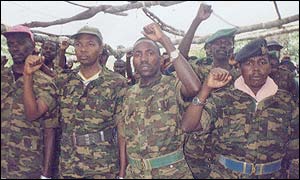 Rebels are supposed to join a new army Rebels and the army in Burundi have accused each other of breaking a ceasefire signed last week in the Tanzanian town of Arusha. The Forces for the Defence of Democracy (FDD) rebels said the army had shelled their positions north-west of the capital, Bujumbura.
The ceasefire had raised hopes of an end to a nine-year civil war which has claimed at least 300,000 lives. However, another ethnic Hutu dominated rebel group, the National Liberation Forces (FNL), refused to sign the agreement. They are accused of killing 12 people over the weekend. A truce was supposed to take effect last Thursday, while the full ceasefire will start on 30 December. Power shift "The Burundi army threw bombs on Monday targeting FDD positions at Kivyuka and Musigati zones in Bubanza province (north-west of Burundi)," said the FDD spokesman Lieutenant Gelase Ndabirabe. But army spokesman Colonel Augustin Nzabampema said rebel forces had attacked their positions first.
"We cannot stay with our arms folded when FDD rebels attack us," he said. "If they attack us we have to respond." A power-sharing agreement brokered by Nelson Mandela a year ago has failed to end the fighting. Tutsi President Pierre Buyoya is due to be replaced by Hutu Vice President Domitien Ndayizeye on 1 May 2003. One of the rebels' main concerns was addressed in last week's agreement: That sharing political power between the two main ethnic groups, Hutus and Tutsis, would be meaningless while the army was still dominated by Tutsis. The old army is to be dismantled and a new army will be created, made up of 50% government forces and 50% Hutu rebels. | |
See also:  04 Dec 02 | Africa 03 Dec 02 | Africa 20 Nov 02 | Africa Internet links: The BBC is not responsible for the content of external internet sites Top Africa stories now: Links to more Africa stories are at the foot of the page. | ||||||||||||||||||||||||||||||||||||||||||||||||||||||||||||||||||||||||||||||||||||||||||||||||||||||||||||||||||||||||||||||||||||||||||||||||||||||||||||||||||||||||||||||||||||||||||||||||||||||||||||||||||||||||
| |
|  E-mail this story to a friend E-mail this story to a friend |
| |
| Links to more Africa stories |
| | | ||
 | ||||
 | | Back to top
| ||
| ---------------------------------------------------------------------------------- To BBC Sport>> | To BBC Weather>> | To BBC World Service>> ---------------------------------------------------------------------------------- © MMIII | News Sources | Privacy |