|
 |
 | | | | | | |||||||||||||||||||||||||||||||||||||||||||||||||||||||||||||||||||||||||||||||||||||||||||||||||||||||||||||||||||||||||||||||||||||||||||||||||||||||||||||||||||||||||
| | | You are in: Africa | |||||||||||||||||||||||||||||||||||||||||||||||||||||||||||||||||||||||||||||||||||||||||||||||||||||||||||||||||||||||||||||||||||||||||||||||||||||||||||||||||||||||||||
|
| | Wednesday, 20 November, 2002, 18:40 GMT Thousands displaced by Burundi fighting 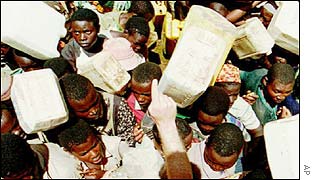 Burundians are caught in the civil war More than 20,000 people have been displaced by fighting between rebel and government forces near the capital of Burundi, Bujumbura, over the last few days.
The two sides have been given until 28 November to try to agree a ceasefire. More than 300,000 people, mostly civilians, have been killed in Burundi's nine-year civil war. Destitute Civilians, mostly women and children, have been fleeing five days of clashes between the army and the rebels of the Forces for the Defence of Democracy (FDD) in Buganza province, 25 kilometres from Bujumbura. The authorities of Buganza province have now asked the United Nations for help to assist the displaced people. The mayor of Mpanda district said that villagers had sought shelter in the district's main town.
"They have nothing. We are still counting them because they are still pouring in and we have nothing to give them," the mayor told the French news agency AFP. The BBC's Christophe Nkurunziza in Bujumbura says that fighting has also been going on in the north, centre and south of the country. The UN's Office for the Co-ordination of Humanitarian Affairs (Ocha) told the BBC that nearly 390,000 people are currently uprooted throughout Burundi. Ocha said it is the largest concentration of internally displaced persons in Africa or possibly in the world. 'Tutsi domination' Mediators in the peace talks have hinted that sanctions may be taken against those groups seen as responsible for the deadlock if no peace deal is signed. However, the FDD rebels have warned that they will pull out of the negotiations if, as they claim, the army continues its offensive against them. A power-sharing arrangement between ethnic Hutus and Tutsis was inaugurated a year ago, but two Hutu rebel groups have continued to fight. Under the power-sharing deal, Tutsi President Pierre Buyoya is due to swap places with his Hutu Vice-President Domitien Ndayizeye on 1 May 2003.
Ethnic Tutsis, who make up 15% of the population, have traditionally dominated Burundi and this has continued since independence, angering the Hutu majority. The rebel groups still fighting say that while Tutsis dominate the army, a Hutu president would be mere window dressing. A key stumbling block is the issue of disarmament. The government delegate had previously rejected a plan for simultaneous disarmament of the army and the militias, saying that disarming the army would be "disastrous". | |
See also:  13 Nov 02 | Africa 04 Nov 02 | Africa 21 Oct 02 | Africa 08 Oct 02 | Africa 04 Oct 02 | Africa 04 Jul 02 | Africa Internet links: The BBC is not responsible for the content of external internet sites Top Africa stories now: Links to more Africa stories are at the foot of the page. | |||||||||||||||||||||||||||||||||||||||||||||||||||||||||||||||||||||||||||||||||||||||||||||||||||||||||||||||||||||||||||||||||||||||||||||||||||||||||||||||||||||||||
| |
|  E-mail this story to a friend E-mail this story to a friend |
| |
| Links to more Africa stories |
| | | ||
 | ||||
 | | Back to top
| ||
| ---------------------------------------------------------------------------------- To BBC Sport>> | To BBC Weather>> | To BBC World Service>> ---------------------------------------------------------------------------------- © MMIII | News Sources | Privacy |