|
 |
 | | | | | | ||||||||||||||||||||||||||||||||||||||||||||||||||||||||||||||||||||||||||||||||||||||||||||||||||||||||||||||||||||||||||||||||||||||||||||||||||||||||||||||||||||||||||||||||||||||||||||||||||||||||||||||||||||||||
| | | You are in: Africa | ||||||||||||||||||||||||||||||||||||||||||||||||||||||||||||||||||||||||||||||||||||||||||||||||||||||||||||||||||||||||||||||||||||||||||||||||||||||||||||||||||||||||||||||||||||||||||||||||||||||||||||||||||||||||||
|
| | Wednesday, 4 December, 2002, 15:30 GMT Rebels reject Burundi peace deal 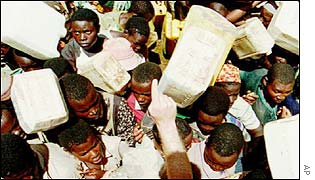 Civilians have born the brunt of the fighting Burundi's National Liberation Forces (FNL) rebels have said they will not be bound by a ceasefire signed between the government and another rebel group earlier this week. FNL spokesman Pasteur Habimana rejected a threat to impose sanctions on it by Ugandan President Yoweri Museveni, who chaired the signing ceremony.
However, many Burundians remain sceptical, not just because the FNL has refused to lay down their weapons but because many details were not covered. Political talks are continuing in the Tanzanian town of Dar es Salaam over such issues as the integration of former Forces for the Defence of Democracy (FDD) rebels into the ethnic Tutsi-dominated army and deciding which ministerial portfolios are given to which FDD leaders. Start at home Mr Habimana said that Mr Museveni should deal with the rebellion raging in northern Uganda before trying to impose sanctions on the FNL. "The ceasefire accord signed by the FDD does not weaken us, because we never cooperated with them, and we never depended in any way on the FDD," he said.
The FNL has its forces closest to the capital, Bujumbura, while the FDD operated in other parts of Burundi. A truce is due to come into effect on Thursday, while the full ceasefire will start on 30 December. A power-sharing agreement brokered by Nelson Mandela a year ago has failed to end the fighting. Tutsi President Pierre Buyoya is due to be replaced by Hutu Vice President Domitien Ndayizeye on 1 May 2003. One of the rebels' main concerns was addressed in this week's agreement: That sharing political power between the two main ethnic groups, Hutus and Tutsis, would be meaningless while the army was still dominated by Tutsis. The old army is to be dismantled and a new army will be created, made up of 50% government forces and 50% Hutu rebels. On Monday, the United Nation's World Food Programme (WFP) warned that more than one million Burundians were threatened by worsening food shortages. | |
See also:  03 Dec 02 | Africa 20 Nov 02 | Africa Internet links: The BBC is not responsible for the content of external internet sites Top Africa stories now: Links to more Africa stories are at the foot of the page. | ||||||||||||||||||||||||||||||||||||||||||||||||||||||||||||||||||||||||||||||||||||||||||||||||||||||||||||||||||||||||||||||||||||||||||||||||||||||||||||||||||||||||||||||||||||||||||||||||||||||||||||||||||||||||
| |
|  E-mail this story to a friend E-mail this story to a friend |
| |
| Links to more Africa stories |
| | | ||
 | ||||
 | | Back to top
| ||
| ---------------------------------------------------------------------------------- To BBC Sport>> | To BBC Weather>> | To BBC World Service>> ---------------------------------------------------------------------------------- © MMIII | News Sources | Privacy |