|
 |
 | | | | | | |||||||||||||||||||||||||||||||||||||||||||||||||||||||||||||||||||||||||||||||||||||||||||||||||||||||||||||||||||||||||||||||||||||||||||||||||||||||||||||||||||||||||||||||||||||||||||||||||||||
| | | You are in: Africa | |||||||||||||||||||||||||||||||||||||||||||||||||||||||||||||||||||||||||||||||||||||||||||||||||||||||||||||||||||||||||||||||||||||||||||||||||||||||||||||||||||||||||||||||||||||||||||||||||||||||
|
| | Saturday, 27 July, 2002, 22:45 GMT 23:45 UK Talks bring hope for Sudan peace 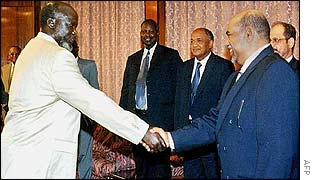 Historic handshake: the two leaders met for the first time The president of Sudan and the country's main rebel leader have expressed hope that an end to one of Africa's longest civil wars may be in sight, after holding their first ever face-to-face talks.
They were discussing a framework agreement aimed at ending the 19-year conflict which has pitted the mainly Christian and animist south against the Islamic government in the north. The BBC's David Loyn, in Kampala, says the historic handshake between the two leaders could mark the beginning of the end to the war. 'Not yet peace' President al-Bashir said the meeting was "an important step towards peace but not yet peace".
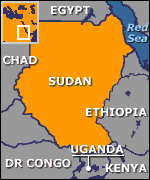
"The meeting is a good sign... it is a sign of hope". The next phase of talks is due to take place next month in Kenya. Ugandan interests Our correspondent says Saturday's meeting was called as a personal initiative of the Ugandan president who has much at stake in the Sudanese peace process. At the end of the talks, Uganda and Sudan agreed to upgrade their diplomatic representation to full ambassador status in each country. They also agreed to step up border security to try to stem cross-border raids by Ugandan rebels. Last year, Sudan withdrew its support from the Ugandan Lord's Resistance Army (LRA) rebel group and later allowed Ugandan troops to cross into Sudanese territory in pursuit of the militants. Sudan peace proposal The proposed settlement between Sudan's warring factions - which came as a surprising breakthrough last week - would exempt the south from Islamic, Sharia, law. It would set up a power-sharing administration and after a six-year transition period, the people in the south would be given the chance to break away from the rest of the country in a referendum. In a joint statement, the two men pledged to "ensure that all efforts are deployed to resolve the outstanding issues". It is still unclear how the country's oil wealth - which lies mainly in the south - will be divided. And the two sides have still not been able to agree ceasefire on the ground. However, Sudanese Vice President Ali Uthman Muhammad Taha has said he expects a ceasefire to be implemented with the SPLA within weeks "if people are serious". | |
See also:  26 Jul 02 | Africa 21 Jul 02 | Africa 21 Jul 02 | Media reports 21 Jul 02 | Africa 09 Jul 02 | Africa 02 Jul 02 | Africa 01 Jul 02 | Africa 17 Jun 02 | Africa Internet links: The BBC is not responsible for the content of external internet sites Top Africa stories now: Links to more Africa stories are at the foot of the page. | |||||||||||||||||||||||||||||||||||||||||||||||||||||||||||||||||||||||||||||||||||||||||||||||||||||||||||||||||||||||||||||||||||||||||||||||||||||||||||||||||||||||||||||||||||||||||||||||||||||
| |
|  E-mail this story to a friend E-mail this story to a friend |
| |
| Links to more Africa stories |
| | | ||
 | ||||
 | | Back to top
| ||
| ---------------------------------------------------------------------------------- To BBC Sport>> | To BBC Weather>> | To BBC World Service>> ---------------------------------------------------------------------------------- © MMIII | News Sources | Privacy |