|
 |
 | | | | | | |||||||||||||||||||||||||||||||||||||||||||||||||||||||||||||||||||||||||||||||||||||||||||||||||||||||||||||||||||||||||||||||||||||||||||||||||||||||||||||||||||||||||||||||||||||||||||||||||||||||||||||
| | | You are in: Africa | |||||||||||||||||||||||||||||||||||||||||||||||||||||||||||||||||||||||||||||||||||||||||||||||||||||||||||||||||||||||||||||||||||||||||||||||||||||||||||||||||||||||||||||||||||||||||||||||||||||||||||||||
|
| | Friday, 26 July, 2002, 19:20 GMT 20:20 UK Sudan ceasefire 'expected in weeks' 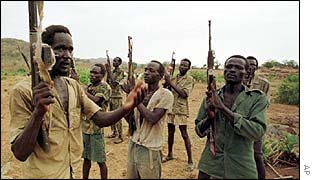 The SPLA rebels want autonomy from the Muslim north
Since the announcement of the peace accord, the Sudanese Government has been on a charm offensive - sending its emissaries round the world to urge its friends to support and invest in the new, peaceful Sudan. "It should be a matter of weeks, if people are serious," Mr Taha said. Dividing oil riches Issues still to be tackled include the practicalities of power-sharing during the next six years. It is still unclear how the country's oil wealth - largely derived from the south - will be divided. The actual ceasefire will not take effect until the end of the process. But the vice president said he believed that everything else could be quickly settled, now that agreement had been reached on the issue of religion. At the end of six years the agreement provides for a referendum on whether the south should remain part of Sudan or become independent. Honouring promises Mr Taha said the government's priority was for a solution within a united Sudan, and the agreement itself made it clear that unity was the preferred option. "The framework of the protocol is very specific in giving unity a priority. "So whoever speaks in favour of unity, would be reflecting the spirit of the framework. This does not negate or marginalise that there is another option." The government's job now, he said, was to work to make unity attractive. But he said if they failed, and there was finally a vote for secession, then the government would honour the agreement and let the southerners go their own way - taking their oil wealth with them. | |
See also:  21 Jul 02 | Africa 21 Jul 02 | Media reports 21 Jul 02 | Africa 09 Jul 02 | Africa 02 Jul 02 | Africa 01 Jul 02 | Africa 17 Jun 02 | Africa 12 Jun 02 | Africa Internet links: The BBC is not responsible for the content of external internet sites Top Africa stories now: Links to more Africa stories are at the foot of the page. | |||||||||||||||||||||||||||||||||||||||||||||||||||||||||||||||||||||||||||||||||||||||||||||||||||||||||||||||||||||||||||||||||||||||||||||||||||||||||||||||||||||||||||||||||||||||||||||||||||||||||||||
| |
|  E-mail this story to a friend E-mail this story to a friend |
| |
| Links to more Africa stories |
| | | ||
 | ||||
 | | Back to top
| ||
| ---------------------------------------------------------------------------------- To BBC Sport>> | To BBC Weather>> | To BBC World Service>> ---------------------------------------------------------------------------------- © MMIII | News Sources | Privacy |