|
 |
 | | | | | | |||||||||||||||||||||||||||||||||||||||||||||||||||||||||||||||||||||||||||||||||||||||||||||||||||||||||||||||||||||||||||||||||||||||||||||||||||||||||||||||||||||||||||||||||||
| | | You are in: Africa | |||||||||||||||||||||||||||||||||||||||||||||||||||||||||||||||||||||||||||||||||||||||||||||||||||||||||||||||||||||||||||||||||||||||||||||||||||||||||||||||||||||||||||||||||||||
|
| | Tuesday, 9 July, 2002, 20:30 GMT 21:30 UK War casts long shadow over Sudan Thousands of people have fled to insalubrious swamps
The rains have begun, and women are out in the fields, tending the first, strong green shoots of maize.
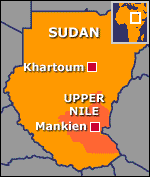
But this is oil-rich Western Upper Nile. Twelve kilometres to the north, government and rebel forces are slugging it out around the town of Mankien. Despite the muffled boom of heavy artillery, the women do not pause in their work. Living with war The cattle continue to graze placidly. Life here is lived in the shadow of Sudan's long-running civil war.
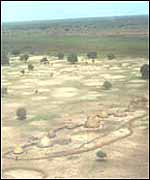
But the existence of the Nuer people of Western Upper Nile is increasingly fragile. Their homeland is one of the most under-developed parts of the world. There are no roads, no cars, no schools, no hospitals - just dome-shaped straw huts and miles of green pasture where thousands of cattle graze. But deep below the surface are the reserves of Sudan's richest resource, oil. The conflict in Sudan has lasted nearly two decades, and is fuelled by race, religion and now, increasingly, oil. Multi-faceted conflict When the colonial power, Britain, withdrew from Sudan in 1956, it left an unwieldy, divided state. It is ruled from the north by Arab Muslims, while the people in the south have a predominantly Christian heritage. In 1983, the southerners took up arms to fight for self-determination.
But three years ago, the extraction of oil began in earnest, changing the dynamic of the war. The oilfields are - at the moment - controlled by the government, and earn Khartoum an estimated $1billion a day. Critics say the government uses oil revenue to buy new sophisticated weaponry. Human rights activists also accuse Khartoum of orchestrating a campaign of terror in Western Upper Nile, as it tries to establish a cordon sanitaire for the international companies operating in the oilfields. "It is quite clear that the government of Sudan is targeting civilians. This isn't war - more like ethnic cleansing or genocide," Nicola Rigby, of Christian Aid, says. Gunship wound Close to the village of Madul, a young boy holds up his fist, swollen, he says, by a bullet graze. His friend says that a few weeks ago helicopter gunships were flying so low in the area around Mankien that they were virtually skimming the tops of the straw huts. He says civilians were being deliberately targeted.
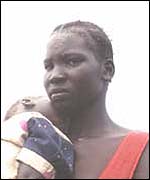
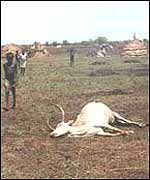
Locals describe how, when the rebel-held town of Mankien fell to government forces in mid-June, militias attacked nearby villages, looting and burning. Some who fled the offensive found shelter with other families. But many others, possibly tens of thousands, are camping out in the open, in mosquito-infested swamps. Children are falling sick. The carcasses of cattle, the main source of wealth, lie strewn on the ground. Hungry The chances of helping these people is limited. Over the past few months, while the fighting escalated in Western Upper Nile and parts of Bahr El Ghazal, the Khartoum government has denied access to humanitarian agencies. Operation Lifeline Sudan, an umbrella organisation of United Nations groups and other international agencies, has delivered help to Sudanese civilians over a decade. The organisation, which works with the consent of the government and the rebels, has continually been subject to the flight bans imposed by one side or another.
But for months, the government has refused to allow aid into swathes of territory on an almost continuous basis. The World Food Programme estimates that 350,000 people who normally benefit from their food aid, are now going hungry. Humanitarian agencies describe the plight of civilians as "dire". Some predict that if the flight bans continue in this way, then Operation Lifeline Sudan itself is in jeopardy. 'Bleak prospects' It is against this backdrop that the UN Secretary General, Kofi Annan, flies into Khartoum on Wednesday. Aid workers hope that his discussions with the government will lead to an easing of the flight ban. But even if that does happen, the long-term prospects for an end to the war appear bleak. The Bush administration recently stepped up its diplomatic efforts to try to break the deadlock between the warring parties, and the initiative of the US special envoy to Sudan, John Danforth, has brought some limited success.
A ceasefire monitored by international observers is holding in the Nuba Mountains, an area decimated by war. Regular consignments of aid have been delivered to the hard-pressed Nuba people, for the first time in years. It is hoped the deal in the Nuba may provide a model for similar agreements elsewhere in Sudan. The US assistant secretary for African Affairs, Walter Kansteiner, on a recent visit to Khartoum, talked optimistically about the possibility of a comprehensive peace deal. 'Worse to come' But that optimism does not seem to be shared by those close to peace talks currently under way in Kenya. The substantive issues, such as the separation of state and religion, and the right of southerners to self-determination, have reportedly not been addressed, despite weeks of talks. In Western Upper Nile, the belief is that the war will not end as long as the government has sole control of the oilfields. Samuel Reihok, of the charity South Sudan Operation Mercy, says: "This year the fighting was bad. But we expect it'll be worse next year." "The government won't rest until all my people are driven from this land." | |
See also:  02 Jul 02 | Africa 01 Jul 02 | Africa 01 Jul 02 | Africa 17 Jun 02 | Africa 12 Jun 02 | Africa Internet links: The BBC is not responsible for the content of external internet sites Top Africa stories now: Links to more Africa stories are at the foot of the page. | |||||||||||||||||||||||||||||||||||||||||||||||||||||||||||||||||||||||||||||||||||||||||||||||||||||||||||||||||||||||||||||||||||||||||||||||||||||||||||||||||||||||||||||||||||
| |
|  E-mail this story to a friend E-mail this story to a friend |
| |
| Links to more Africa stories |
| | | ||
 | ||||
 | | Back to top
| ||
| ---------------------------------------------------------------------------------- To BBC Sport>> | To BBC Weather>> | To BBC World Service>> ---------------------------------------------------------------------------------- © MMIII | News Sources | Privacy |