|
 |
 | | | | | | |||||||||||||||||||||||||||||||||||||||||||||||||||||||||||||||||||||||||||||||||||||||||||||||||||||||||||||||||||||||||||||||||||||||||||||||||||||||||||||||||||||||||||
| | | You are in: Africa | |||||||||||||||||||||||||||||||||||||||||||||||||||||||||||||||||||||||||||||||||||||||||||||||||||||||||||||||||||||||||||||||||||||||||||||||||||||||||||||||||||||||||||||
|
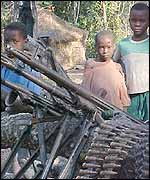
| | Monday, 22 July, 2002, 16:09 GMT 17:09 UK Angola's ex-rebels still armed 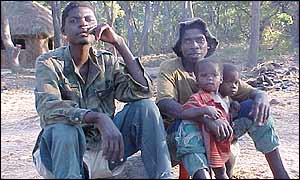 The 26-year civil war ended in April The demobilisation of Angola's former rebel fighters has been postponed because thousands have not yet given up their weapons. Around 5,000 Unita combatants were due to be selected to join the government army last week but many have not yet reported to the demobilisation camps.
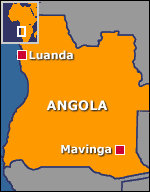
Angola is currently suffering from a devastating famine, caused by the war. Both sides destroyed fields of crops to make it harder for their enemies to get food supplies. The full extent of the famine is only becoming apparent after the end of the war, as aid workers arrive in parts of the country which had been cut off by fighting. Stranded The camps were set up after a ceasefire was signed in April, ending the 27-year war. Presidential spokesman Victor Carvalho told the BBC's Justin Pearce in Angola that the demobilisation process had been postponed until further notice. In the Capembe quartering area near Mavinga in Cuando Cubango province, Unita Brigadier Jose Liahuka David said that some former rebels had not arrived in the official camps because they were stranded.
"They are far away and are awaiting transport to bring them to the quartering areas," he said. But army sources said that no plans had been made to provide transport. The people in the demobilisation camps have also attracted the concern of the United Nations, which has called for more funds to assist them and the 2.5 million civilians in urgent need of aid. 'Careful' The camps were set up to accommodate 55,000 people and so far, 85,000 have arrived, according to officials. Those ex-Unita fighters not selected to join the army are supposed to receive training so they can find jobs in civilian life.
There are concerns that if aid does not arrive soon for those in the camps and those still in the bush, that might lead to renewed insecurity. Referring to the problems in the camps, General Gato said: "It is very dangerous for the peace process," he told the French news agency, AFP. "The government must be very, very careful to manage the situation as rationally as possible," he said, "or else we may end up with the absence of war, rather than the peace we want, social and political peace." | |
See also:  15 Jul 02 | Africa 09 Jul 02 | Africa 06 Jul 02 | From Our Own Correspondent 21 Jun 02 | Africa 23 May 02 | Africa 16 May 02 | Africa Internet links: The BBC is not responsible for the content of external internet sites Top Africa stories now: Links to more Africa stories are at the foot of the page. | |||||||||||||||||||||||||||||||||||||||||||||||||||||||||||||||||||||||||||||||||||||||||||||||||||||||||||||||||||||||||||||||||||||||||||||||||||||||||||||||||||||||||||
| |
|  E-mail this story to a friend E-mail this story to a friend |
| |
| Links to more Africa stories |
| | | ||
 | ||||
 | | Back to top
| ||
| ---------------------------------------------------------------------------------- To BBC Sport>> | To BBC Weather>> | To BBC World Service>> ---------------------------------------------------------------------------------- © MMIII | News Sources | Privacy |