|
 |
 | | | | | | |||||||||||||||||||||||||||||||||||||||||||||||||||||||||||||||||||||||||||||||||||||||||||||||||||||||||||||||||||||||||||||||||||||||||||||||||||||||||||||||||||||||||
| | | You are in: Africa | |||||||||||||||||||||||||||||||||||||||||||||||||||||||||||||||||||||||||||||||||||||||||||||||||||||||||||||||||||||||||||||||||||||||||||||||||||||||||||||||||||||||||||
|
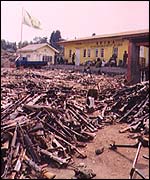
| | Friday, 28 June, 2002, 16:22 GMT 17:22 UK Trial set for Rwandan 'hate radio' Up to 1 million people died in the genocide A radio station is being accused by the International Criminal Tribunal for Rwanda of playing a key role in inciting the 1994 genocide. Two men from Rwanda's Radio Tele Libre Mille Collines (RTLM) will appear along with a newspaper editor at the tribunal on Monday on charges of inciting genocide and crimes against humanity.
It is the first time international law is being used to try the media in this way, says the BBC's legal affairs correspondent, John Silverman. The radio station, say the prosecutors in Arusha, was used not only to stir up violence against Rwanda's Tutsis but also to tell Hutu militiamen hunting them where their targets were hiding. Nazi echoes The three defendants - Professor Ferdinand Nahimana and Jean-Bosco Barayagwiza of the radio station, and Hassan Ngeze of newspaper Kangura - first appeared at the court in Arusha on 2 October 2000. Their trial has been delayed repeatedly and was last adjourned on 31 May. Mr Ngeze is accused of using his newspaper like the Nazis' hate-sheet Der Sturmer, which incited hatred of Jews in pre-war Germany, our correspondent says. The tribunal will have to decide where the line can be drawn between propaganda and actual incitement to genocide. 'War situation' The lawyer for Mr Nahamina, English barrister Diana Ellis, says the radio station he was involved with was not inciting genocide. It was, she says, operating in a country which had been at war since it had been "invaded by a Tutsi-dominated force".
In such a situation, she argues, the government "uses a different kind of language to mobilise a defence against enemies attacking from outside". The prosecution counters that the propaganda was particularly virulent. Our correspondent says witnesses talk of the radio broadcasting commands to search out and kill Tutsis. The radio station was "enormously influential" in a country with a high degree of illiteracy, according to an expert witness, Alison Des Forges of Human Rights Watch. "RTLM had an informal relaxed sound and played great music so the messages being pumped out were wrapped in a number of attractive trappings," she says. The radio station is also accused of getting Hutus to phone in and report the whereabouts of their Tutsi neighbours. | |
See also:  28 Jun 02 | Africa 19 Jun 02 | Africa 18 Jun 02 | Africa 12 Jun 02 | Africa 21 Mar 02 | Africa 17 Jun 02 | Africa 19 Jun 02 | Africa Internet links: The BBC is not responsible for the content of external internet sites Top Africa stories now: Links to more Africa stories are at the foot of the page. | |||||||||||||||||||||||||||||||||||||||||||||||||||||||||||||||||||||||||||||||||||||||||||||||||||||||||||||||||||||||||||||||||||||||||||||||||||||||||||||||||||||||||
| |
|  E-mail this story to a friend E-mail this story to a friend |
| |
| Links to more Africa stories |
| | | ||
 | ||||
 | | Back to top
| ||
| ---------------------------------------------------------------------------------- To BBC Sport>> | To BBC Weather>> | To BBC World Service>> ---------------------------------------------------------------------------------- © MMIII | News Sources | Privacy |