|
 |
 | | | | | | |||||||||||||||||||||||||||||||||||||||||||||||||||||||||||||||||||||||||||||||||||||||||||||||||||||||||||||||||||||||||||||||||||||||||||||||||||||||||||||||||||||||||||||||||||||||||
| | | You are in: Africa | |||||||||||||||||||||||||||||||||||||||||||||||||||||||||||||||||||||||||||||||||||||||||||||||||||||||||||||||||||||||||||||||||||||||||||||||||||||||||||||||||||||||||||||||||||||||||||
|
| | Tuesday, 25 June, 2002, 09:23 GMT 10:23 UK Mali's dangerous desert gateway Gao's gateway to the deadly desert road
The city of Gao in northeastern Mali was once the wealthy capital of the great Songhay Empire of West Africa. Today it has fallen on hard times and become the impoverished capital of human trafficking from West Africa to Europe.
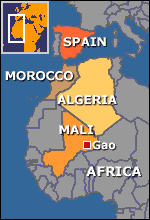
From Gao, young Africans, mostly from Nigeria and Ghana, set off across the desert in battered pick-up trucks or lorries bound for Europe. Some even undertake the hazardous journey on foot. The route takes the migrants across the Malian border into Algeria, then north across the Sahara until they reach Morocco. From there they must get to Spain, their entry point into Europe. 'Oldest profession' Chief of Police in Gao's police chief, Abdoullaye Danfaga, estimates that thousands of illegal migrants set out from Gao each year. He says it is impossible to know exactly how many leave, let alone how many perish in the desert.
He says the traffic is organised from Spain and "the network is vast, like a Mafia". Mr Danfaga says that when the traffickers need more people to move, they call from Spain to their agent in Nigeria and order, say, 20 girls. When those girls reach Gao, the traffickers force them into prostitution to pay for their false passports and to continue their journey. The female migrants are put to work in a brothel known as "The Ghetto". Most of them are just teenagers. Traffickers The police chief sadly admits that human trafficking is by far Gao's biggest industry and deplores the dangers facing young people who attempt to cross the desert this way. Austin, a Nigerian who Danfaga alleges is the leader of the trafficking operation in Gao, says the number of migrants who set off from here each year is "uncountable, it's like sand, so many people moving".
With his vested interest in the trafficking, Austin downplays the dangers of the desert crossing. he says, "People die, yes, but people also die in air crashes." He defends the illegal immigration to Europe by saying that white people refuse to give Africans visas. But the local authorities in Gao suggest that the traffickers themselves take advantage of the desperate young migrants trying to get to Europe to earn money to support their own families back home. Death in the sand The gendarme commander in the region, Seydou Doumbia, says the migrants are harassed and threatened by the traffickers at every stage of their journey. Once they are in the desert, they are at the mercy of ruthless drivers who threaten to abandon them if they don't hand over all their possession. The gendarmes say if vehicles break down, the passengers usually die of thirst in the desert and their remains may be lost forever in the desert sands. Last year, they rescued 17 young Nigerians from a stranded vehicle but many of their fellow travellers had died of hunger and thirst.
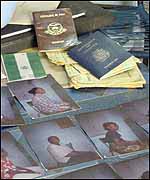
The gendarmes say the survivors lived only by eating their dead companions. The gendarmes allege that there is complicity in this lucrative human trade at all levels of government. The traffickers work with officials to procure Malian or Guinean passports for illegal migrants from all over Africa. The papers allow them to cross into Algeria without visas. The police are able to intercept some of the migrants and seize their false passports. But most of illegal migrants manage to head off undetected into the desert. One young Nigerian migrant, who wants to remain anonymous, says all the clandestine migrants are driven by desperate poverty and their dreams of work and money in Europe . Asked if he thinks it's worth risking his life to cross the desert, he replies, "It's because I don't have money I am willing to take the risk. Nobody wants to die in the desert. So when you go, you better give yourself over to God, make yourself close to God and if you pray, you will reach your destination." | |
See also:  19 Jun 02 | Europe 13 Jun 02 | Europe 30 May 02 | Europe 17 May 02 | Country profiles Internet links: The BBC is not responsible for the content of external internet sites Top Africa stories now: Links to more Africa stories are at the foot of the page. | |||||||||||||||||||||||||||||||||||||||||||||||||||||||||||||||||||||||||||||||||||||||||||||||||||||||||||||||||||||||||||||||||||||||||||||||||||||||||||||||||||||||||||||||||||||||||
| |
|  E-mail this story to a friend E-mail this story to a friend |
| |
| Links to more Africa stories |
| | | ||
 | ||||
 | | Back to top
| ||
| ---------------------------------------------------------------------------------- To BBC Sport>> | To BBC Weather>> | To BBC World Service>> ---------------------------------------------------------------------------------- © MMIII | News Sources | Privacy |