BBCiNEWS  SPORT  WEATHER  WORLD SERVICE  A-Z INDEX  SEARCH 

News imageNews imageFront Page | In depth | World | Conflict with IraqNews image
News image
News image
News image
News image
News imageMilitary build upNews image
News image
News imageUK forcesNews image
News imageNews imageNews image
News imageIraqi basesNews image
News image
News imageIraqi missile rangeNews image
News image
News imageDissident areasNews image
News image
News imageIraqi oilfieldsNews image
News image
News imageBaghdadNews image
News image
News imageWeapons sitesNews image
News image
News imagePresidential palacesNews image

News imageNews image
News image(uses Flash 5)
News image

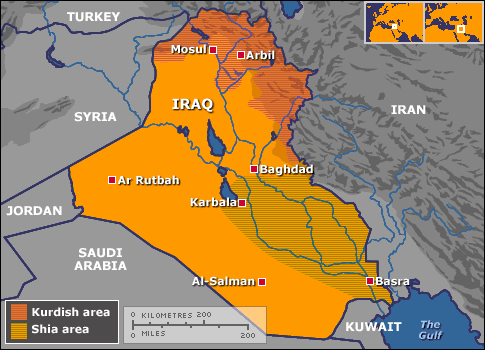
The Kurds in their north of the country and the Shia Muslims in the south are both partly protected by the US-British enforced "no-fly" zones.

The Kurds have at times opposed the regime and suffered brutal repression in return. Saddam Hussein used chemical weapons against them when they increased opposition activites during the Iran-Iraq war.

The two main Kurdish parties have a total of about 40,000 armed forces.

In the south, Shia Muslims have opposed the regime since the early 1980s, when they were backed by Iran during the Iran-Iraq war. According to some reports, the main militant group has a guerrilla force of between 7,000 and 15,000 men.

News imageNews imageNews image