HIV - the Human Immunodeficiency Virus - targets the immune system, the very system which would normally defend the body against infections. The virus attacks a particular type of white blood cells called CD4+ cells. It hijacks the cell, inserts its own genes into the cell's DNA and uses it to manufacture more virus particles. These go on to infect other cells.
The CD4+ host cells eventually die, although scientists do not know exactly how.
The body's ability to fight diseases decreases as the number of CD4+ cells drops, until it reaches a critical point at which the patient is said to have Aids - Acquired Immune Deficiency Syndrome.
HIV is a particular kind of virus � a retrovirus. While simpler than ordinary viruses, retroviruses tend to be harder to defeat.
They embed their genes into the DNA of the cells they target, so that any new cells that the host cell produces also contain the virus genes.
Retroviruses also copy their genes into the target cell with a high level of error. In combination with HIV's high replication rate, this means the virus mutates at speed as it spreads.
Furthermore, the "envelope" the HIV virus particle is contained inside is made of the same material as some human cells, making it difficult for the immune system to distinguish between virus particles and healthy cells.





 One-Minute World News
  News services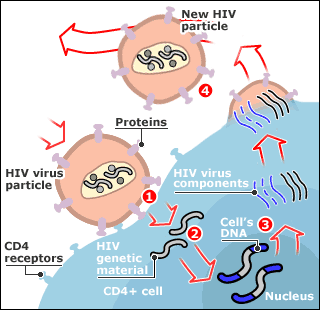


 Guide to key HIV terms