Since the start of the HIV epidemic, a series of drugs have been developed which significantly prolong the lives of people who are HIV positive Called "antiretroviral drugs", they block the virus's ability to replicate.
They can delay the onset of Aids by slowing the loss of patients' CD4+ cells, but they are not a cure.
There are four main classes of drugs, operating at different points in the HIV cycle, as shown on the diagram on the right.
A wide range of side effects are associated with antiretroviral therapy.
Many patients experience nausea, vomiting, headaches, fatigue, rashes, diarrhoea, insomnia, stomach pain and numbness around the mouth.
Inflammation of the pancreas, damage to the liver and nerves, changes in body shape, anaemia and muscle pain can also result from some of the drugs.
Antiretroviral drugs should be taken in combination. Usually three different drugs, from at least two different classes, are used at once.
As HIV mutates, some versions of the virus become resistant to drugs. The chances of keeping it in check are therefore much higher if several drugs are used.
Pill-taking regimes can be complicated and involve taking tablets at very specific times during the day.
If such programmes are not followed properly, the likelihood of the virus growing resistant to the drugs increases.
Some people are now becoming infected with strains of the virus which are already resistant to particular drugs.





 One-Minute World News
  News services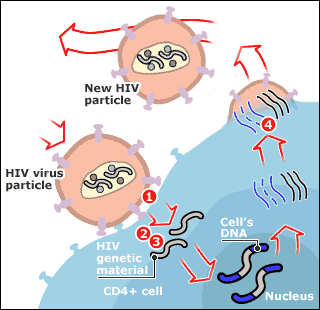


 Guide to key HIV terms