As the immune system becomes damaged, it loses its capacity to fight disease and infections can become life-threatening. People who are HIV positive are more susceptible to widespread diseases such as tuberculosis, malaria, pneumonia and shingles. Their vulnerability increases as their CD4+ cell count drops.
HIV patients also become vulnerable to a host of "opportunistic infections". These are infections caused by common bacteria, funguses and parasites which healthy bodies can fight, but which can cause illness and in some cases death in people with damaged immune systems.
Some of these are likely to occur at higher CD4+ counts than others. Most become active below CD4+ counts of 200, the point where Aids develops.
If full medical care is available, patients can be given drugs which treat and guard against some of these infections, although these are sometimes expensive and can cause side effects.
Click on the graph to read about some of the most common infections which affect HIV patients.





 One-Minute World News
  News services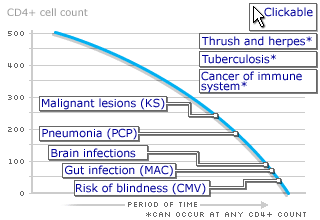
 Guide to key HIV terms