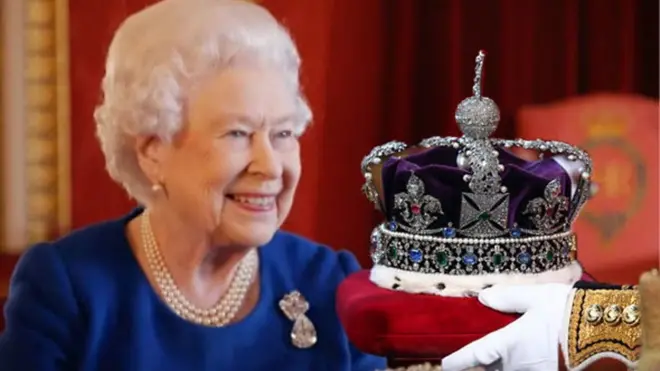
英国夏令时结束 温莎城堡那400多座时钟怎么调校
英国夏令时和格林尼治时间的交替,手机和电脑都会自动切换,一般家里的钟表需要手动调整,也不太费功夫。但是,英国王室的温莎堡和白金汉宫里有数百座钟,都需要人工调整,工作量可以想见。
图像来源,Antonio Olmos
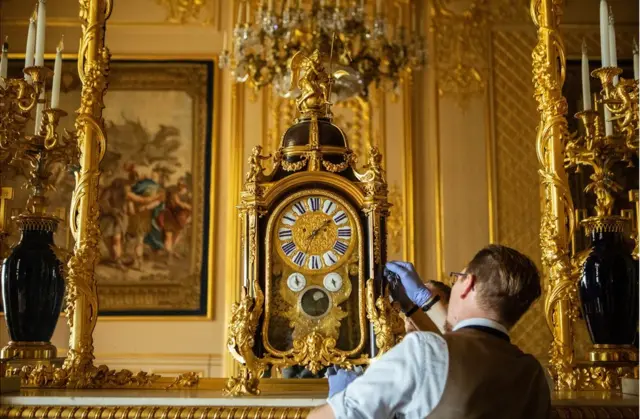
英国2020年夏令时在10月25日星期日结束,时针拨回一小时。这件事对寻常百姓来说根本不算个事,但要保证900年历史的温莎堡皇家收藏的那400多座时钟都准时切换,想想都很不容易。
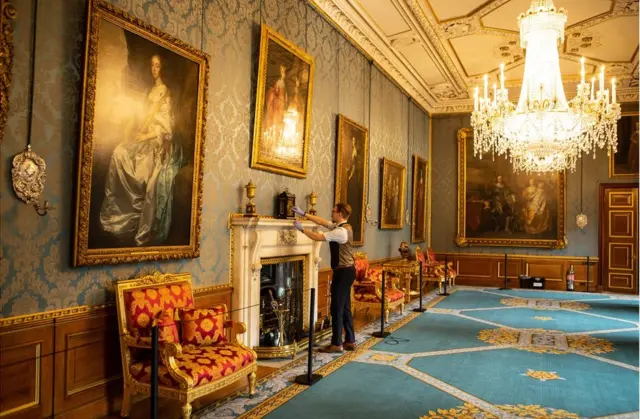
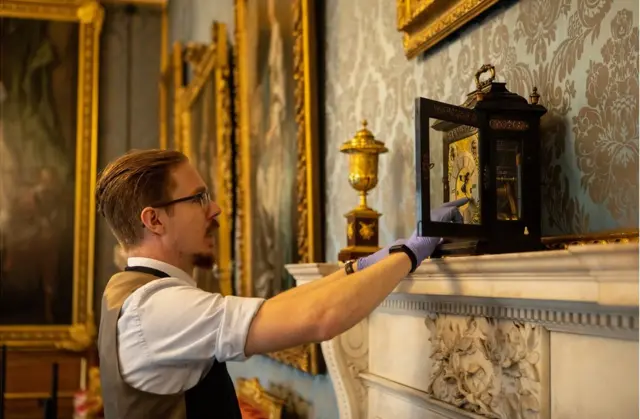
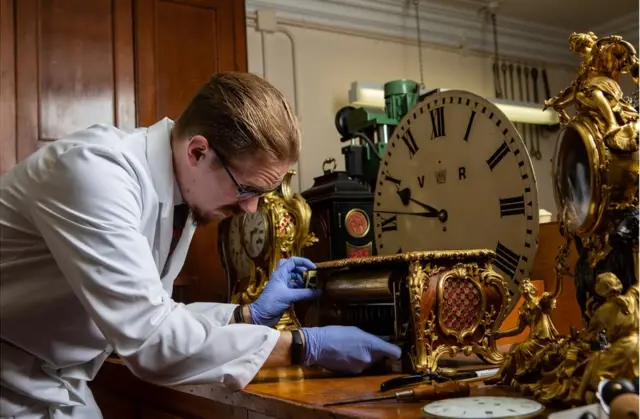
而且,在温莎堡负责维修钟表的布洛克(Fjodor van den Broek)需要独自一人完成这项任务。他今年第一次遇到时间的切换,前后花了16个小时。
图像来源,Antonio Olmos
图像来源,Antonio Olmos
布洛克说,他的一名同事负责调整白金汉宫的钟表时针。
有些地方的钟需要人为拨快一点,比如温莎堡和白金汉宫的厨房里,所有的时钟都快5分钟,这是为了确保准时供餐。
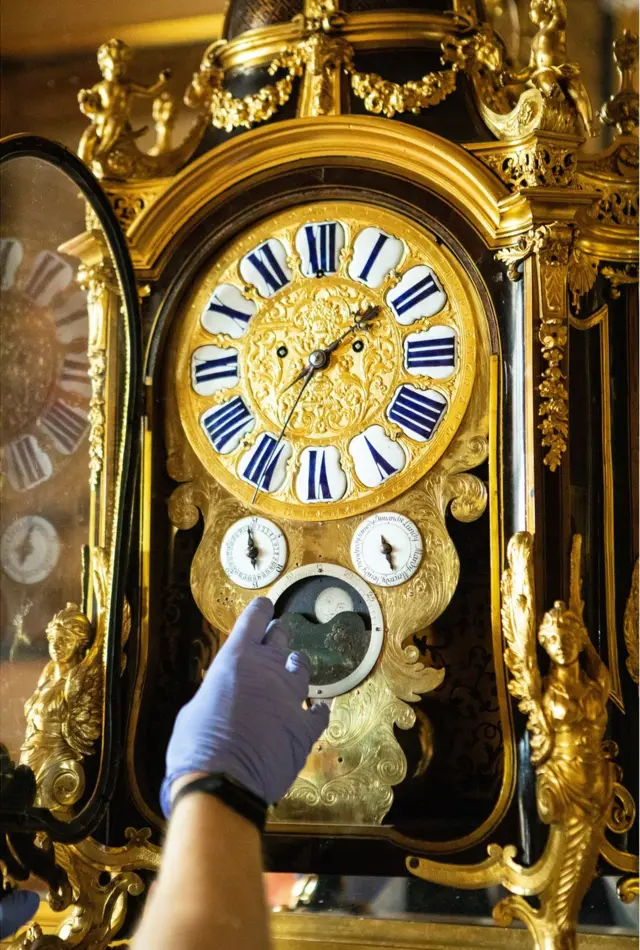
他平时会每周用一整天时间给时钟上发条,保证钟摆正常摆动。他计算过,每天在城堡各处巡查、紧发条、校正时间,一般大约走1.6万步。
温莎堡的大部分时钟一般都没有问题,很准时,但有时也会莫名其妙地突然停了、快了、或者慢了。布洛克说,那是钟表有了自己的“生命”。
图像来源,Antonio Olmos
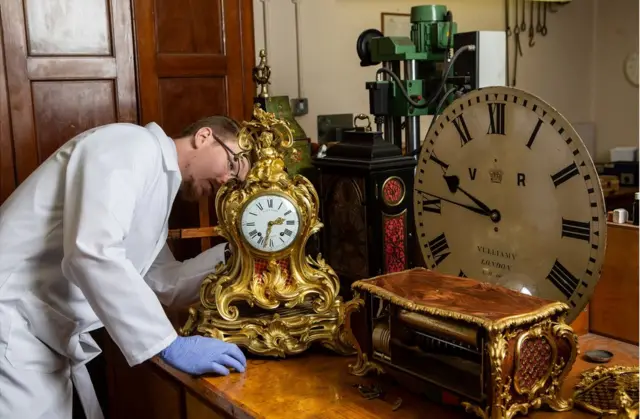
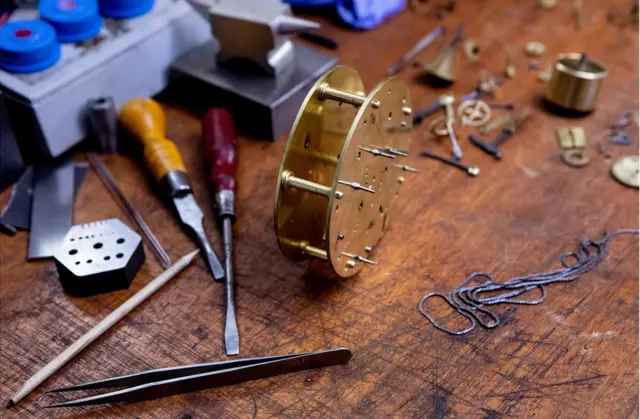
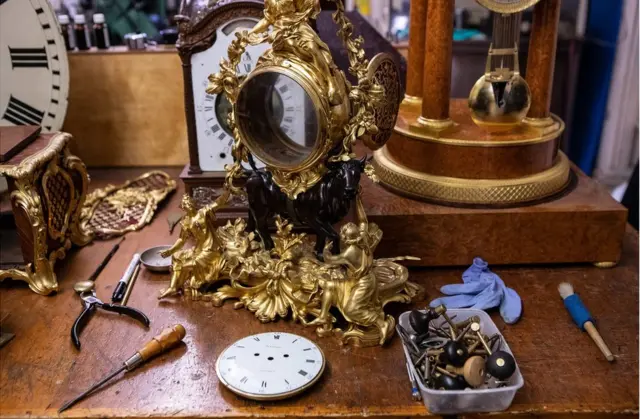
其他时间,他一般在工作坊中修复、维护那些二、三百年前制作的钟表。


图像来源,Antonio Olmos
钟表的零部件坏了或者太陈旧了需要更换。
图像来源,Antonio Olmos
钟表在古代属于奢侈品,要想炫耀自己富有,通常会置办最新款式的时钟。
图像来源,Antonio Olmos
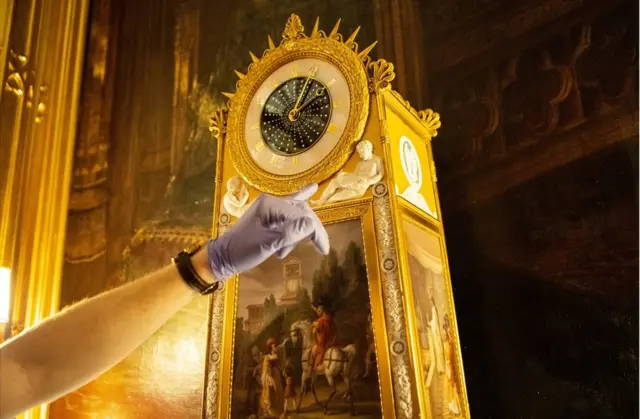
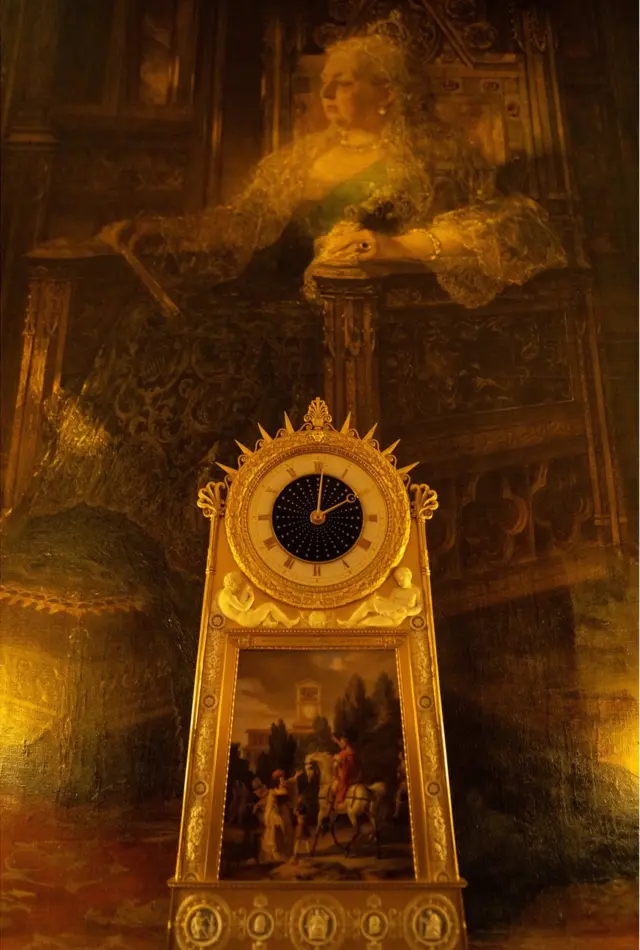
温莎堡国宴厅里那座法国装饰座钟据说是维多利亚女王最心爱的,是1844年法国国王赠送的 。座钟旁边的墙上挂着维多利亚女王肖像。
图像来源,Antonio Olmos
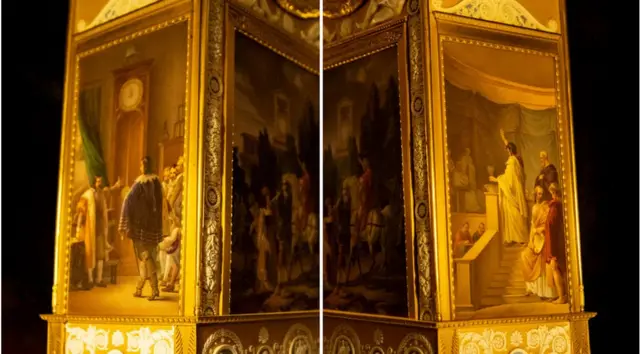
座钟的三面分别是三幅画,描绘了钟表制作工艺三个历史阶段。正面是1364年意大利帕度亚市政厅的第一座天文时钟,左面是荷兰物理学家惠更斯(Christiaan Huygens)在演示自己1656年发明的摆钟,右面是罗马元老院一位参议员拿着一架滴漏。
图像来源,Antonio Olmos
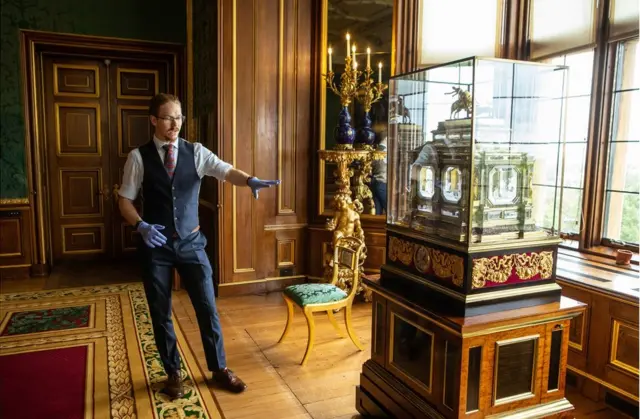
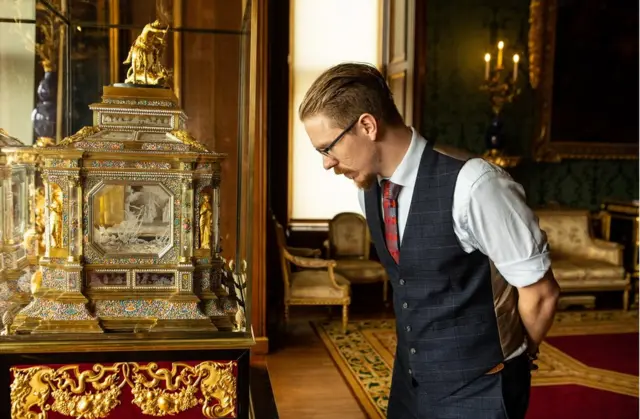
另一件跟维多利亚女王在位有关的物件在国王休憩室,一个水晶盒里跟一册圣经摆在一起的音乐时钟。
图像来源,Antonio Olmos
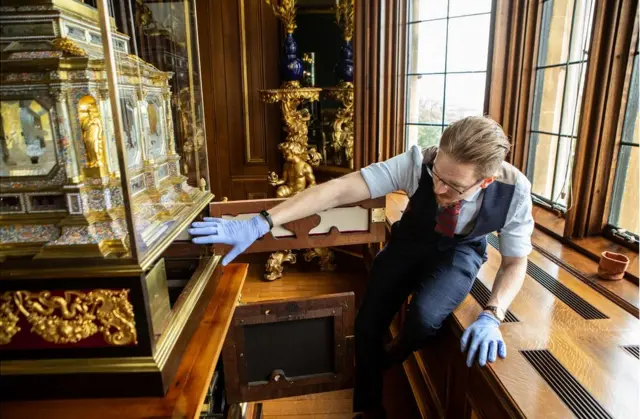
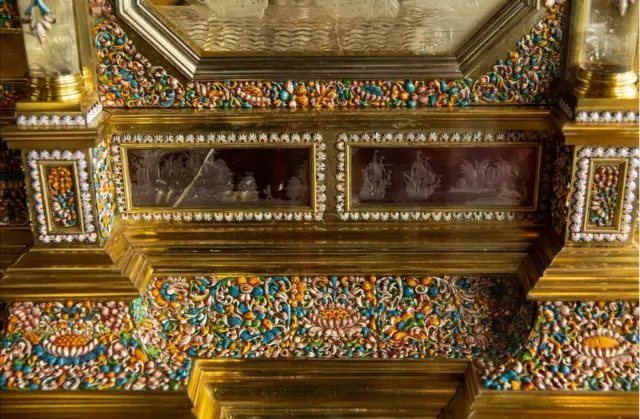
这座管风琴音乐时钟高1.8米,1740年由一位名叫克雷(Charles Clay)的钟表匠制成,放亨德尔(Handel)的乐曲,其中4首乐曲是专门为这座钟创作的。
克雷和亨德尔经常合作,他们制作的音乐钟有不少被欧洲各地的王室收纳。
图像来源,Antonio Olmos
管风琴装置放在时钟底座里。水晶盒是1664年一名德国匠人在奥古斯堡制作的。
图像来源,Antonio Olmos
图像来源,Antonio Olmos
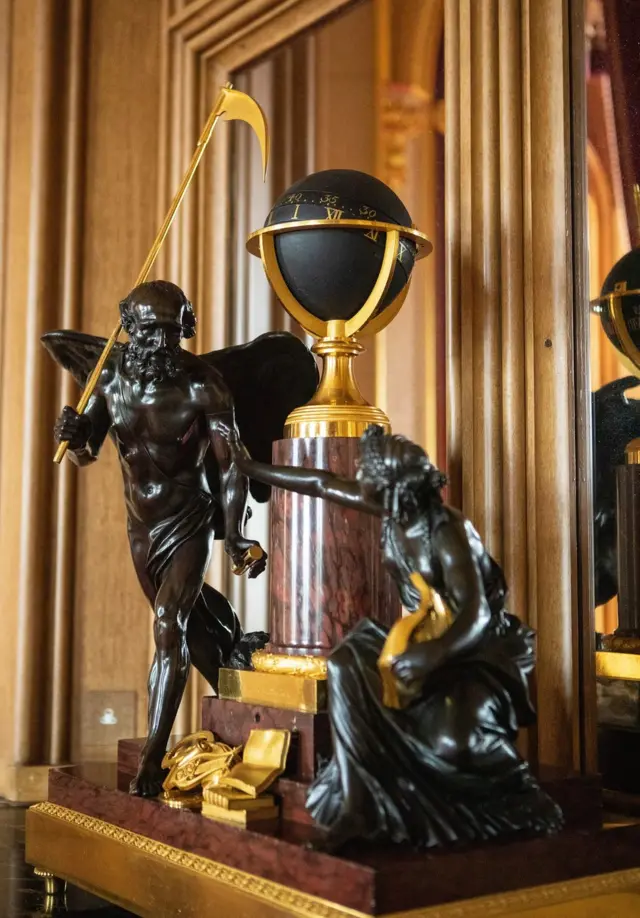
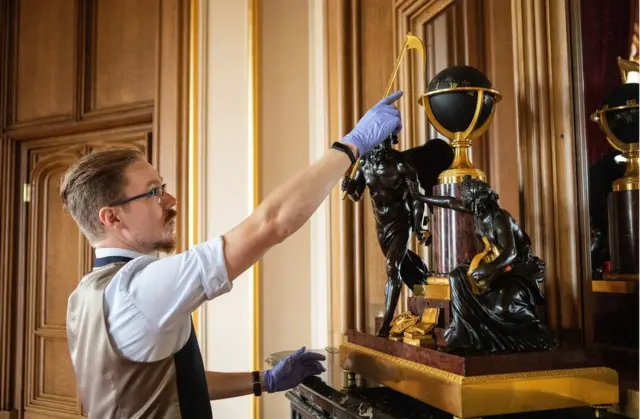
布洛克自己最喜欢的时钟之一是希腊神话中的时间之父柯洛诺斯雕塑座钟,他肩上扛的镰刀指着周转的球体,刀尖所指就是当下时间。
图像来源,Antonio Olmos
这座雕塑时钟是铜铸的,大理石底座;时钟重90公斤,搬动时需要三个人分工协作。
图像来源,Antonio Olmos
这座钟三个月前调校维修过一次,现在仍很准时,误差不到一分钟。
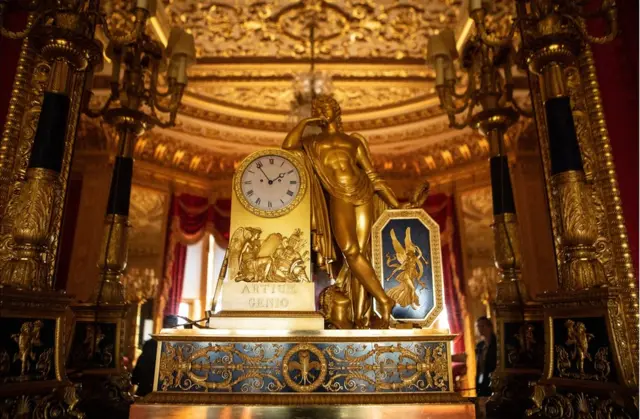
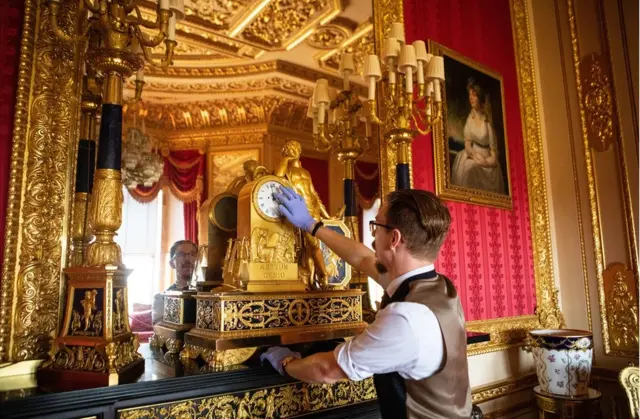
下面这尊阿波罗雕塑壁炉架时钟也是以学习为主题。时钟底座正面的两个字意思是艺术天才。
图像来源,Antonio Olmos
这座摆在壁炉架上的时钟是乔治四世国王即位前命人打造的。
图像来源,Antonio Olmos
所有这些年代各异的时钟都堪称无价之宝,布洛克说,因为它们不只是计时工具,还凝聚了历史、文化、艺术、传统的结晶。
每隔10到15年需要全面保修一次,那意味着拆开清洁、上润滑油、修复或更换零部件。
图像来源,Antonio Olmos
图像来源,Antonio Olmos
温莎堡从1970年代后期开始设专人负责这些珍稀时钟的维修保养,布洛克是第四个担任这个职务的人。他的前任在那里工作了20年,前任的前任工作了30年,可以算是终身职业了。
图片摄影:Antonio Olmos