Tuesday 18 September, 2001
New York attempts to identify its missing
As hope fades of finding any more survivors in the ruins of New York’s World Trade Centre, efforts will turn to identifying the remains of those who died.
Many of the bodies will have been very badly damaged but, as BBC Science reports, forensic experts have a variety of techniques at their disposal.
Missing

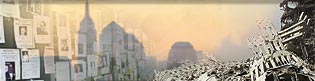
The faces of the missing stare back from every available public space in New York as, in a desperate bid for information, thousands of families have pinned up photographs of their loved ones.
At the Armoury, two miles north of the disaster center, lists are displayed of the missing and the survivors. Friends and families flock here scanning the pages for information.
The list of the missing is regularly updated using the data extrapolated from the seven-page questionnaire that families have been asked to complete to register a missing relative.
Questions include blood type, shoe size, length of fingernails and distinguishing marks as well as specifics about each piece of clothing and jewellery worn on the day of the tragedy, 11th September 2001.
It is hoped that this information will help to find survivors, but as time goes on it is more likely to help identify the remains of those who have died.
As no-one has been pulled out alive from the debris since the day after the attack, focus is beginning to switch from finding survivors to identifying the dead.
Many bodies will be fragmented or burnt, and so extremely difficult to identify. Speaking to the British newspaper, The Independent, Angelo Otchy, a mortgage broker, who had volunteered to help sift through the debris succinctly described the scene when he said:
| ‘I must have come across body parts by the thousands.’ |
|
Identification
Sometimes a combination of methods is needed to identify remains beyond reasonable doubt, but the first line of inquiry is visual evidence - hair and eye colour, height and weight, and more specific clues such as scars and tattoos.
However experts tend not to rely on identification by relatives - both because it is too distressing when bodies are badly mutilated, and because relatives sometimes misidentify remains.
They then turn to clothes and property, such as credit cards and jewellery. Fingerprints can usually be recovered from corpses and compared with prints left in the victim's home, but in this case, hands may be detached from other remains.
Dental evidence is valuable and in a rich country such as the United States, many people will have had some high-tech dental treatment, and good records are kept.
Teeth are the most indestructible part of a human body, and even a single tooth can be matched with X-rays taken by dentists.
DNA testing
The last resort will be DNA testing, comparing corpses and fragments with material taken from a missing person's comb or razor, or from a swab sample taken from the mouth of a close relative.
Speaking to The New York Times, Dr Robert Shaler, director of forensic biology at the New York City medical examiner's office, said that his lab is prepared to test as many as 20,000 tissue samples. He said:
| ‘We will test all tissues that come into the laboratory, because not to do so would be unfair to the populace.’ |
|
Scientists use enzymes to dismantle the DNA from a cell; they then pass an electric current through the fragments that makes them line up in a unique pattern like a barcode.
The DNA process and the technology involved were also used to identify bodies from the Srebrenica massacre in Bosnia. Forensic pathologist, Professor Derrick Pounder of the University of Dundee, worked on the programme in Bosnia. He has commented on the difficulties involved in identifying bodies on this scale, saying:
‘Having large numbers of dead does create specific problems because it's not a closed group. It's a very analogous situation to that in Bosnia, and very different to a conventional air crash, where you know exactly who was on board and you can recover all the bodies.’
Morgues
After the 1993 bomb attack on the World Trade Centre the hospitals were inundated with casualties, this time the doctors have been standing ready, but there have been few survivors to treat.
The present disposal of human remains in New York will be a horrific task. Whilst health officials have reassured that mounting body parts does not present an immediate health hazard, it is only a matter of time before bacterial decay sets in.
Immediately after the attack makeshift morgues were set up in shops and on the piers along the Hudson River. National Guardsmen drove body parts away in refrigerated trucks and now searchers continue to half fill body bags, placing them on vehicles ready to whisk them away to the city’s morgues.
The process of recovery and identification is painfully slow, particularly for those friends and relatives who anxiously await answers.
After the bombing of a federal government building in Oklahoma City in 1995, search teams spent a little under a month locating the remains of victims before the area could be cleaned up.
Estimates of how long it will take until the area is clear in New York remain uncertain, but some have speculated that it could be as late as December before the debris is cleared to street level. Then work on the excavation of the six floors underground can begin.
|  |  | | | Human losses |  |
| | New York Mayor Rudolph Giuliani has said that 201 bodies have been retrieved from the rubble of the World Trade Centre, 135 of which have been identified.
Another 5,422 people are missing. |
|  |
| |